
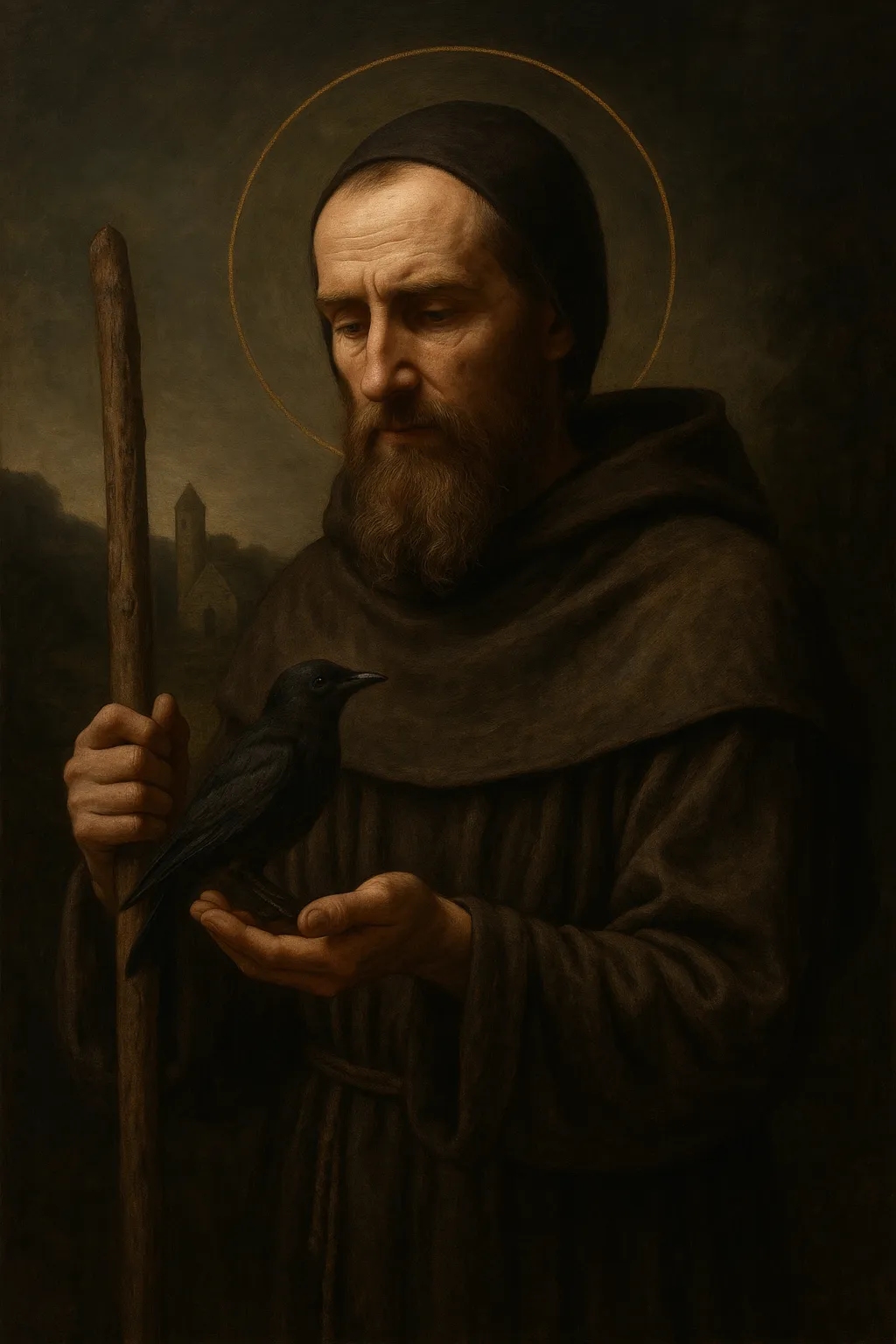
St. Patrick
Before the parades and legends, there was a frightened captive, a conversion in exile, and a costly return to Ireland.
I am Patrick, a sinner, the most rustic and least of all the faithful.
Confessio, opening sentence Documented
The captive who returned freely to preach the Gospel among the people who had enslaved him
Patrick was born in Roman Britain in the late fourth century, kidnapped by Irish raiders as a teenager, and held in Ireland for six years. His own Confessio says that captivity awakened the faith he had neglected. After escape, formation, and ordination, he returned as a bishop and missionary. He left two Latin writings; they give us an unusually direct voice from the conversion of fifth-century Ireland.
Patrick’s Confessio is the surest place to begin. He calls himself unlearned and sinful, identifies his father as a deacon and his grandfather as a priest, and admits that before captivity he did not truly know God. Raiders carried him from his family and sold him into slavery in Ireland, where he tended animals in hunger and cold.
In that isolation, Patrick says, prayer became constant. After six years he heard in a dream that his ship was ready. He fled, traveled a long distance, and escaped across the sea. The details of his later training are less secure than the autobiography’s central claim: he came to understand a call to return to the land of his captivity with the Gospel.
As a bishop in Ireland, Patrick baptized converts, ordained clergy, and faced danger, criticism, and the costs of working beyond the stable structures of the Roman world. His Letter to the soldiers of Coroticus condemns the killing and enslavement of newly baptized Christians. It is not decorative spirituality; it is a bishop defending the dignity of his people against Christian violence.
The familiar stories of shamrocks, snakes, the Paschal fire at Slane, and a precise thirty-year itinerary belong to later tradition, not Patrick’s own writings. They carry Catholic memory, and Patrick’s own two writings carry his life. Even the exact dates and places of his death and burial are unrecorded. Downpatrick preserves the dominant burial tradition, shared with Brigid and Columba in later memory, and pilgrims have gone there for centuries.
Patrick’s lasting importance is missionary and sacramental: the captive returned without revenge, built communities, baptized freely, and defended converts whose lives were treated as expendable. Ireland’s later Christian culture grew far beyond one man, but it never forgot the cost of his return.
The life of St. Patrick, in years and approximate ages.
-
late 4th centuryBirthBorn in Roman BritainPatrick is born into a Christian Romano-British family; his father is a deacon and his grandfather a priest.
-
c. age 1616Kidnapped and enslavedIrish raiders carry Patrick from his family and sell him into slavery in Ireland, where he works for six years.
-
six years laterAbout 22Escape from captivityPrompted by a dream, Patrick flees his master, reaches a ship after a long journey, and eventually returns to his people.
-
5th centuryAdultReturns as bishop and missionaryAfter formation and ordination, Patrick returns to Ireland to preach, baptize, ordain clergy, and gather Christian communities.
-
5th centuryAdultWrites against CoroticusPatrick excommunicates the soldiers of Coroticus after they kill and enslave newly baptized Christians, and demands the captives’ release.
-
5th centuryLater lifeComposes the ConfessioPatrick defends his ministry and gives thanks for grace in the autobiographical work now called the Confessio.
-
5th centuryDeath and burial traditionPatrick dies in Ireland. Later tradition places his death near Saul and his burial on the hill at Downpatrick.
Dates are approximate where the surviving record is traditional or incomplete.
3 places where this witness remains visible.
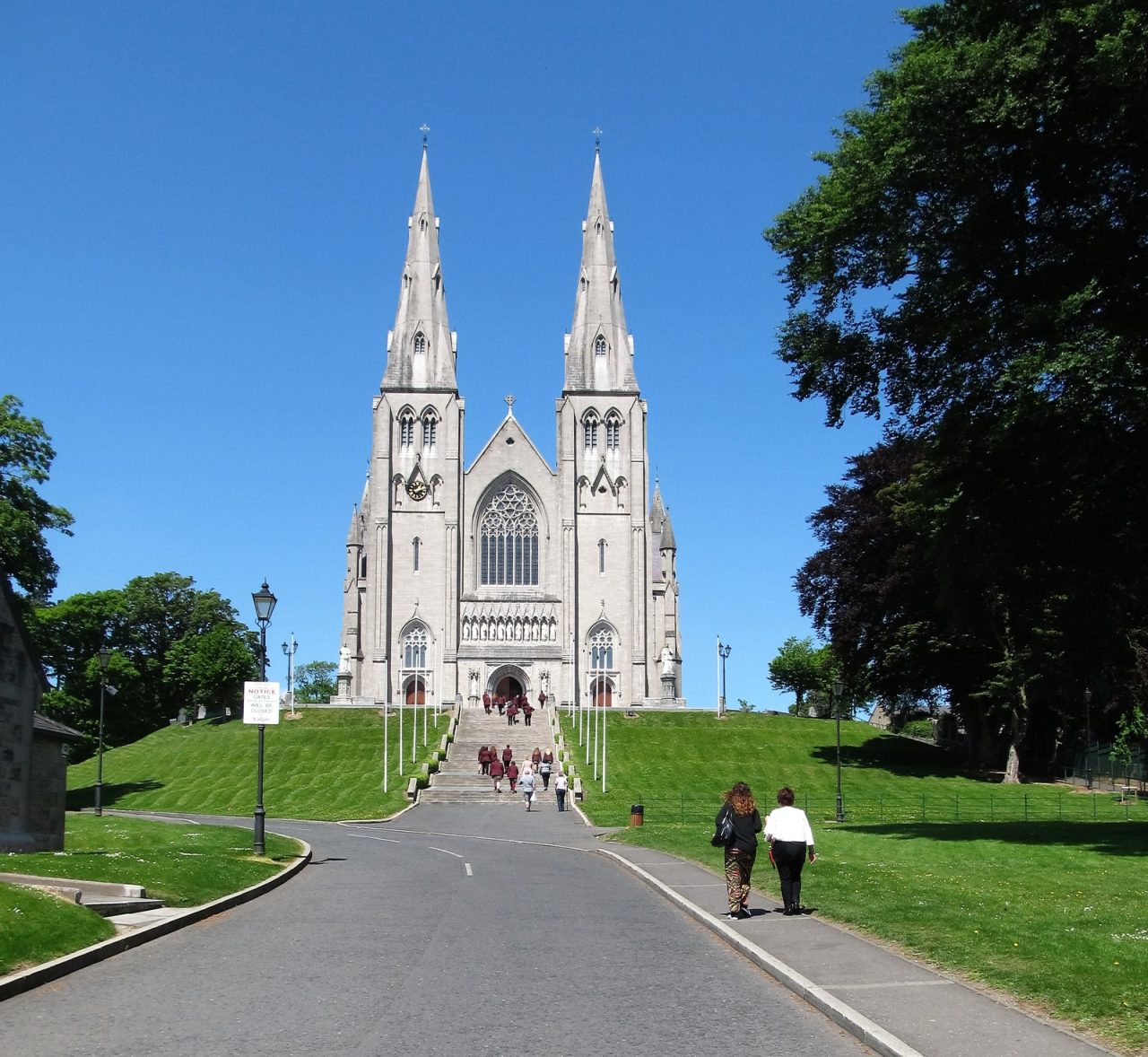
St. Patrick’s Catholic Cathedral
Begin in the Catholic primatial cathedral dedicated to Patrick, distinguishing its documented nineteenth-century history from the earlier tradition of Patrick’s mission in Armagh.
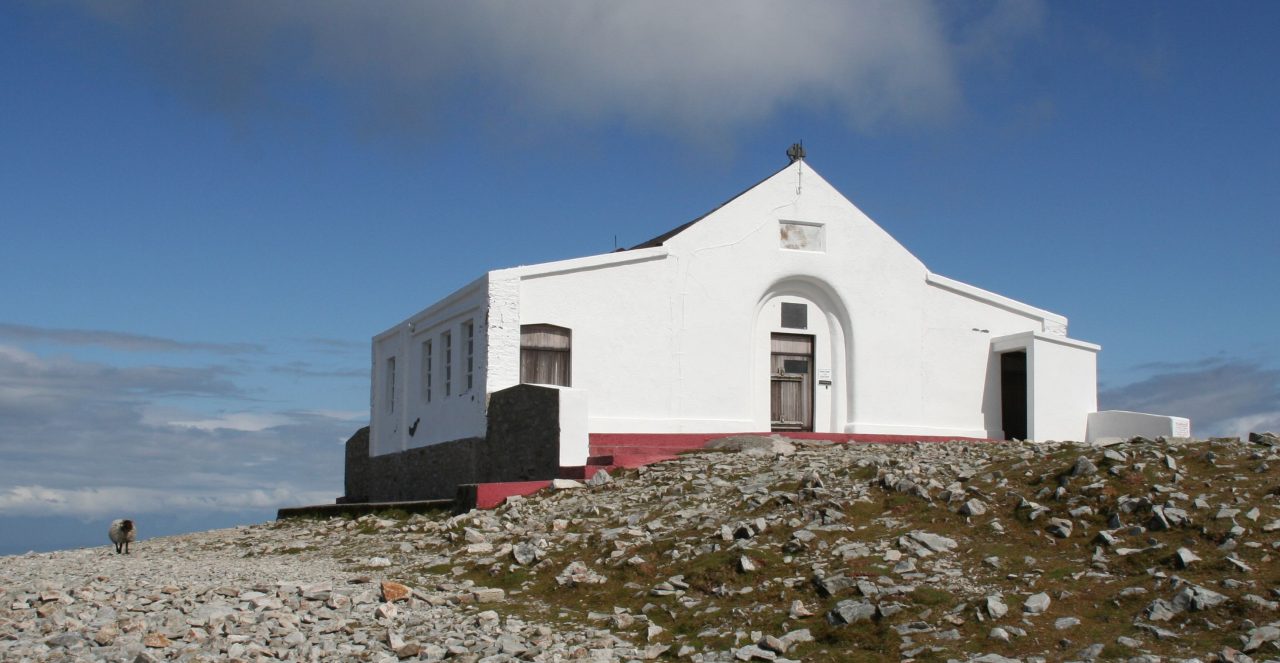
Croagh Patrick Pilgrimage
Climb only with suitable fitness, preparation, weather, and local advice. The forty-day fast belongs to received Patrick tradition; the penitential pilgrimage remains living Catholic practice.
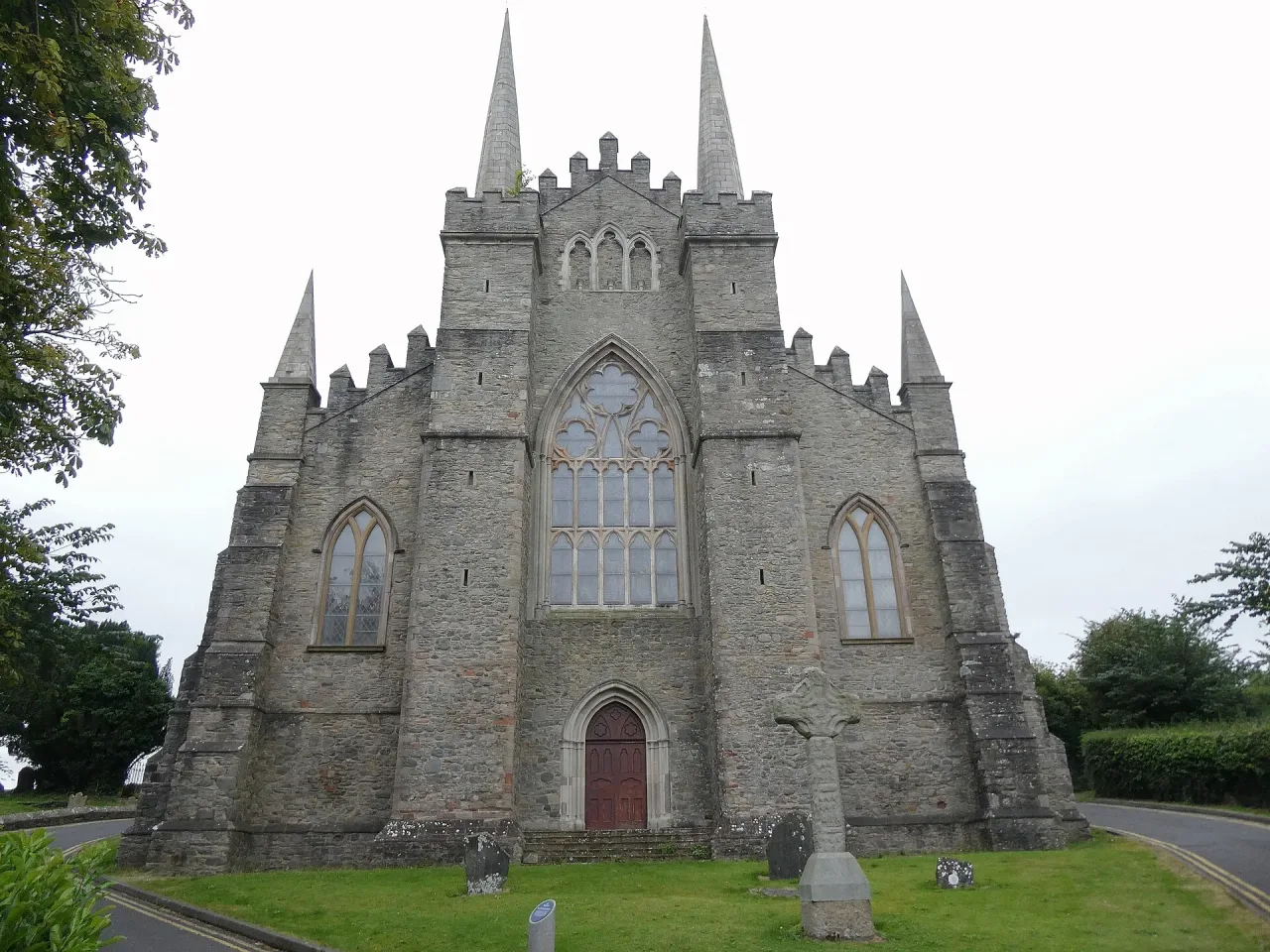
Down Cathedral and Saint Patrick’s Grave
End at the traditional grave, letting the uncertainty sharpen rather than weaken the prayer.
A grave held by tradition
Down Cathedral holds the enduring tradition that Patrick was buried on this hill, and Catholics have come to the grave for centuries. The great granite slab that marks the spot is a memorial rather than a reliquary: what pilgrims venerate here is the place tradition has kept, not bodily relics of the saint.
The burial or relic tradition is not securely identified.
Traditional burial place
The cathedral hill gathers the enduring tradition that Patrick was buried here, later remembered with Brigid and Columba.
- Traditional grave site marked by a granite stone
Pray here without asking the stone to prove more than it can. The value of the place is centuries of Christian memory gathered around Patrick’s death.
Kindred witnesses
-
Saint Brigid of Kildare
One of Ireland’s principal patrons; later tradition joins her memory to Patrick’s at Downpatrick. -
Saint Columba of Iona
The great monastic missionary of the following century, also joined to Patrick and Brigid in the Downpatrick burial tradition. -
Saint Kevin of Glendalough
A later Irish monastic saint whose landscape shows how the Christian life planted in Patrick’s century developed in the generations after him.

Where this leads next.
St. Patrick feast day: March 17
March 17 is kept as Saint Patrick’s feast throughout the universal Church and with particular solemnity in Ireland.
At Downpatrick, pilgrims gather near the traditional grave and on the cathedral hill. Times of prayer there are set locally, and are worth checking before a visit.
A path of captivity, return, and remembered burial.
Patrick’s own writings preserve spiritual geography more clearly than a modern map. Later Irish tradition gives the pilgrim places—Armagh, Saul, Slane, Croagh Patrick, Downpatrick—and each rests on a different kind of evidence, which is worth knowing before setting out.
Begin with the unknowable coast of captivity. Patrick does not give enough detail to place it securely, and humility about that gap is part of following him.
Armagh represents the enduring ecclesial memory of his mission. Saul and Slane carry later traditions of first preaching and Paschal proclamation. Croagh Patrick embodies centuries of penitential pilgrimage, carried by the received tradition of his fast rather than by his own writings.
Downpatrick is the strongest ending because the burial tradition has gathered prayer there for centuries. The granite marker is a memorial rather than an excavated tomb, and what makes it worth the journey is the long Christian memory it gathers.
Photo credits
- St. Patrick’s Catholic Cathedral. St Patrick's Roman Catholic Cathedral - geograph.org.uk - 4994625. Eric Jones / Geograph Britain and Ireland / Wikimedia Commons (CC BY-SA 2.0). Source. CC BY-SA 2.0.
- Croagh Patrick Pilgrimage. Croagh-patrick-chapel. Störfix / Wikimedia Commons (CC BY-SA 3.0). Source. CC BY-SA 3.0.
- Down Cathedral and Saint Patrick’s Grave. Down Cathedral at Downpatrick - geograph.org.uk - 8136422. Gareth James / Geograph Britain and Ireland / Wikimedia Commons (CC BY-SA 2.0). Source. CC BY-SA 2.0.