
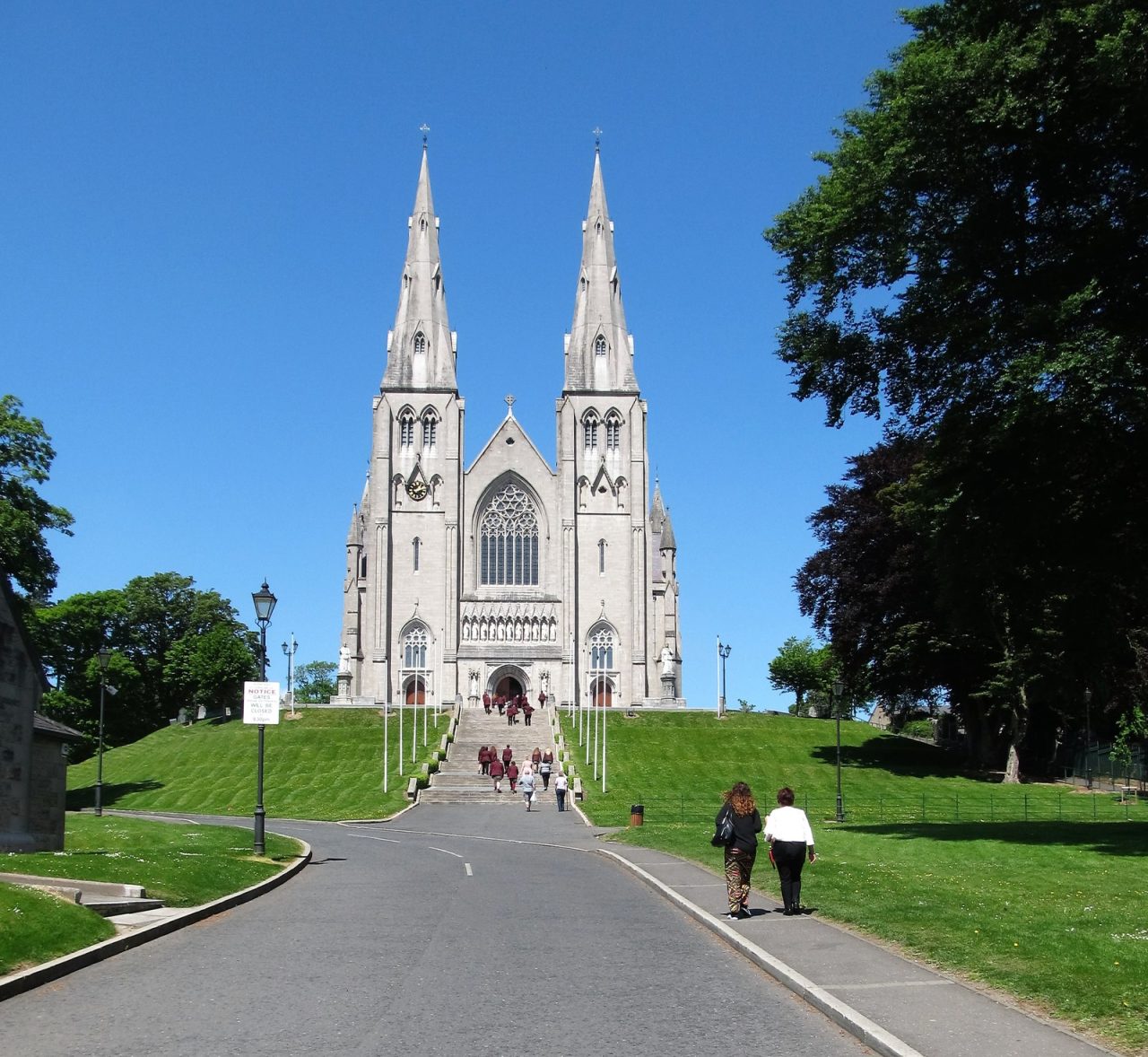
St. Patrick's Catholic Cathedral, Armagh
Armagh's Catholic cathedral gathers a nineteenth-century story of endurance around the apostle of Ireland, its twin spires facing a city whose Christian memory reaches much further back.
- Location
- Armagh, Northern Ireland 54.3528° N · 6.6564° W
- Type
- Roman Catholic metropolitan cathedral Nineteenth-century Gothic Revival cathedral with twin spires and a richly decorated interior
- Time Needed
- 1 hour to a full day
A cathedral built through hunger and hope
Come to pray for Ireland in the Catholic primatial church dedicated to Patrick. The long interruption of its building during the Great Famine gives the cathedral a gravity that no list of dates can carry alone.
Patrick's name in nineteenth-century Armagh
The foundation stone was laid on March 17, 1840. Building stopped during the Great Famine, when Archbishop William Crolly redirected attention toward the suffering people, and resumed under his successors. The cathedral was dedicated in 1873, then further decorated and consecrated in 1904. The building belongs to the documented nineteenth-century history of the Catholic see that bears Patrick's name; his own mission predates it by many centuries, and the burial tradition belongs to Downpatrick.
The Gothic Revival cathedral rises on a commanding hill with a long stepped approach and paired spires. Inside, patterned floors, clustered columns, side chapels, and a richly ordered sanctuary turn the vertical exterior into a processional interior. The building's long construction history is visible in its successive campaigns and decoration.
The foundation stone was laid on Saint Patrick's Day in 1840.
Construction was interrupted during the Great Famine before the cathedral was dedicated in 1873.
The building was decorated and consecrated in 1904 and restored in the early twenty-first century.
Armagh has two cathedrals dedicated to Patrick, one Roman Catholic and one Church of Ireland.
Spiritual Significance
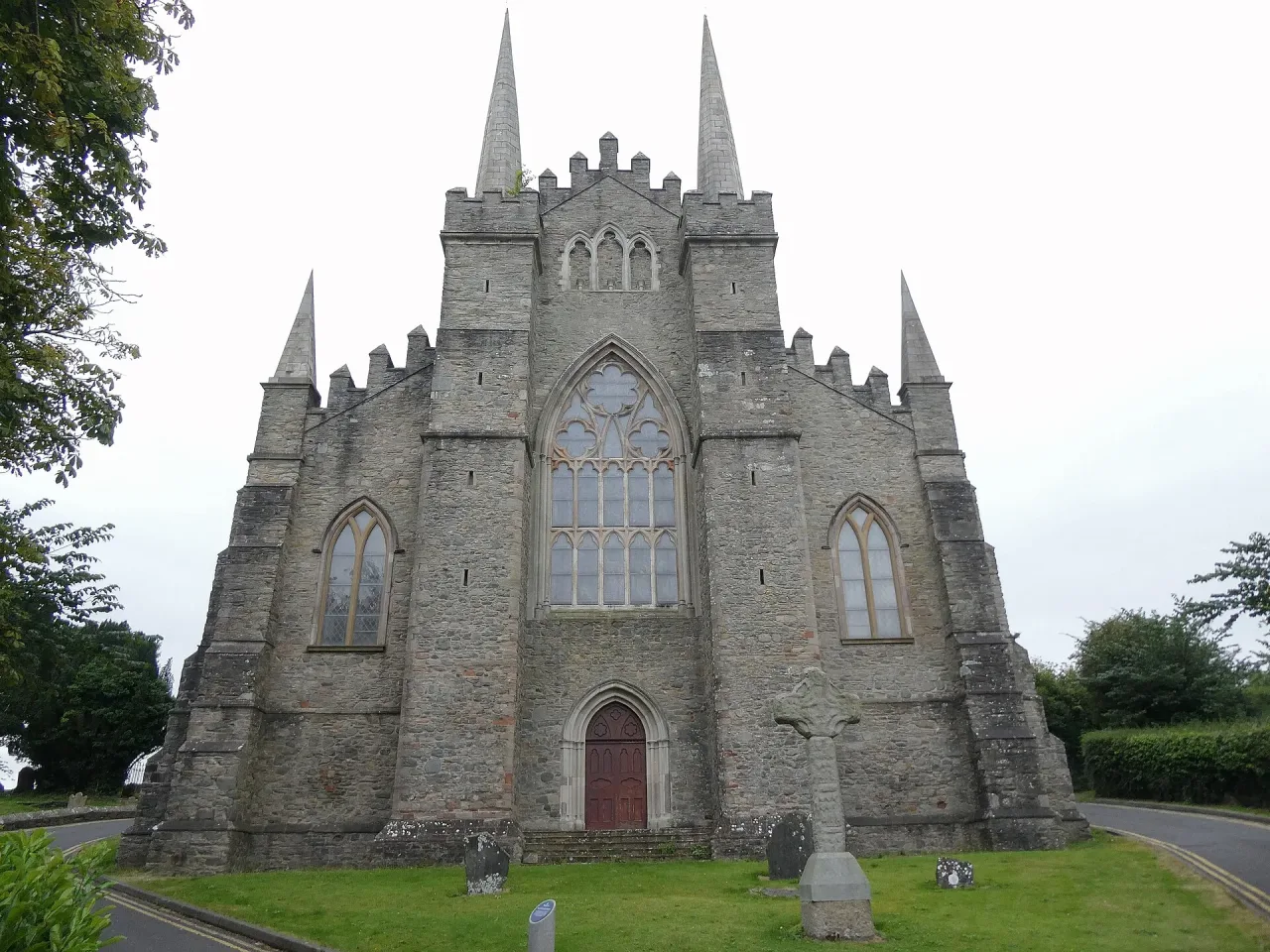
Patrick is honored here as apostle of Ireland within a living Catholic cathedral. Across the city stands the Church of Ireland cathedral on the older ecclesiastical hill. The two must not be confused, and respectful clarity about both deepens rather than diminishes the pilgrimage.
Do Not Miss
-
The long approach
Let the climb and the twin spires frame the cathedral as a deliberate nineteenth-century Catholic presence.
-
The nave and sanctuary
Notice how color, pattern, and vertical lines carry the pilgrim toward the altar.
-
The view across Armagh
Hold both Patrick cathedrals in view without confusing their distinct traditions and histories.
- The cathedral's two major nineteenth-century building phases
- The difference between Patrick's fifth-century mission and this later Catholic cathedral
- The shared city landscape of two cathedrals dedicated to the same saint
Visit Plans
-
The Cathedral Interior
The cathedral interior and prayer.
-
Patrick from Armagh to Downpatrick
3 ordered stopsBegin in Armagh's Catholic cathedral, then continue to Downpatrick's traditional grave with the distinction between cathedral history and burial tradition intact.
- Pray in St. Patrick's Catholic Cathedral in Armagh.
- If visiting the older cathedral hill, identify its Church of Ireland tradition accurately.
- Continue to Down Cathedral and pray at Patrick's traditional grave.
How to Visit
Check the parish's current Mass and access information, arrive outside liturgy if sightseeing, and give worship priority. If visiting both Armagh cathedrals, name their traditions accurately and allow time to walk the valley between them.
Check cathedral worship before arranging your day.
Mass, funerals, diocesan events, and seasonal access can change the visitor rhythm. The parish's official page remains authoritative.
- Tradition
- Roman Catholic cathedral
- Time needed
- About 45 to 75 minutes for prayer and the interior
- Two-cathedral note
- The Church of Ireland cathedral is a separate building on the older cathedral hill
Worship and access
- Do not tour during worship or a private liturgy.
- Some areas may be restricted during cathedral events.
Additional schedule notes
The stepped approach
The ceremonial approach is long and steep; verify accessible arrival if needed.
- Plan an alternative arrival if the principal steps are a barrier.
Relics, Tombs, Sacred Objects
Tomb and Burial
- No claim is made that Saint Patrick is buried here; his principal burial tradition belongs to Downpatrick.
Relics and Sacred Tradition
- The cathedral's significance is ecclesial and devotional rather than a claim to Patrick's bodily relics.
Sacred Objects
- The high altar and sanctuary
- The richly patterned nave and side chapels
- The paired spires that answer the older cathedral hill across Armagh
Continue Your Pilgrimage
Map
Photo credits
- Hero. St Patrick's Roman Catholic Cathedral - geograph.org.uk - 4994625. Eric Jones / Geograph Britain and Ireland / Wikimedia Commons (CC BY-SA 2.0). Source. CC BY-SA 2.0.
- The cathedral nave. Andreas F. Borchert / Wikimedia Commons (CC BY-SA 4.0). Source. CC BY-SA 4.0.