
St. Nicholas
of Myra
Almost nothing he wrote survives. What survives is a tomb, a feast kept on December 6, and sixteen centuries of pilgrims.
A fourth-century bishop of Lycia whose surviving biography is thin and whose veneration became one of the largest in Christian history
Nicholas was bishop of Myra, a port city of Lycia on the southern coast of Asia Minor, in the fourth century. That much is secure. Almost everything told about him in detail arrives much later. No contemporary biography survives, and no letters or sermons of his have come down to us. What survives instead is one of the widest devotions in Christian history, and a grave that has drawn pilgrims for more than sixteen hundred years.
The commonly repeated dates 270 to 343 are later conventions rather than recorded fact. The evidence places him in the age of Constantine. A church at the harbor of Myra was built between roughly 311 and 337, his grave lay outside the city walls in keeping with Roman burial law of the period, and the veneration at that grave is attested early. He died on December 6 of a year no source records. The feast is old and steady; the year is simply not known.
The earliest substantial account of his life was written by Michael the Archimandrite around the year 700, about three and a half centuries after Nicholas died. A sermon of Patriarch Proclus of Constantinople from the fifth century refers to him earlier, but already carries material that belongs to devotional storytelling rather than biography. Historians also work carefully here because a second figure, Nicholas of Sion, a later abbot and bishop in the same region, was drawn into the same body of stories over time. Some of what is told of Nicholas of Myra may belong to him.
The best known of the early stories is the one that shaped everything after it. A father of three daughters had no dowry for them and no honorable future to offer them. Nicholas, according to the tradition Michael the Archimandrite records, threw bags of gold into the house at night, three times, and took care not to be seen. Whatever the underlying event, the story is the reason Nicholas is remembered for generosity practiced in secret, and it stands behind every later custom of gifts left quietly for children.
His patronage of sailors grew out of the same coast. Myra sat above the harbor of Andriake, on the sea lane between the Aegean and the Levant, and a bishop there lived among crews and shipowners. Traditional accounts tell of Nicholas calming a storm and saving sailors who called on him. Whether or not those narratives preserve a particular event, the maritime devotion they express is genuinely early and genuinely widespread, and it carried his name into every port of the Mediterranean.
Whether Nicholas attended the Council of Nicaea in 325 cannot be settled. His name is absent from the older and fuller lists of bishops who attended, and appears in only a few of the surviving medieval copies. A copyist who knew the famous bishop of Myra may have added a name he expected to find. Catholic memory has long associated Nicholas with Nicaea, and that association is worth knowing, but it is later tradition rather than established biography.
The famous scene of Nicholas striking Arius at the council is later still. It appears first around 1370, in Petrus de Natalibus, and there the man struck is only described as an Arian, not Arius himself, who was a priest rather than a bishop and did not sit among the council fathers. Two centuries later the story had hardened into Nicholas against Arius by name, and from there it passed into icons and popular retelling. It is a devotional legend about zeal for the faith, roughly a thousand years younger than the man it describes.
What is remarkable about Nicholas is precisely the gap between how little was written down and how far the devotion traveled. From Myra the devotion spread through the Greek East, then along the shipping routes of the Mediterranean, then into Latin Europe, where by the eleventh century he was among the most invoked saints in the West. Churches, guilds, harbors, and whole cities took his name. When his relics were carried to Bari in 1087, they arrived in a place that already venerated him.
The gift-giving customs of northern Europe kept his feast attached to his name. In the Low Countries Sint Nicolaas became Sinterklaas, and Dutch settlers carried the observance to New Amsterdam. In nineteenth-century New York the figure was reshaped by Washington Irving and then by the 1823 poem now known as The Night Before Christmas, and from there the modern Santa Claus developed. The line back to the bishop of Myra is real, but it runs through several centuries of cultural change. Nicholas is first a bishop, a confessor, and the object of an ancient pilgrimage.
Nicholas is the clearest case in the calendar of a saint whose documentation is thin and whose veneration is enormous. The Church did not remember him because his life was well recorded. It remembered him because generation after generation kept going to his grave.
A life, in years and approximate ages.
-
Early 4th centuryAdultBishop of MyraNicholas serves as bishop of Myra in Lycia during the reign of Constantine. A church at the city’s harbor is built in these decades.
-
325AdultAssociated with the Council of NicaeaCatholic memory links Nicholas to the council, though his name is missing from the older lists of bishops who attended.
-
December 6, year unknownDies at MyraHe dies on December 6 and is buried in a church outside the city walls. The grave becomes a place of Christian pilgrimage.
-
c. 700After deathThe first full Life is writtenMichael the Archimandrite composes the earliest substantial account of Nicholas, about three and a half centuries after his death.
-
May 9, 1087After deathThe relics are brought to BariSailors from Bari take possession of the relics at Myra and land with them at Bari, where Abbot Elia receives them.
-
October 1, 1089After deathPlaced beneath the crypt altarPope Urban II places the relics in the finished crypt of the new basilica, where they have remained since.
-
1100After deathVenice gathers the remaining fragmentsA Venetian fleet on the First Crusade stops at Myra and removes the fragments left in the tomb, reaching Venice the following year.
Dates are approximate where the surviving record is traditional or incomplete.
3 places where this witness remains visible.

Basilica di San Nicola, Bari
Begin in the crypt at the tomb, then come up into the church that was built around it. The whole basilica is an argument about where the saint is.
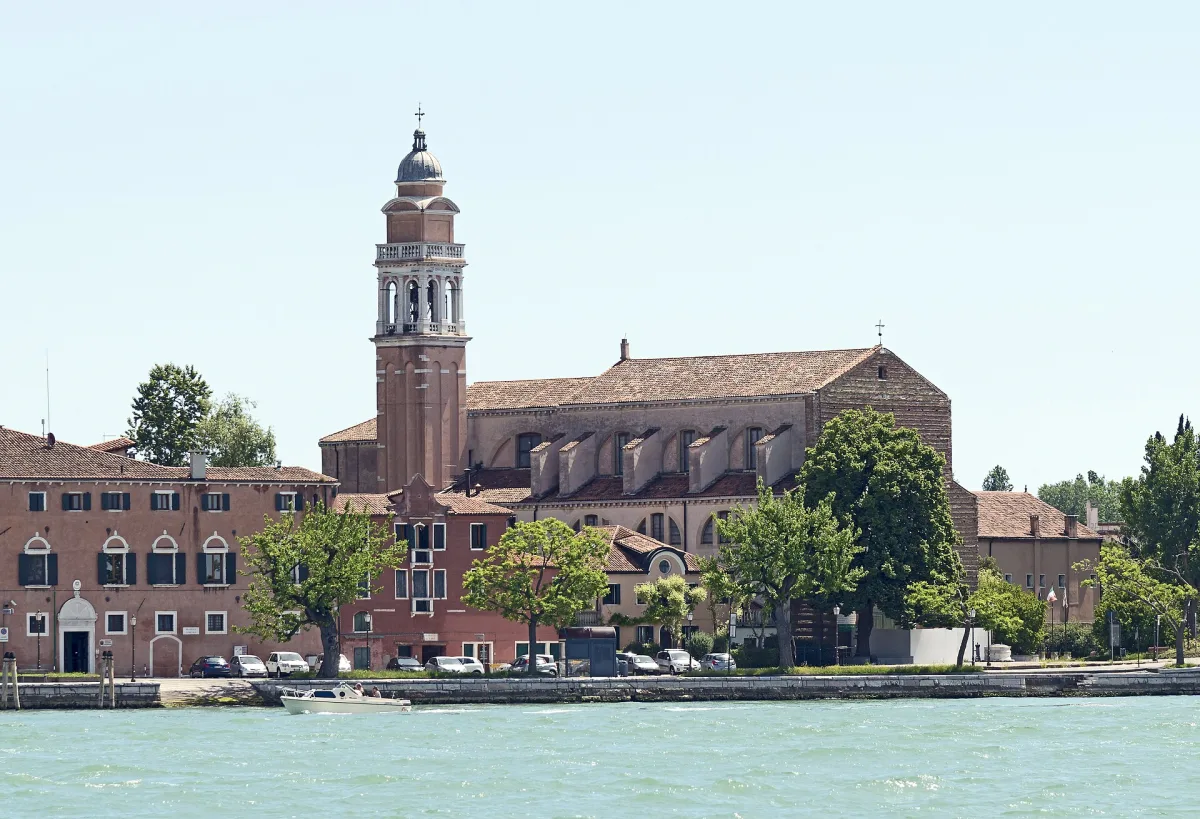
San Nicolò al Lido, Venice
Fragments gathered at Myra in 1100 by a Venetian fleet rest beneath the high altar. Anatomical study has found them compatible with the Bari remains, though the attribution is a smaller claim than Bari’s.

Church of Saint Nicholas, Demre
The church at ancient Myra, outside the old city walls, holds the sarcophagus tradition identifies as his first grave. It has been empty since 1087 and the site is a museum today.
A tomb at Myra, a crypt at Bari, and a smaller claim at the Lido
Nicholas was buried at Myra and venerated at his grave for seven centuries. In 1087 sailors from Bari took possession of the relics and carried them to Apulia, where Pope Urban II laid them beneath the altar of the new crypt on October 1, 1089. In 1100 a Venetian fleet returning from the First Crusade gathered the fragments left behind at Myra and brought them to San Nicolò al Lido. Luigi Martino, professor of anatomy at the University of Bari, examined the Bari relics in 1953 and 1957 and the Venetian fragments in 1992, and found the two collections anatomically complementary and consistent with a single skeleton. Between them the two cities keep one body; that it is the bishop of Myra’s rests where it has always rested, on the unbroken veneration at his grave.
A principal relic site is named, with other fragments or reliquaries noted separately.
- Principal tomb or body site
- The place the Church and long pilgrimage practice treat as holding the saint's body.
- Traditional or qualified association
- Venerated according to long-standing tradition, where the surviving record is incomplete or more than one church preserves a rival claim.
Tomb and principal relics
The relics have lain beneath the crypt altar since 1089. The basilica is the working center of the devotion and is used by Orthodox as well as Catholic pilgrims.
- Principal relics of Saint Nicholas beneath the crypt altar
- The manna drawn from the tomb each May 9
The relics are behind a grille in the front of the tomb and are not exposed. Go down to the crypt first; the upper church reads differently once you have prayed below.
Original burial place
The church at ancient Myra, outside the old city walls, holds the sarcophagus tradition identifies as his first grave. It has been empty since 1087 and the site is a museum today.
- The original tomb, empty since the translation
This is the origin of the devotion rather than a place of relics. Read it as the beginning of the story, not its present home.
Secondary relic tradition
Fragments gathered at Myra in 1100 by a Venetian fleet rest beneath the high altar. Anatomical study has found them compatible with the Bari remains, though the attribution is a smaller claim than Bari’s.
- Relic fragments attributed to Saint Nicholas
A quiet church at the edge of the lagoon rather than a major shrine. Worth knowing about; not the reason to plan a journey.
Kindred witnesses
-
Saint Ambrose of Milan
A fourth-century bishop of the same generation, whose sermons and letters survive in quantity, which is exactly what makes the silence around Nicholas so striking. -
Saint Clement I
Another early bishop whose relics traveled far from where he died, and whose veneration likewise outgrew the record of his life.
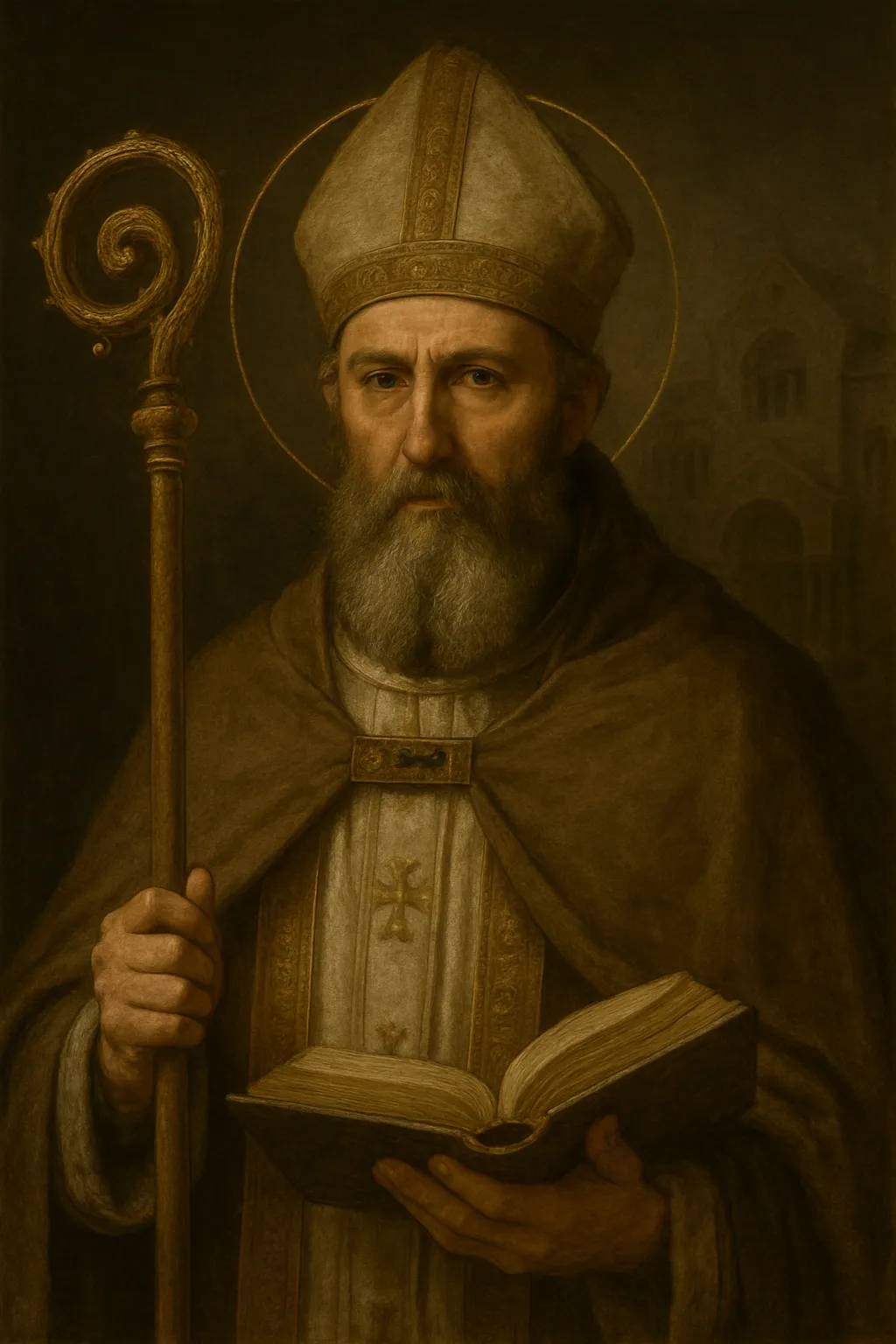
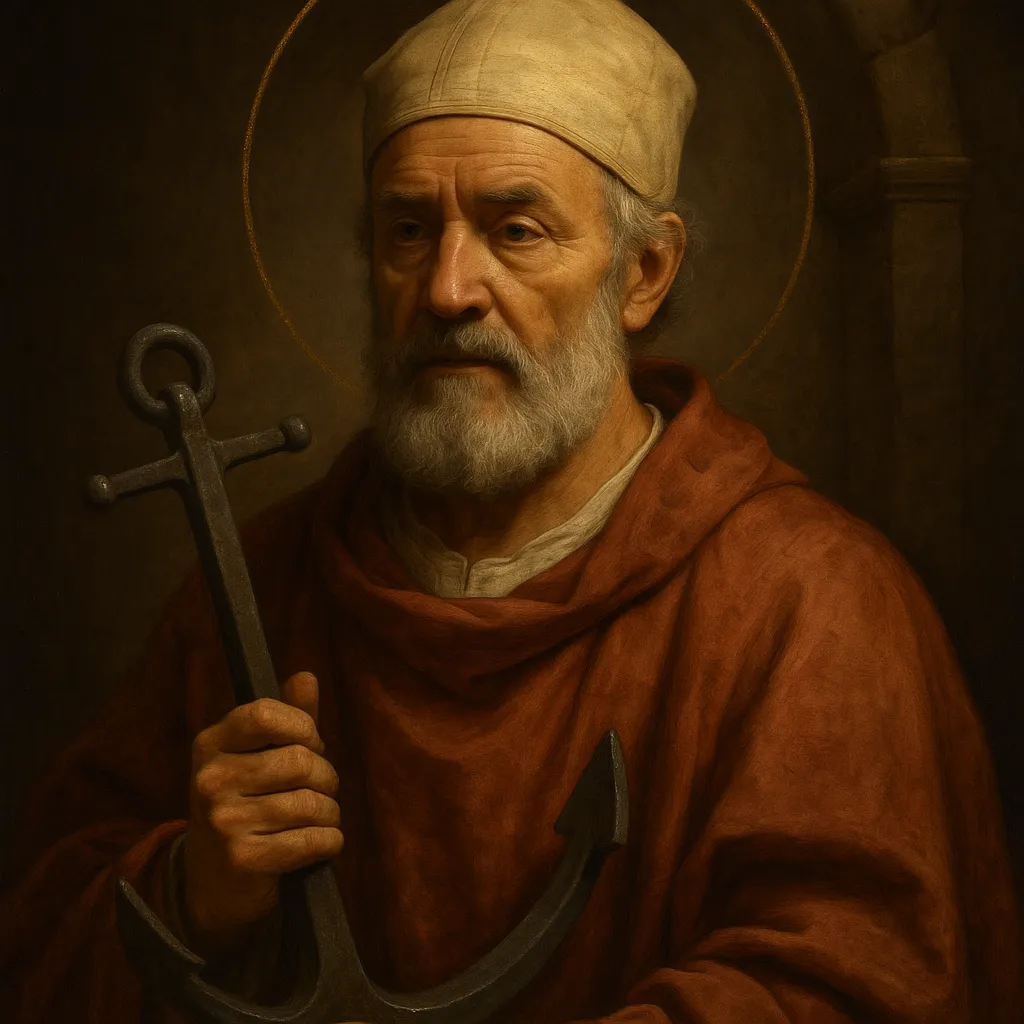
Kept on December 6.
December 6 is his feast in both the Catholic and Orthodox calendars, and in much of Europe it remains the day for gifts left secretly for children.
Bari keeps a second observance on May 9, the anniversary of the relics’ arrival in 1087, when the clear liquid known as the manna is drawn from the tomb.
One bishop, three coastlines.
Nicholas is venerated in three places that mean three different things: the city he served, the city that holds his relics, and the lagoon that holds what was left behind.
Myra, now Demre in southern Turkey, is his own geography. He was bishop there, he died there, and he was buried there in a church outside the walls that archaeologists have identified. It is the origin of the devotion and no longer the place of his relics.
Bari is where a pilgrim goes today. The relics have lain beneath the crypt altar since 1089, and the basilica built over them remains the working center of the devotion, shared in practice by Catholic and Orthodox pilgrims.
Venice holds a secondary relic tradition at San Nicolò al Lido, from a later expedition that gathered fragments the Bari sailors had left at Myra. It is a real part of the story and a smaller claim than Bari’s.
Photo credits
- Saint page. Saint Catherine’s Monastery, Sinai. Public domain, via Wikimedia Commons. Public Domain.
- San Nicolò al Lido, Venice. Didier Descouens, CC BY-SA 4.0, via Wikimedia Commons. Source. CC BY-SA 4.0.
- Church of Saint Nicholas, Demre. Dosseman, CC BY-SA 4.0, via Wikimedia Commons. Source. CC BY-SA 4.0.
- Basilica di San Nicola, Bari. Sailko / Wikimedia Commons. Source. CC BY-SA 4.0.
- Public domain (PD-Art). Converted to WebP by Eternal Roam. Saint Nicholas, icon at Saint Catherine’s Monastery, Sinai, first half of the 13th century. Source.
- Didier Descouens, CC BY-SA 4.0, via Wikimedia Commons. Converted to WebP by Eternal Roam. San Nicolò al Lido, Venice. Source.
- Dosseman, CC BY-SA 4.0, via Wikimedia Commons. Converted to WebP by Eternal Roam. Church of Saint Nicholas, Demre. Source.