The tomb and relics of Saint Faustina Kowalska
Tomb of a canonized religiousPublic veneration at the tomb in the convent chapel
Congregation of the Sisters of Our Lady of MercyThe Łagiewniki sanctuary in Kraków, where the convent chapel holds Saint Faustina's tomb and the venerated image of the Merciful Jesus, and a modern basilica consecrated in 2002 takes the international pilgrimage.
Almost everything a pilgrim comes to Łagiewniki for is inside a small brick chapel of 1891: the image, the tomb, and the rooms where Faustina spent her last years.
The large basilica beside it was built sixty years after her death for crowds she never saw. Understanding which building is which is not pedantry; it is the difference between visiting a shrine and visiting a saint.
The Congregation of the Sisters of Our Lady of Mercy founded this house at Łagiewniki in 1889, for the care and education of women in difficulty. Helena Kowalska entered the congregation in 1925, received the name Sister Maria Faustina in 1926, and came here permanently in 1936. She died in the convent on October 5, 1938 and was buried in the sisters' cemetery in the garden. Her remains were brought into the convent chapel on November 25, 1966, as the diocesan process for her cause was beginning under Archbishop Karol Wojtyła. She was beatified in 1993 and canonized on April 30, 2000, when the Sunday after Easter was established for the whole Church as Divine Mercy Sunday. The pilgrimage that followed outgrew the chapel entirely, and a new church was built between 1999 and 2002. John Paul II consecrated it on August 17, 2002 and entrusted the world to Divine Mercy. It received the title of minor basilica on March 6, 2003.
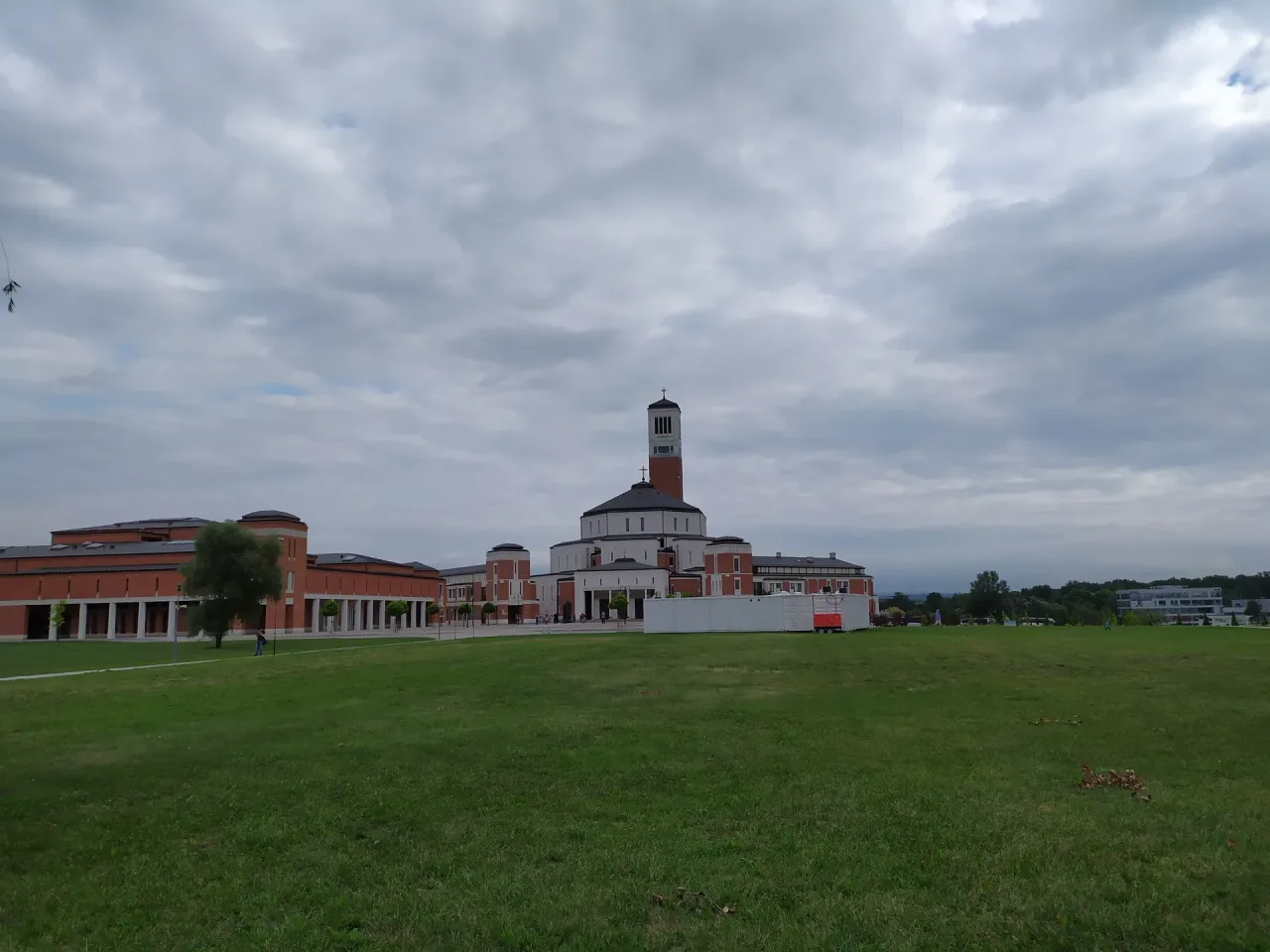
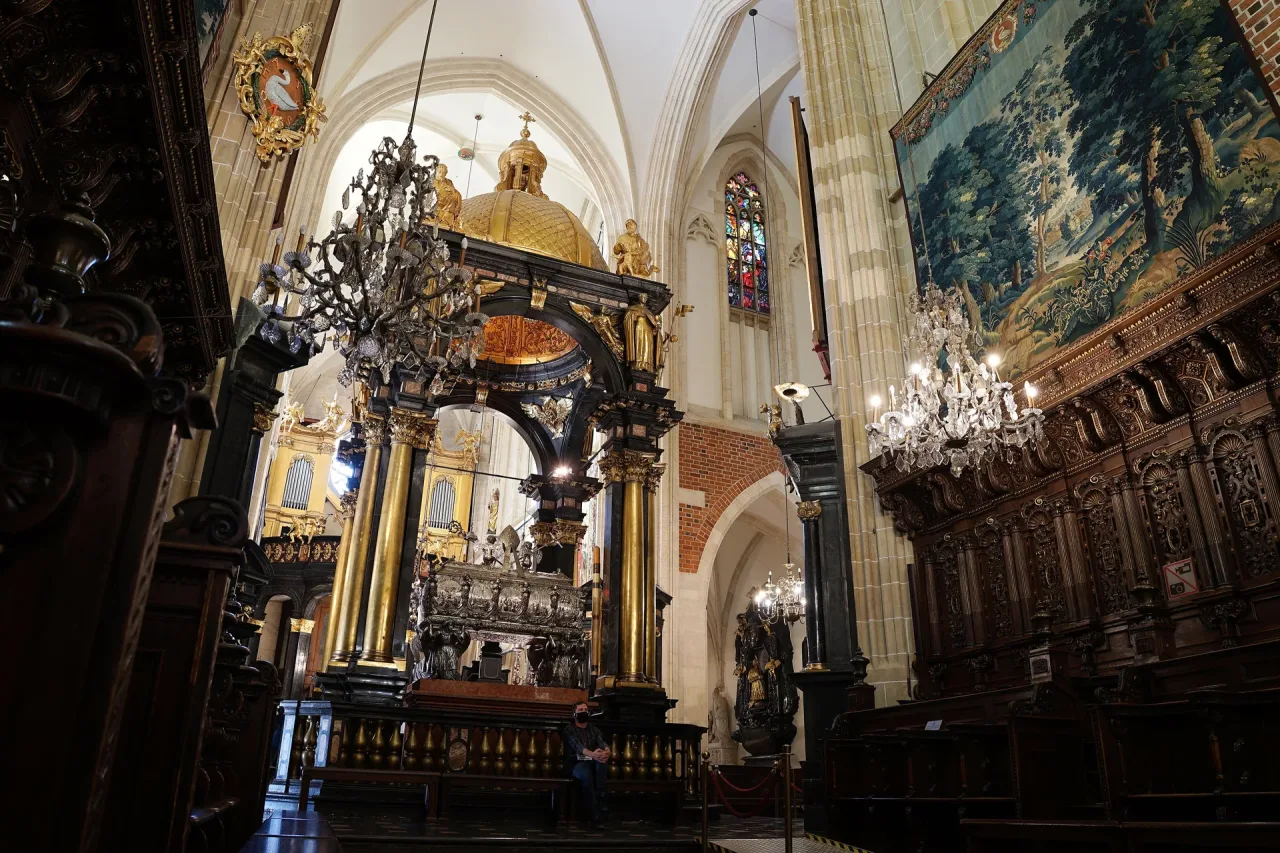
The convent chapel of St. Joseph, consecrated in 1891, is small, brick, and dim, with the venerated image over the left side altar and the tomb beneath its mensa. The basilica a short walk away is wide, white and light, with a boat-shaped timber ceiling and a glass tower carrying a viewing level. Set against each other the two buildings tell the whole story: a hidden religious life, and the worldwide reception that came afterwards.
Four distinctions the site will not make for you.
The 1891 convent chapel holds the tomb and the image. The 2002 basilica holds the crowds. Both are the sanctuary; only one is where she lived.
The picture venerated here was painted by Adolf Hyła and blessed in 1944, after Faustina's death. The image painted under her direction in Vilnius in 1934 is a different painting and is not here.
The sisters still live and work here. Parts of the house are enclosed and are not open, and that is not an oversight.
More pilgrims come to Łagiewniki for the sacrament than for the buildings. The queues are the devotion, not an obstacle to it.
The tomb and the venerated image are in the small nineteenth-century chapel, not in the modern basilica
Faustina was first buried in the convent cemetery and moved into the chapel in 1966, when her cause opened
John Paul II consecrated the modern basilica and entrusted the world to Divine Mercy on August 17, 2002
Divine Mercy is not a promise that suffering will disappear, and the Diary is not an addition to the Gospel. The devotion is confidence in the crucified and risen Christ, received through the sacraments and returned in works of mercy. The sanctuary itself preaches it that way, which is why Confession is the busiest thing here.
Consecrated in 1891 and dedicated to Saint Joseph. This is the church Faustina prayed in, and both the tomb and the venerated image are inside it. Begin here.
Beneath the mensa of the side altar in the convent chapel, in a white marble coffin. She was buried in the convent cemetery in 1938 and brought into the chapel on November 25, 1966.
Over the left side altar in the convent chapel. Painted by Adolf Hyła and blessed on April 16, 1944, after a first version of 1943. It is not the Vilnius painting made under Faustina's direction in 1934.
At three in the afternoon. If you can shape your visit around one thing, this is a better choice than any building.
Offered in many languages through the day. For a large share of the pilgrims here this is the reason for coming.
Consecrated by John Paul II on August 17, 2002, when he entrusted the world to Divine Mercy, and made a minor basilica on March 6, 2003. Visit it after the chapel, not before.
The glass tower beside the basilica has a viewing level that looks across Łagiewniki toward the Sanctuary of Saint John Paul II. Access is seasonal and ticketed.
If the day is tight, this is the part that cannot be skipped. Free and quiet.
The chapel first, then Confession or Mass, then the modern basilica and the tower. Leaves room to walk on to the Sanctuary of Saint John Paul II.
The chapel and the basilica keep separate schedules and both are free. Confession is offered in many languages and is the reason many pilgrims come. Divine Mercy Sunday, the Sunday after Easter, fills the whole site and changes how everything moves. The sanctuary is in a southern district of Kraków, reached by city transport, and it is about eight hundred meters from the separate Sanctuary of Saint John Paul II.
Visiting
Prayer and liturgy
Getting there and access
The Sanctuary of Saint John Paul II is a separate institution about eight hundred meters south, reached on foot across open ground with slopes.
The basilica is modern and broadly step-free. The convent chapel is older and smaller, and it fills quickly.
Public veneration at the tomb in the convent chapel
Congregation of the Sisters of Our Lady of MercyContinuous public veneration over the left side altar
Congregation of the Sisters of Our Lady of MercyRead and prayed throughout the sanctuary
Vatican canonization documents and the custodian congregationSource note Traditional attributions are presented as tradition, with documentation named where it exists.
Where this church sits within the wider Catholic geography of Kraków.
A distinct sanctuary about eight hundred meters south, on the Solvay ground where Karol Wojtyła worked.
In the historic center, where Karol Wojtyła said his first Mass and was consecrated bishop.
The convent chapel, the tomb, the venerated image and the modern basilica are described as four distinct things, with dates from the custodian congregation and from the Vatican record of August 17, 2002. The image venerated here is identified as Adolf Hyła's painting of 1944 rather than the Vilnius painting of 1934. The Diary is treated as reported private revelation approved for devotion, not as public revelation.
August 5, 2026
Use this for corrections, broken links, missing places, and planning ideas.