
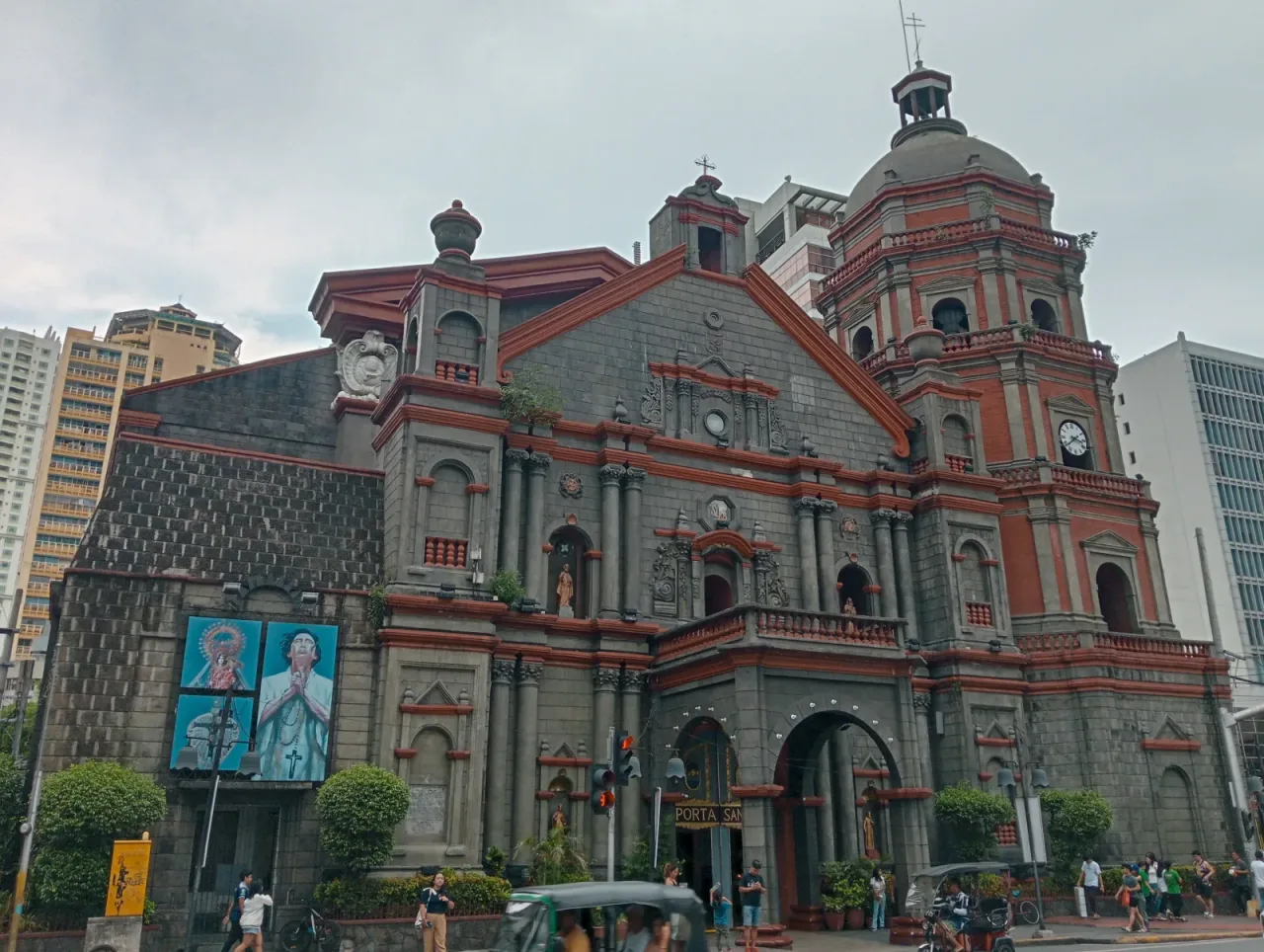
Minor Basilica and National Shrine of San Lorenzo Ruiz
The Binondo parish and national shrine that formed Saint Lorenzo Ruiz in family faith, Dominican education, altar service, work, and Rosary prayer.
- Location
- Manila, Philippines 14.6002° N · 120.9747° E
- Type
- Minor basilica, national shrine, and active parish
- Dedication
- Our Lady of the Most Holy Rosary; national shrine of Saint Lorenzo Ruiz
The parish where ordinary holiness was formed
Come to ask for the holiness of ordinary Catholic life. Lorenzo was a husband, father, clerk, altar server, and man of prayer before persecution demanded the final witness of martyrdom. The basilica's own pastoral emphasis is imitation: a good husband, a good father, a good family man, a firm Christian.
A mission, parish, and Filipino-Chinese Catholic home
Dominicans established a mission here among Manila's Chinese population in 1587, and the parish was established in 1596. That ministry matters to Lorenzo's life: he was the son of a Chinese father and a Tagala mother, educated by Dominicans and formed in the parish's Rosary and liturgical life. The buildings changed through invasion, transfer, war, and repair, so today's church should not be presented as the exact fabric Lorenzo saw. Saint John Paul II approved its elevation as a minor basilica in Lorenzo's honor in 1992. The Archdiocese of Manila identifies it as a center of devotion to the first Filipino saint.
The present facade and bell tower bear the marks of repeated rebuilding rather than a frozen sixteenth-century church. Plaza Lorenzo Ruiz opens immediately before the church, giving the basilica a civic as well as parish threshold. Inside, the proper line is from the parish dedication to Our Lady of the Most Holy Rosary toward Lorenzo's devotional memory: Rosary prayer, altar service, family formation, and fidelity belong together.
Family, parish, work, and witness
Lorenzo's martyrdom becomes legible through the ordinary life that preceded it.
Our Lady of the Most Holy Rosary
The parish dedication keeps Lorenzo's Dominican and Rosary formation visible.
A Filipino-Chinese parish
The mission to Manila's Chinese community belongs to Lorenzo's own family and formation, not merely to neighborhood branding.
A shrine of imitation
Devotion to Lorenzo asks pilgrims to imitate his fidelity as husband, father, worker, and Christian.
Spiritual Significance
Binondo should not be reduced to a Chinatown landmark. Dominican ministry among Manila's Chinese community helped shape the Catholic world in which Lorenzo, of Chinese and Tagala parentage, learned the faith. His shrine memory is therefore neither abstract nationalism nor a late addition to an old building. It is the fruit of a specific parish culture that formed a lay Catholic for holiness.
Do Not Miss
-
The parish dedication
Begin with Our Lady of the Most Holy Rosary and the devotional world that formed Lorenzo.
-
Saint Lorenzo's shrine memory
Pray for imitation in family, work, parish, and fidelity rather than treating the saint as a national symbol alone.
-
Plaza Lorenzo Ruiz
The square places the parish within the public life of Binondo.
- The Rosary and Dominican context
- The difference between Lorenzo's historical parish world and the repeatedly rebuilt present fabric
- The absence of an invented tomb or bodily relic claim
Visit Plans
-
Parish formation and lay holiness
3 ordered stopsPray with the parish's Rosary identity and ask for fidelity in ordinary family and working life.
- The parish altar and Rosary dedication
- Saint Lorenzo's devotional image
- Plaza Lorenzo Ruiz
How to Visit
Begin with the parish altar and Rosary dedication before approaching Lorenzo's image or shrine memory. Pray for spouses, parents, workers, and ordinary Catholics asked to remain faithful. Use current parish or archdiocesan sources for Masses, confessions, feast events, and access.
Visit as a parish and shrine
Schedules and feast access remain current-detail questions.
Worship and feast
- Feast observances and access can change from year to year.
Continue Your Pilgrimage
Map
Mission and parish dates follow the NHCP marker; basilica status and the pastoral emphasis on imitation follow the Archdiocese of Manila. The page does not claim that the present fabric is Lorenzo's church or that his body or relics are present.
September 23, 2026
Photo credits
- Hero. Ralff Nestor Nacor / Wikimedia Commons (CC BY-SA 4.0). Source. CC BY-SA 4.0.