
St. Paul Miki
At the end of a winter march across Japan, Paul Miki used his final breath to confess Christ and forgive those who killed him.
The Life and Witness of Paul Miki.
Paul Miki was born in Japan between 1564 and 1566 and entered the Society of Jesus. Formed as a catechist and preacher, he was preparing for priesthood when a new persecution swept missionaries and Japanese Christians into arrest.
Twenty-six prisoners—Jesuits, Franciscans, and lay Catholics, including children—were mutilated and marched hundreds of miles to Nagasaki. The ordeal was meant to frighten the growing Church into silence.
On February 5, 1597 they were fastened to crosses on Nishizaka Hill. The earliest accounts remember Paul preaching from his cross, professing that he was Japanese and Christian, and offering forgiveness to his executioners. He and the others were then killed with spears.
Pope Pius IX canonized the twenty-six martyrs in 1862. Their liturgical memorial is kept on February 6, and the hill of their death remains a Catholic place of prayer, museum study, and memory.
Paul Miki stands within the Japanese Church as a native Christian voice: formed by the Jesuits, speaking to his own people, and dying among a mixed community of religious and lay witnesses.
The cross at Nishizaka did not end his preaching. It gave the Japanese Church a native martyr whose last public act joined truth to forgiveness.
A life, in years and approximate ages.
-
c. 1564–1566BirthBorn in JapanPaul is born into a Japanese Christian family.
-
1580sYoung adultEnters the Society of JesusHe is formed as a Jesuit catechist and becomes an effective preacher to his countrymen.
-
December 1596–February 1597Early thirtiesArrested and marched to NagasakiPaul and his companions are publicly mutilated and forced on a winter journey to the execution place.
-
February 5, 1597About 31–33Martyred at NishizakaFrom the cross Paul confesses Christ and forgives his executioners before he and the company are killed.
-
June 8, 1862After deathCanonizedPope Pius IX canonizes Paul Miki and his twenty-five companions.
Dates are approximate where the surviving record is traditional or incomplete.
2 places where this witness remains visible.
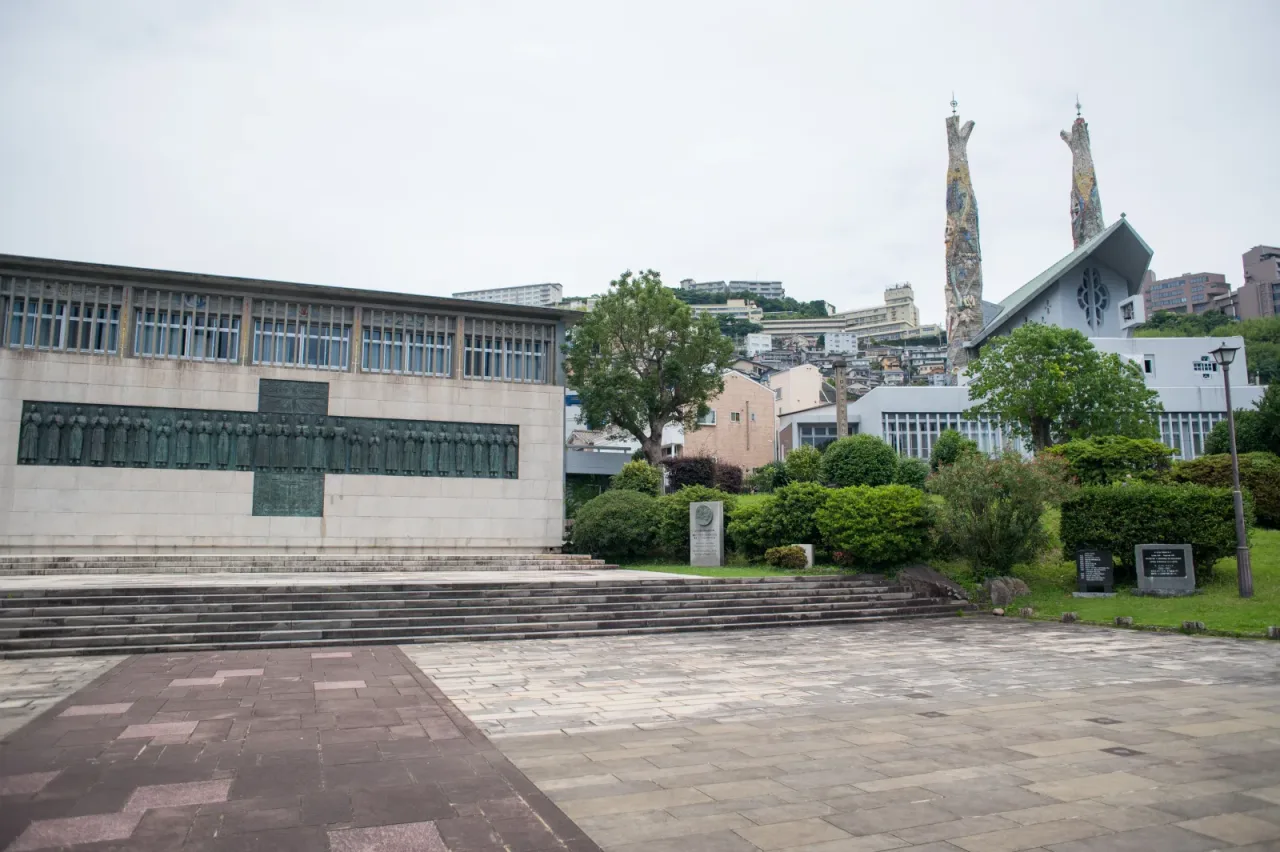
Nishizaka martyr hill
Begin at the actual execution site, visit the museum, and end in prayer before continuing to Nagasaki’s living churches.
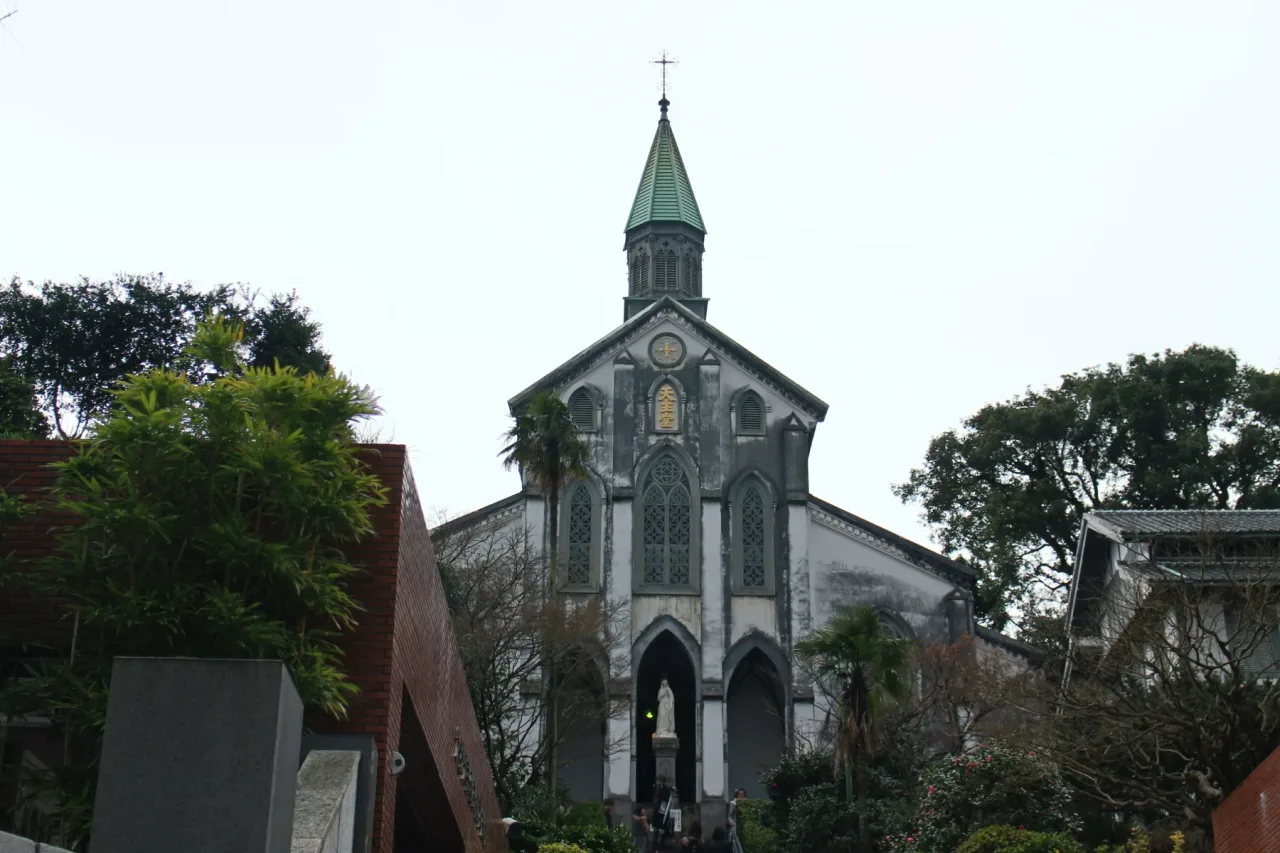
Ōura Cathedral
Two kilometers south, and dedicated to Paul Miki and his twenty-five companions. The Paris Foreign Missions Society built it in 1864 and set it facing their hill, so the martyrs were named as the patrons of the mission’s return.
Stand where the twenty-six died.
Nishizaka brings monument, museum, relic memory, and the actual martyr hill into one bounded pilgrimage.
Paul is the best-known preacher, but the pilgrimage is to twenty-six martyrs: Jesuit, Franciscan, lay, Japanese, Mexican, Spanish, and Portuguese-born.
Use Nagasaki’s churches to encounter the community that endured after the public executions.
The martyr hill and the relics of the twenty-six
The pilgrimage is anchored at Nishizaka, the hill where the twenty-six were crucified on February 5, 1597. The Jesuit-run museum keeps relics of the company, including bones identified as belonging to Paul Miki, Jacob Kisai, and John of Goto. Paul’s relic is encountered within the communion of witnesses in which he died, not in isolation from them.
Significant relics are venerated in more than one place.
Nishizaka martyr hill
The monument and museum stand at the hill where Paul Miki and his companions were crucified, and the museum preserves relics and records of Japan’s Catholic martyrs.
- Bones identified as relics of Saint Paul Miki
- Bones identified as relics of Saint Jacob Kisai and Saint John of Goto
- A piece of silk stained with the blood of one of the Twenty-Six Martyrs
Read the names before isolating one saint from the company.
Saints Connected to Paul Miki
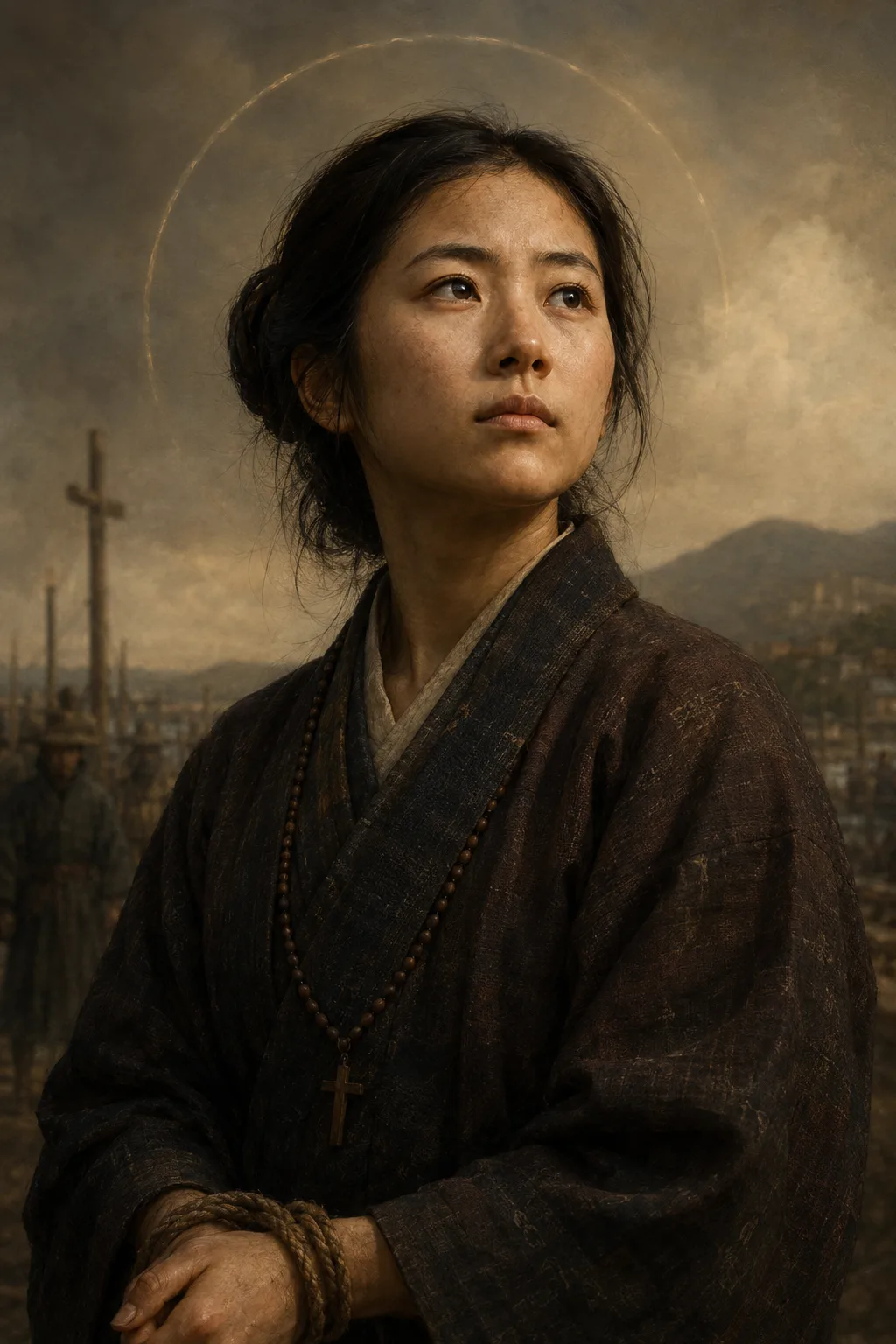
Kept on February 6.
On February 6 the Church keeps the memorial of Saint Paul Miki and his twenty-five companions together. Their common feast preserves the company in which they confessed Christ and died.
At Nishizaka, pray before the names and images of all twenty-six martyrs before entering the museum and venerating the relics kept there.
Photo credits
- Saint page. Eternal Roam devotional rendering. Source. Eternal Roam commissioned generation.
- Nishizaka martyr hill. BigCheddah / Wikimedia Commons. Source. CC BY-SA 4.0.
- Ōura Cathedral. Suicasmo / Wikimedia Commons (CC BY-SA 4.0). Source. CC BY-SA 4.0.