
St. Willehad
of Bremen
Driven from one mission after another, Willehad returned to the lower Weser and laid a Christian foundation beneath the later city of Bremen.
The Life and Witness of Willehad of Bremen.
Willehad was born in Northumbria before the middle of the eighth century and formed in the English Church. He crossed to the Continent to preach among Frisians and Saxons, working in a landscape where conversion, Frankish conquest, and local resistance were dangerously entangled.
His first missions met violence, and he narrowly escaped death. Charlemagne later entrusted him with work in the lower Weser region, but the Saxon uprising of 782 destroyed churches and killed several of his companions. Willehad fled, traveled to Rome, and spent a period at Echternach copying books and waiting.
After the rebellion subsided, he returned. Consecrated bishop at Worms in 787, Willehad established his seat at Bremen and dedicated a wooden church to Saint Peter on November 1 789. It was the first cathedral church on the site where Saint Peter’s Cathedral still stands.
He died of fever at Blexen one week after the dedication, on November 8 789. His body was later translated to Bremen, and devotion grew around his grave. Medieval accounts of miracles were collected by Saint Ansgar.
The relics were lost during the Reformation. The modern pilgrim therefore comes to Saint Peter’s Cathedral for the historical foundation, the memory of the first bishop, and the Christian continuity of the site—not for a surviving bodily shrine.
Willehad’s life was a succession of departures and returns. Bremen became his lasting answer: a bishop’s seat and a church built after the mission had nearly vanished.
A life, in years and approximate ages.
-
before 745BirthBorn in NorthumbriaWillehad is born and formed in the Northumbrian Church.
-
c. 770AdultCrosses to the Frisian missionHe begins preaching on the Continent among Frisians and later Saxons.
-
782AdultMission destroyed in revoltThe Saxon uprising kills companions and destroys churches; Willehad escapes and later withdraws to Echternach.
-
July 13, 787AdultConsecrated bishopWillehad is consecrated and establishes his episcopal seat at Bremen.
-
November 1–8, 789AdultDedicates the church and diesHe dedicates Bremen’s first cathedral church on November 1 and dies at Blexen one week later.
-
November 8, 860After deathTranslated into the rebuilt Bremen cathedralAfter an earlier translation from Blexen to Bremen, Willehad's body is solemnly translated into the rebuilt cathedral under Archbishop Ansgar.
-
16th centuryAfter deathRelics lost during the ReformationThe bodily relics disappear during the Reformation; the cathedral remains a place of historical memory rather than an intact shrine.
Dates are approximate where the surviving record is traditional or incomplete.
One place where this witness remains visible.
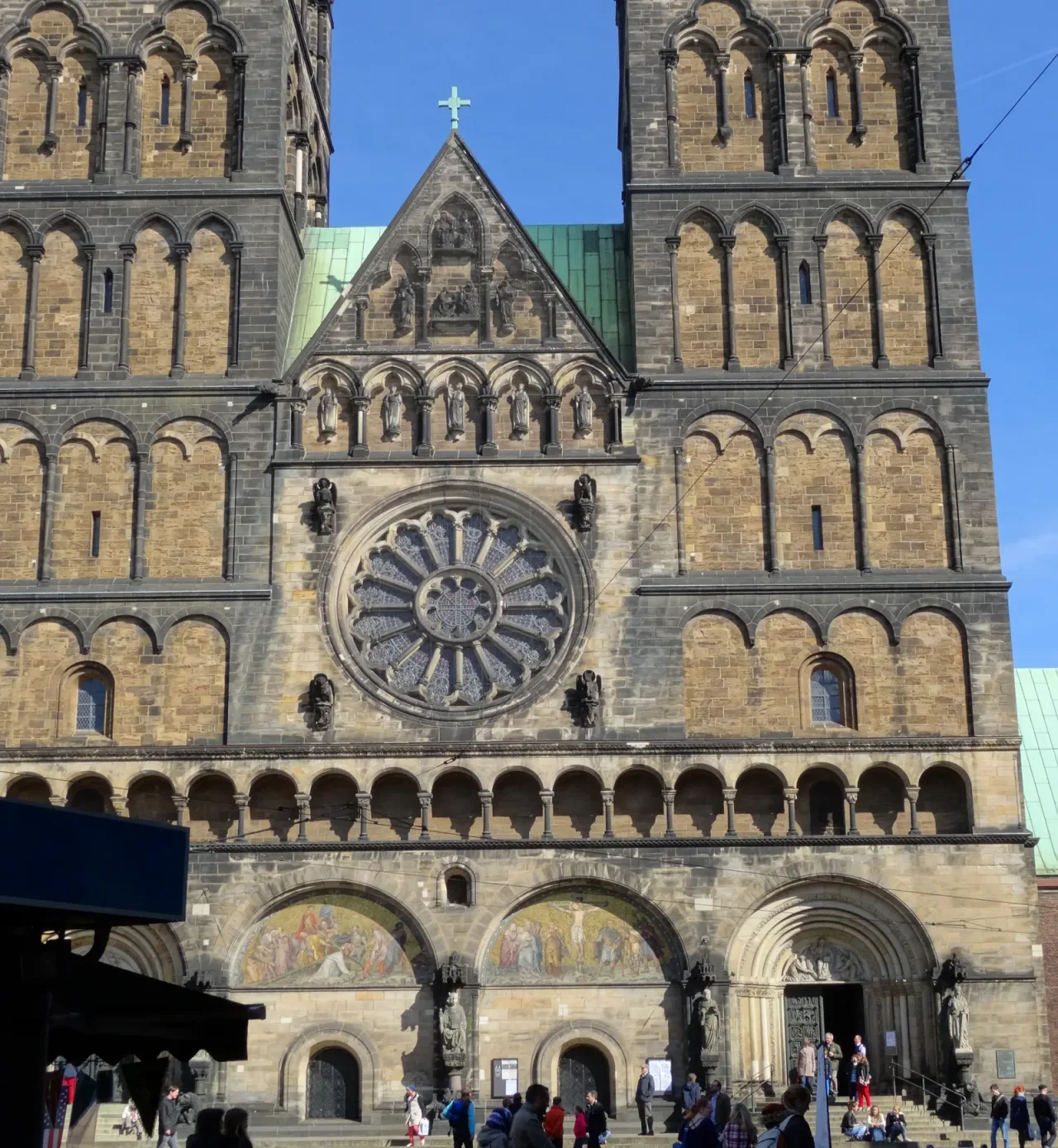
Saint Peter’s Cathedral
Read the official building history and pray for the renewal of Christian witness in northern Europe.
Begin beneath the present cathedral.
The church is later, but its official history carries the site back to Willehad’s first wooden sanctuary of 789.
The present Romanesque and Gothic fabric is not Willehad’s church. It stands in the same cathedral tradition on the same urban height.
His body was translated to Bremen, but the relics were lost during the Reformation. Do not present the cathedral as an intact tomb shrine.
A lost relic tradition and a living cathedral site
Willehad was first buried at Blexen, then translated to Bremen; a further translation into the rebuilt cathedral under Ansgar is dated to November 8, 860. His medieval grave drew pilgrims, but the relics were lost during the Reformation. Saint Peter’s Cathedral is therefore a place of episcopal and devotional memory, not a surviving bodily shrine.
The tradition does not preserve a public relic site with confidence.
Saint Peter’s Cathedral
The cathedral’s official history begins with the wooden church Willehad dedicated in 789; the later veneration at his grave belonged to this cathedral tradition.
- Medieval relics lost during the Reformation
Visit for the episcopal and cathedral memory, without expecting a surviving tomb or reliquary.
Saints Connected to Willehad of Bremen
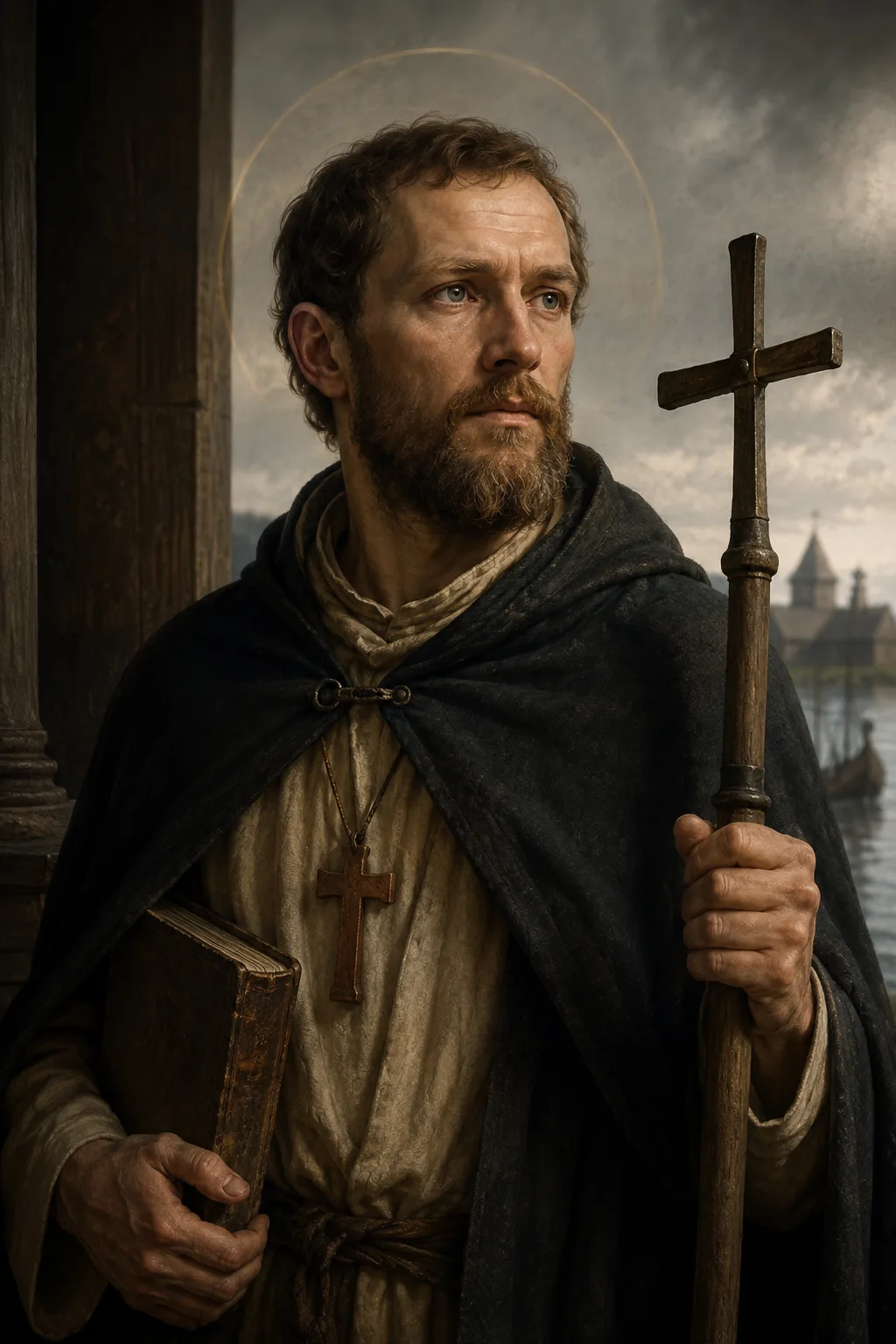
Kept on November 8.
Saint Willehad's feast is kept on November 8, the anniversary of his death at Blexen in 789. In the Catholic Church of the Bremen region, his memorial recalls the first bishop and the missionary foundation from which the local Church grew.
At Saint Peter's Cathedral, pray for fidelity in missionary work and remember that the present church preserves Willehad's episcopal and cathedral history, not surviving bodily relics.
Photo credits
- Saint page. Eternal Roam devotional rendering. Source. Eternal Roam commissioned generation.
- Saint Peter’s Cathedral. BremerDom Westfassade. Godewind / Wikimedia Commons. Source. CC BY-SA 3.0.