
St. Ninian
At Whithorn, an ancient Christian community and a beloved missionary saint meet within a history that deserves both confidence and care.
The Life and Witness of Ninian.
Ninian is the first named missionary saint attached to Scotland in a surviving written source. Bede, writing in 731, described a bishop called Ninian who had been instructed at Rome, built a stone church dedicated to Saint Martin at Candida Casa, and preached among the southern Picts. That account made Whithorn the center of Ninian's memory, but it was written centuries after the period in which the saint is traditionally placed.
The archaeology is both rich and cautious. Excavation at Whithorn has revealed an important Christian community, burials, inscriptions, trade, and ecclesial life from the early medieval centuries. It confirms that this was no invented sacred place. It does not, by itself, prove every detail later told about Ninian, including a fourth-century date, travel to Rome, friendship with Saint Martin of Tours, or the precise extent of his mission.
Later medieval writers expanded the story. The most influential Life was written by Aelred of Rievaulx in the twelfth century, when Whithorn's cathedral priory and shrine were growing in importance. Modern scholarship has also asked whether devotion to Ninian absorbed memories associated with a saint called Uinniau or Finnian and how Northumbrian churchmen shaped the tradition. These questions do not erase the saint from Catholic devotion. They teach the pilgrim to distinguish Bede, archaeology, medieval hagiography, and received local memory.
By the later Middle Ages, Ninian's shrine at Whithorn was one of Scotland's great pilgrim destinations, visited by kings and ordinary people. The Reformation broke the shrine's institutional life, but the pilgrimage did not disappear from Catholic memory. Pilgrims still walk toward Saint Ninian's Cave and gather for Mass near the shore, while those unable to manage the rough route can remain in Whithorn.
Ninian therefore matters as both saint and threshold. His name stands at the beginning of Scotland's recorded Christian story, while Whithorn shows that the Gospel had already taken root in a complex community whose full history no single biography can contain.
Ninian's legacy is not the story of one bishop single-handedly converting Scotland. It is the durable Catholic memory of mission from Whithorn, joined to an early Christian community whose graves, stones, shrine, and pilgrim road still call the Church to gratitude.
A life, in years and approximate ages.
-
traditionally c. 400AdultMission remembered at Candida CasaLater tradition places Ninian at a stone church called Candida Casa in Galloway and connects him with mission among the southern Picts.
-
5th to 7th centuriesAfter deathAn early Christian community flourishes at WhithornBurials, inscriptions, imported goods, and ecclesial archaeology attest a significant Christian center at Whithorn.
-
731After deathBede records NinianBede names Ninian, Candida Casa, a dedication to Saint Martin, and mission among the southern Picts.
-
12th centuryAfter deathThe medieval shrine and Life take shapeWhithorn develops as a Premonstratensian cathedral priory, and Aelred of Rievaulx writes an influential Life of Ninian.
-
Middle AgesAfter deathPilgrims cross Scotland to WhithornRoyal and popular pilgrims make Ninian's shrine one of the most important destinations in medieval Scotland.
-
modern periodAfter deathThe national pilgrimage continuesScottish Catholics continue pilgrimage toward Saint Ninian's Cave and gather for Mass under the direction of the Diocese of Galloway.
Dates are approximate where the surviving record is traditional or incomplete.
One place where this witness remains visible.
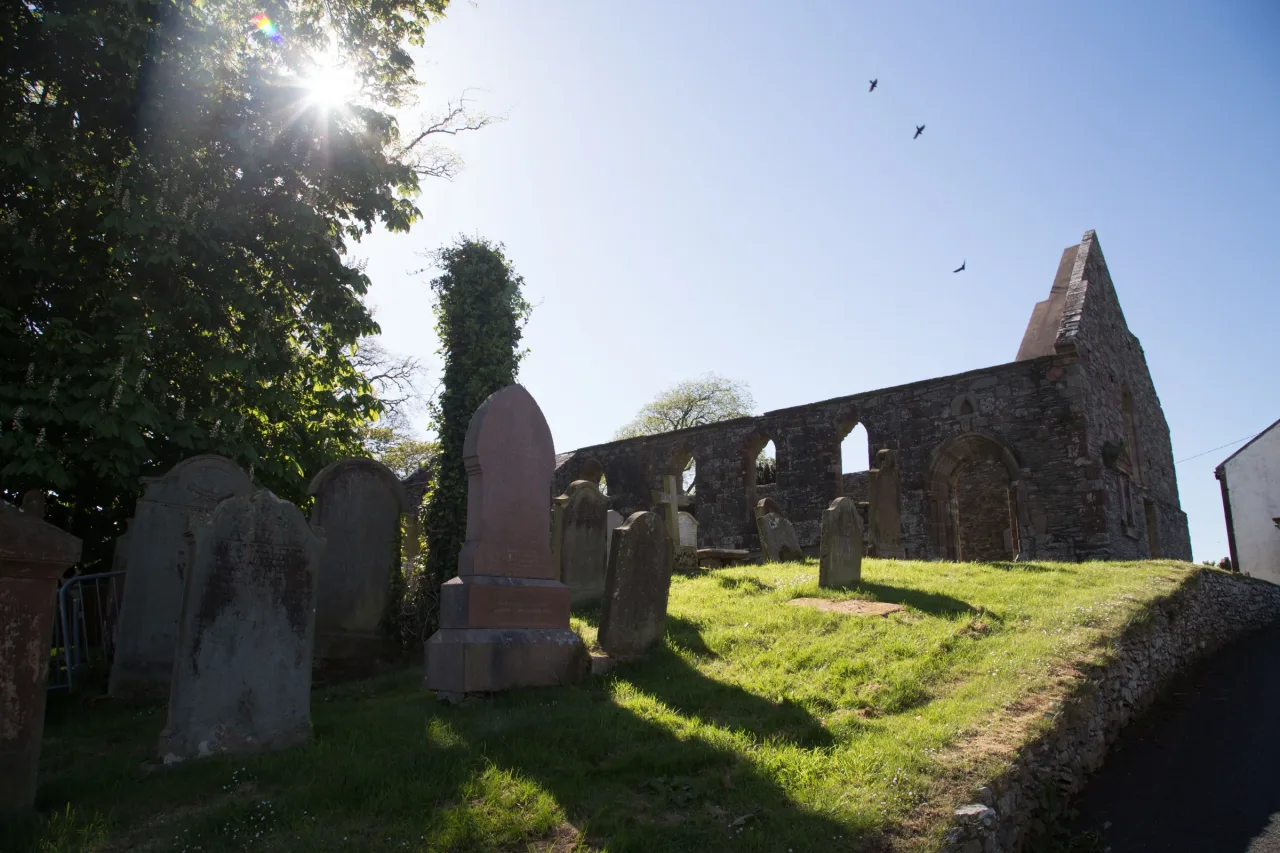
Whithorn Priory and Saint Ninian's Shrine
Begin with the museum, priory remains, and shrine crypts before deciding whether conditions permit the separate cave walk.
Let Whithorn be ancient without making every tradition certain.
Bede, archaeology, medieval hagiography, and present pilgrimage each carry a different kind of evidence.
Whithorn is an archaeologically attested early Christian center and a documented medieval shrine. That is the firm ground.
Bede wrote in 731, centuries after the period traditionally assigned to Ninian. His account is early for the veneration, not contemporary with the saint.
Rome, Saint Martin, miracles, and detailed biography come through medieval hagiography and should be identified accordingly.
The cave route is rough and exposed. The Church provides an alternative in Whithorn when weather or mobility makes the shore walk unsuitable.
A medieval shrine whose bodily custody remains uncertain
Medieval pilgrims venerated Ninian at Whithorn, and the surviving crypts preserve the setting of that shrine.
The exact burial place and the survival of authenticated bodily relics are not established. The pilgrimage rests on sacred memory, archaeology, and continuing devotion rather than on a claim of complete relic custody.
The burial or relic tradition is not securely identified.
Whithorn Priory and Saint Ninian's Shrine
The priory crypts preserve the setting of the medieval shrine at the center of his veneration.
- Medieval shrine site; bodily custody uncertain
Pray in the crypts when open, remembering that what endures at Whithorn is the place and the memory rather than the relics.
Saints Connected to Ninian
-
Saint Andrew the Apostle
Scotland's patron apostle, whose medieval national shrine at St Andrews belongs to a later sacred geography. -
Saint Columba of Iona
A better documented sixth-century missionary abbot whose Iona community carried the Gospel through northern Britain. -
Saint Margaret of Scotland
The medieval queen whose Dunfermline foundation and shrine reveal another chapter of Scottish Catholic memory.
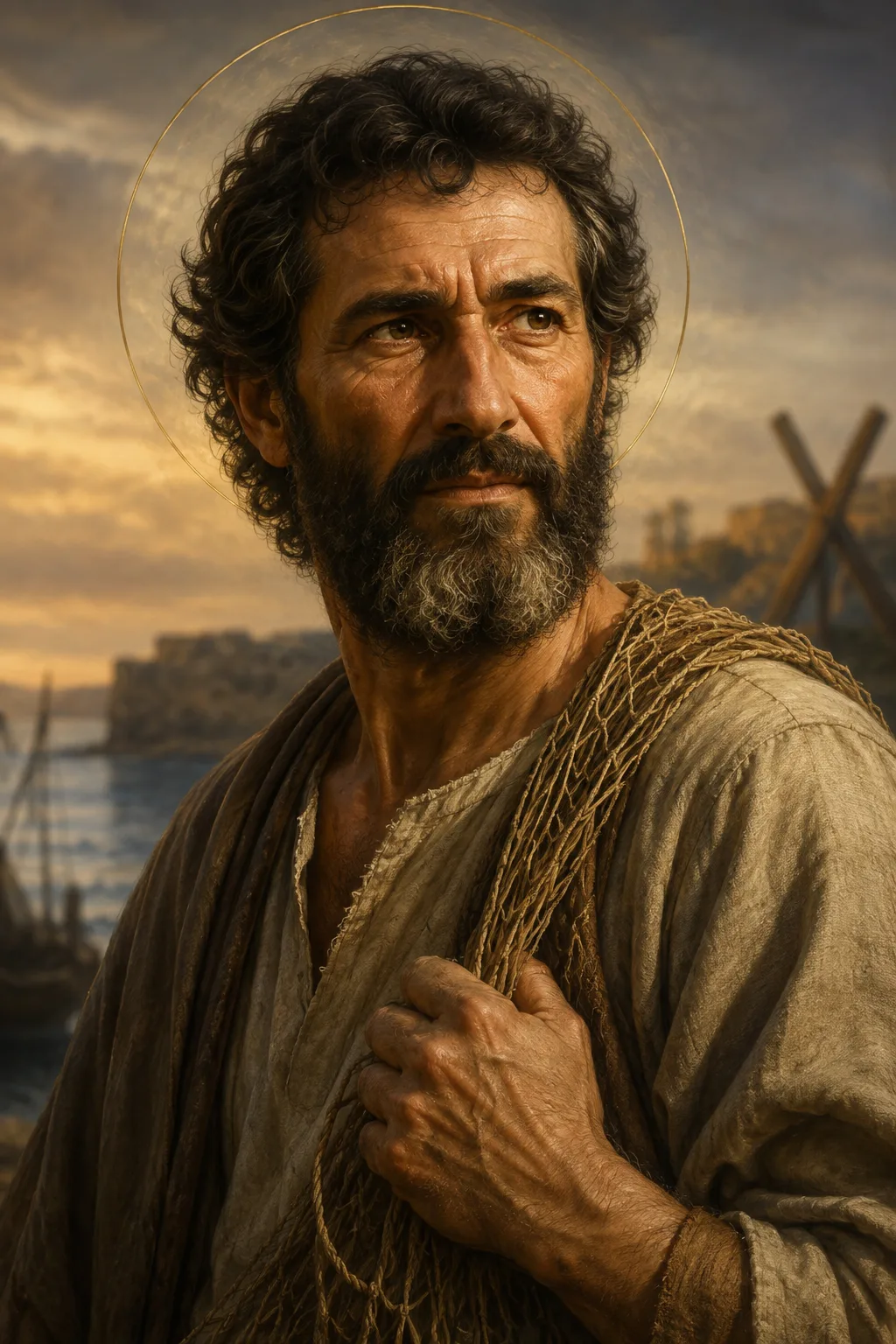


Kept on September 16.
September 16 is kept as Saint Ninian's feast in Scotland.
The national pilgrimage is scheduled separately by the Diocese of Galloway and may fall near rather than on the feast. Use the current diocesan notice.
Photo credits
- Saint page. Eternal Roam devotional rendering. Source. Eternal Roam commissioned generation.
- Whithorn Priory and Saint Ninian's Shrine. Tom Parnell / Wikimedia Commons. Source. CC BY-SA 4.0.