
St. Hildegard
of Bingen
A Benedictine abbess whose visions, music, and theology lit the Rhine Valley and the whole medieval Church.
A twelfth-century Benedictine abbess whose visions and music are now read across the universal Church
Hildegard of Bingen was received as an oblate at Disibodenberg at about age eight and entrusted to the consecrated woman Jutta of Sponheim. From that enclosed life she would eventually emerge as one of the most remarkable figures in the history of the Church.
From childhood, Hildegard received what she described as visions of living light, not dreams, but waking experiences of illumination that she kept largely to herself for decades. In her early forties, after receiving what she understood as divine command, she began recording her visions with the help of a monk named Volmar. The result was Scivias (Know the Ways), a monumental visionary work completed over ten years.
She was also a composer. The Symphonia, her corpus of sacred songs, and the morality play Ordo Virtutum are among the most distinctive sacred compositions of the medieval Church. Her music belongs to the Latin liturgical world while carrying a melodic voice unmistakably her own. Listening before reading is often the most direct way into her world.
Hildegard corresponded with popes, emperors, abbots, and ordinary clergy across Europe. She preached publicly, unusual for a woman in her century, and undertook preaching tours in her sixties and seventies along the Rhine. She was declared a Doctor of the Church by Pope Benedict XVI in 2012, only the fourth woman to receive the title.
Hildegard's reliquary is venerated in the parish and pilgrimage church of Saint Hildegard and Saint John the Baptist in Eibingen, below the modern abbey that continues her Benedictine life. Her feast day is September 17.
A life, in years and approximate ages.
-
c. 1098BirthBirth in Bermersheim vor der HöheHildegard is born, the tenth child of a noble family. From early childhood she reports visions of light.
-
c. 1106About 8Received as an oblate at DisibodenbergHildegard is received as an oblate and entrusted to Jutta of Sponheim at the monastery of Disibodenberg.
-
1136About 38Becomes AbbessAfter Jutta's death, Hildegard is elected abbess of the community. Her authority and her visions begin to reach a wider audience.
-
c. 1141–1151About 42–53Writing SciviasAfter receiving what she understood as divine command, Hildegard begins recording her visions. With the help of a monk named Volmar, she completes Scivias over ten years.
-
c. 1147–1150About 49–52Foundation of Rupertsberg MonasteryHildegard moves her community to a new monastery on the Rupertsberg near Bingen, a decision requiring years of struggle against the Disibodenberg monks who profited from the community's presence.
-
1165About 67Founds the Eibingen communityHildegard establishes a second women's monastery at Eibingen and crosses the Rhine regularly to guide the community.
-
1179About 81Death at RupertsbergHildegard dies on September 17 at Rupertsberg, after a long life of visionary work, composition, correspondence, and preaching. Contemporary accounts describe lights appearing in the sky at her death.
-
May 10, 2012After deathEquivalent canonizationPope Benedict XVI extends Hildegard's liturgical veneration to the universal Church by equivalent canonization.
-
October 7, 2012After deathDeclared Doctor of the ChurchPope Benedict XVI proclaims Hildegard a Doctor of the Universal Church.
Dates are approximate where the surviving record is traditional or incomplete.
3 places where this witness remains visible.
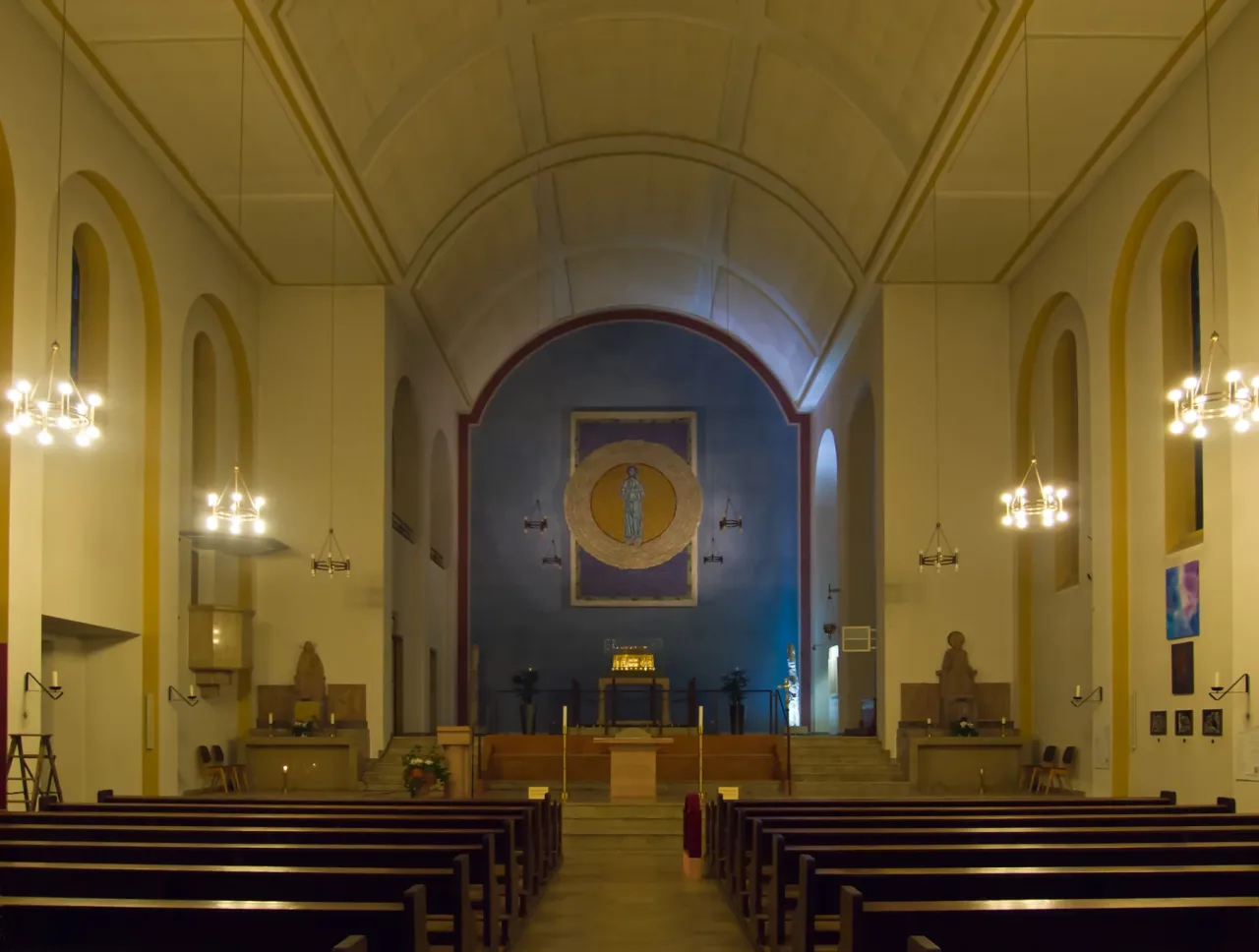
Parish and Pilgrimage Church of Saint Hildegard and Saint John the Baptist
The historic parish and pilgrimage church below the abbey keeps Hildegard's reliquary and carries it in procession on her September 17 feast.
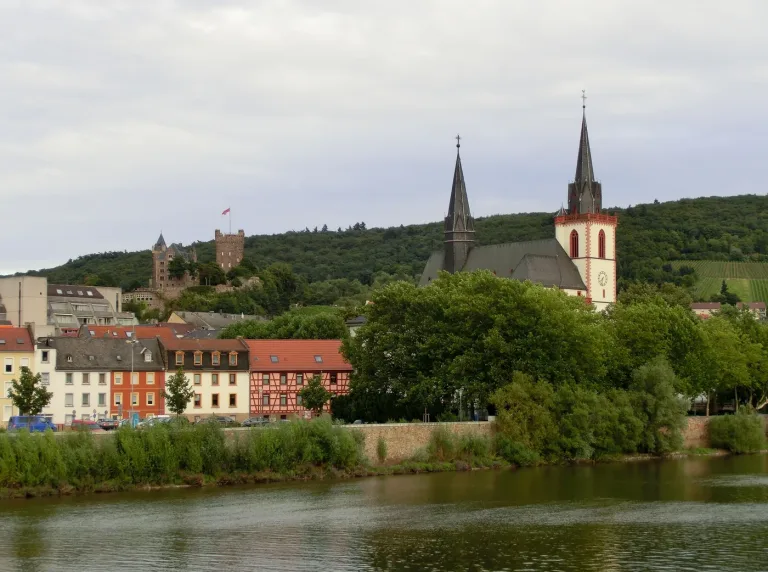
Bingen am Rhein
The town at the confluence of the Nahe and Rhine where Hildegard built her Rupertsberg monastery.
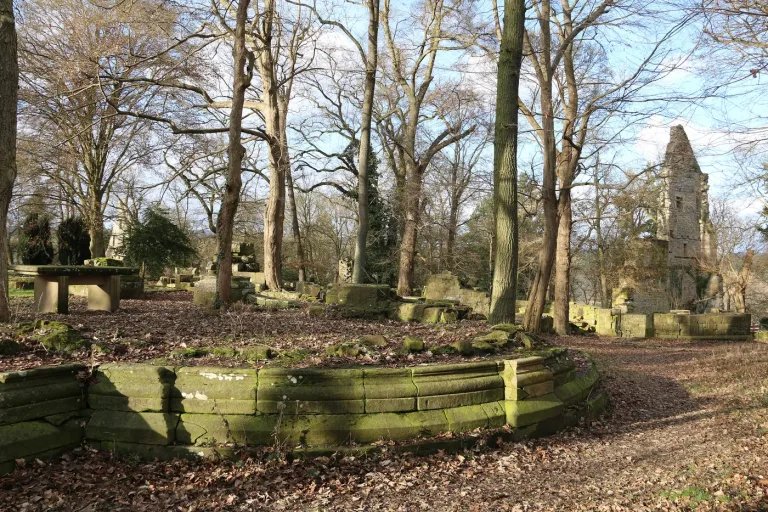
Disibodenberg
The monastery ruins where Hildegard lived for over thirty years and wrote the first part of Scivias.
Hildegard's reliquary in the Eibingen pilgrimage church
The parish and the Abbey of Saint Hildegard identify the reliquary's home as the parish and pilgrimage church of Saint Hildegard below the abbey. The gilded shrine contains Hildegard's bones and is carried through Eibingen on September 17. The nearby modern abbey is the living Benedictine successor community, not the reliquary's custody site.
A principal relic site is named, with other fragments or reliquaries noted separately.
Reliquary of Saint Hildegard
- Bones of Saint Hildegard in the gilded Hildegardschrein
Confirm parish access before traveling specifically for the reliquary. Continue uphill to the modern abbey for the Divine Office and the life of the present Benedictine community.
Kindred witnesses
-
Benedictine foundation
Saint Benedict of Norcia
The father of the monastic tradition within which Hildegard lived and grew. -
Sacred music
Saint Cecilia
The patron of sacred music, a natural companion for the woman who composed the Symphonia. -
Latin liturgical inheritance
Saint Gregory the Great
The pope whose liturgical and pastoral legacy helped shape the Latin Church Hildegard inherited. -
Fellow woman Doctor of the Church
Saint Catherine of Siena
Another woman declared Doctor of the Church, who also wrote, prophesied, and corresponded with popes and rulers.

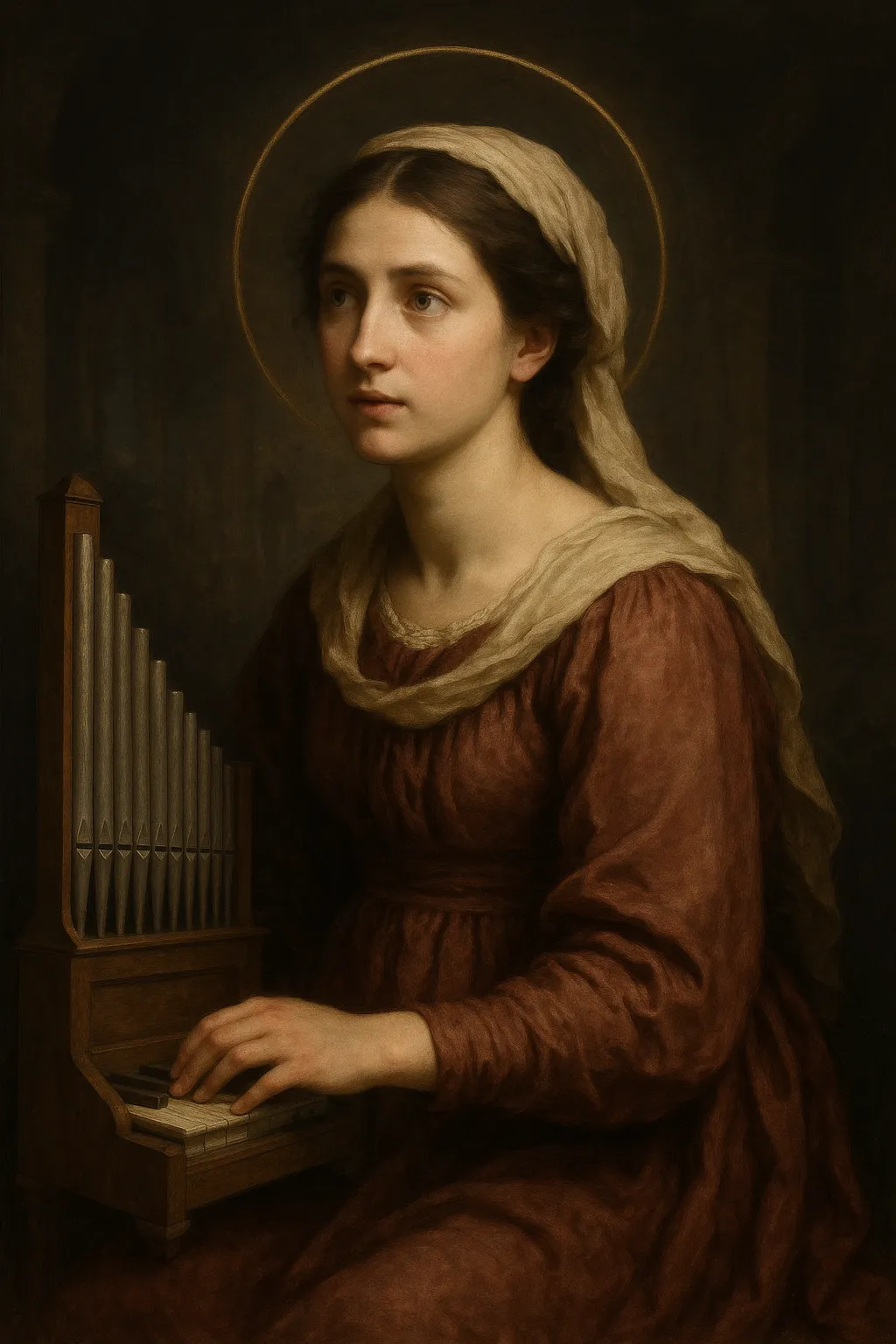

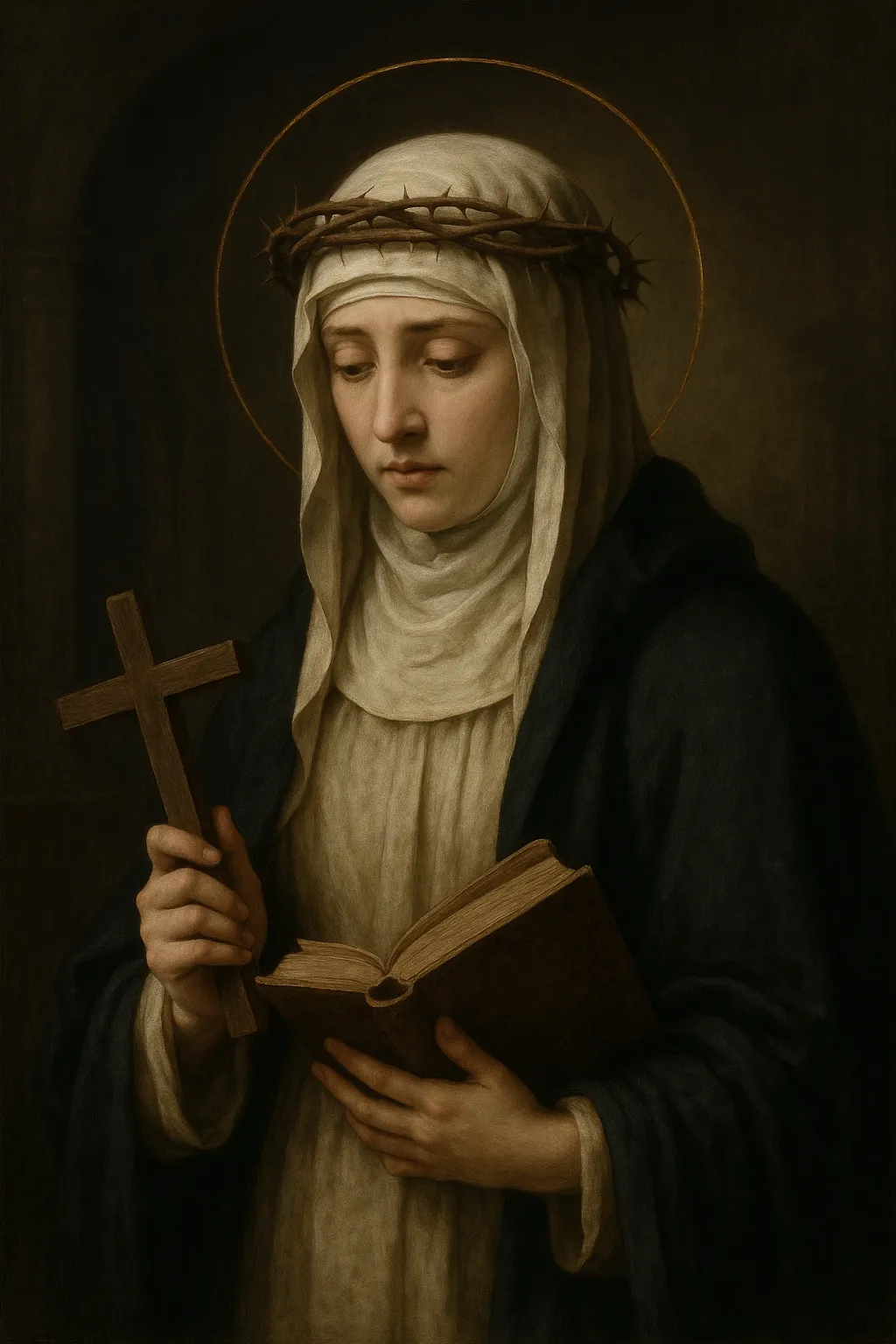
Kept on September 17.
September 17 is Hildegard's feast day. Her reliquary is carried in procession from the parish and pilgrimage church in Eibingen, while the nearby Abbey of Saint Hildegard continues her Benedictine inheritance.
Venerate the reliquary in the parish church of Saint Hildegard and Saint John the Baptist, then visit the active Abbey of Saint Hildegard above Eibingen. The town of Bingen and the Rhine Valley preserve the wider landscape of her ministry.
Photo credits
- Parish and Pilgrimage Church of Saint Hildegard and Saint John the Baptist. Pfarrkirche St Hildegard Eibingen Innenansicht. Pedelecs / Wikimedia Commons (CC BY-SA 3.0). Source. CC BY-SA 3.0.
- Bingen am Rhein. Basilika St. Martin Burg Klopp Bingen 2012. Felix König, CC BY 3.0, via Wikimedia Commons. Source. CC BY 3.0.
- Disibodenberg. Disibodenberg mit Ruine. Viewcatcher, CC BY-SA 3.0, via Wikimedia Commons. Source. CC BY-SA 3.0.