
St. Charles de Foucauld
A French officer who became a hermit priest in the Algerian desert and was canonized in 2022.
As soon as I believed that there was a God, I understood that I could do nothing other than live for Him alone.
Charles de Foucauld, letter to Henry de Castries, 1901 Well-attested
The Life and Witness of Charles de Foucauld.
Charles de Foucauld spent the last fifteen years of his life in the Algerian Sahara, at Beni Abbes and then at Tamanrasset, living as a hermit priest among the Tuareg. He founded nothing in his lifetime, made no converts he would have counted, and wrote no famous book. What he did was stay, adore the Blessed Sacrament, learn the language of his neighbours, and be available to them. He was canonized in 2022.
Born at Strasbourg in 1858 and orphaned young, Charles was a cavalry officer and then an explorer of Morocco, and by his own account a man who had abandoned the faith of his childhood. The hospitality and the visible prayer of the Muslims he met among them unsettled him. He came back to the Church in 1886 through the priest Henri Huvelin, and later said that as soon as he believed there was a God, he understood he could do nothing but live for Him alone.
He became a Trappist, then left for a life still poorer, serving as a servant to Poor Clares at Nazareth. The hidden life of Jesus at Nazareth, the thirty years before the public ministry, became the pattern he wanted: ordinary work, obscurity, and adoration. He was ordained priest in 1901 and went to the Sahara, first to Beni Abbes and then south to Tamanrasset and the high hermitage of the Assekrem.
He learned Tamahaq, compiled a dictionary and collected the poetry of the Tuareg, and kept the Blessed Sacrament in a place where it had never been reserved. He hoped others would join him and none did while he lived. He was shot outside his hermitage on December 1, 1916. The spiritual families that now look to him were all founded after his death.
Charles de Foucauld is a saint of Eucharistic adoration, the hidden life of Nazareth, and a friendship with Muslim neighbours that grew out of his life in Christ rather than standing in for it.
A life, in years and approximate ages.
-
1858BirthBirth at StrasbourgCharles de Foucauld is born into an aristocratic family at Strasbourg. Both his parents die before he is six.
-
1883-1884About 25 to 26Exploration of MoroccoDisguised as a Jewish traveller, he crosses Morocco and produces a reconnaissance that wins him a gold medal from the Geographical Society. The faith of the people he travels among unsettles his own unbelief.
-
1886About 28Return to the faithAt Saint-Augustin in Paris he asks the priest Henri Huvelin for instruction; Huvelin tells him to kneel and make his confession. He receives communion the same hour.
-
1897-1900About 39 to 42NazarethAfter years as a Trappist he leaves for a poorer life still, working as a servant to the Poor Clares at Nazareth. The hidden life of Jesus becomes the pattern of his own.
-
1901About 43Ordination and Beni AbbesOrdained priest, he goes to Beni Abbes in the Algerian Sahara and builds a small hermitage and chapel where the Blessed Sacrament can be reserved.
-
1905-1916About 47 to 58Tamanrasset and the AssekremHe settles among the Tuareg at Tamanrasset and in the high hermitage of the Assekrem, learns Tamahaq, compiles its dictionary and poetry, and keeps a life of adoration and availability.
-
191658Death at TamanrassetOn December 1 he is taken from his hermitage by an armed band and shot. He had gathered no community and made no converts.
-
1929After deathHis body is brought to El GoleaHis body is translated from Tamanrasset to El Golea, now El Menia, and laid in the cemetery beside the church of Saint Joseph, where the Diocese of Laghouat-Ghardaia states that it has rested ever since.
-
2022After deathCanonized by Pope FrancisPope Francis canonizes him in Saint Peter's Square on May 15, a little over a century after his death in the Sahara.
Dates are approximate where the surviving record is traditional or incomplete.
One place where this witness remains visible.
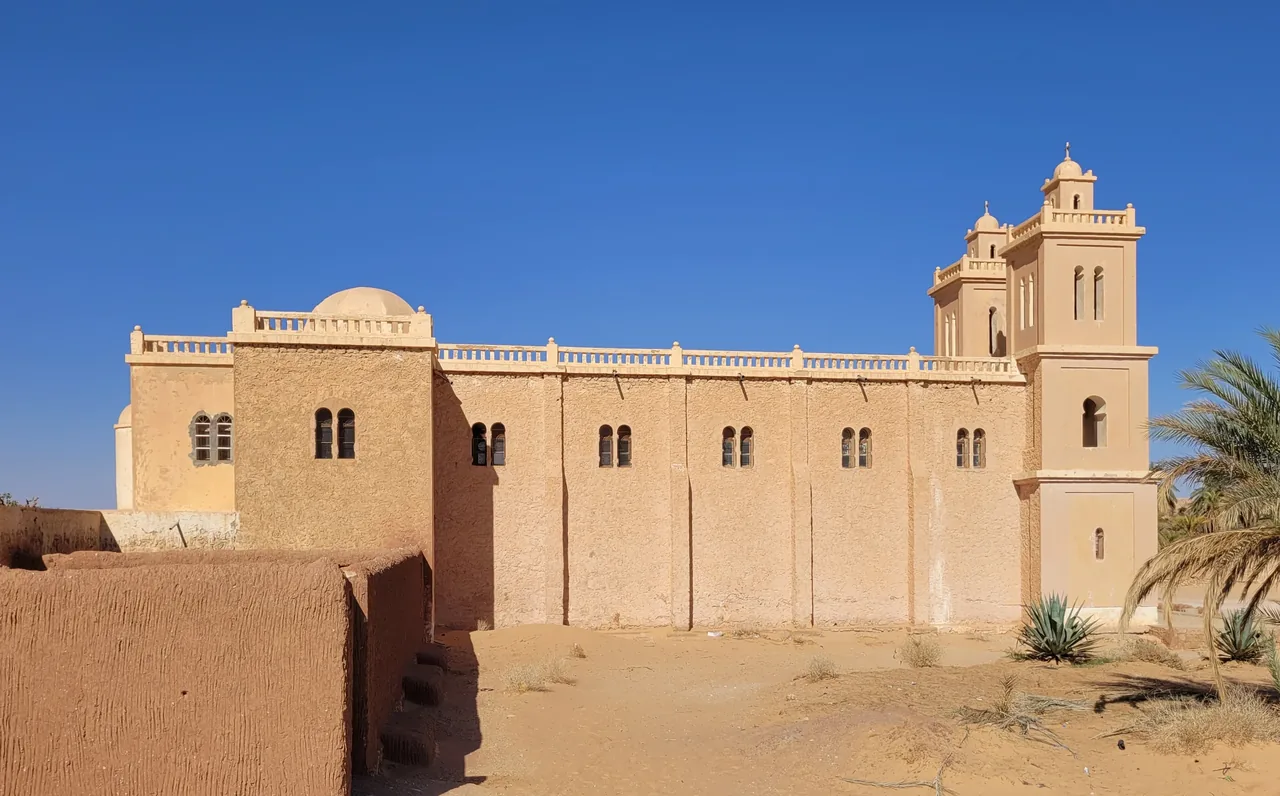
The tomb of Saint Charles de Foucauld, El Menia
His body was brought here in 1929 and lies in the cemetery beside the church of Saint Joseph. The Diocese of Laghouat-Ghardaia names it as a place of pilgrimage.
Where the relics are venerated.
Charles de Foucauld was killed at Tamanrasset in 1916. Since 1929 his body has rested at El Menia, the former El Golea, in the cemetery beside the church of Saint Joseph, as the Diocese of Laghouat-Ghardaia states. The diocese describes the traces of his presence at Beni Abbes, Tamanrasset and the Assekrem as making its territory a place of spiritual pilgrimage. All of these lie deep in the Algerian Sahara, where travel is restricted; the journey belongs to the diocese to advise on, not to an itinerary.
A principal relic site is named, with other fragments or reliquaries noted separately.
The tomb of Saint Charles de Foucauld, El Menia
His body was brought here in 1929 and lies in the cemetery beside the church of Saint Joseph. The Diocese of Laghouat-Ghardaia names it as a place of pilgrimage.
- The body of Saint Charles de Foucauld
Deep Sahara, roughly a thousand kilometres south of Algiers. Travel in southern Algeria is subject to permissions that change. Write to the diocese before making any plan and consult current official travel advice.
Saints Connected to Charles de Foucauld

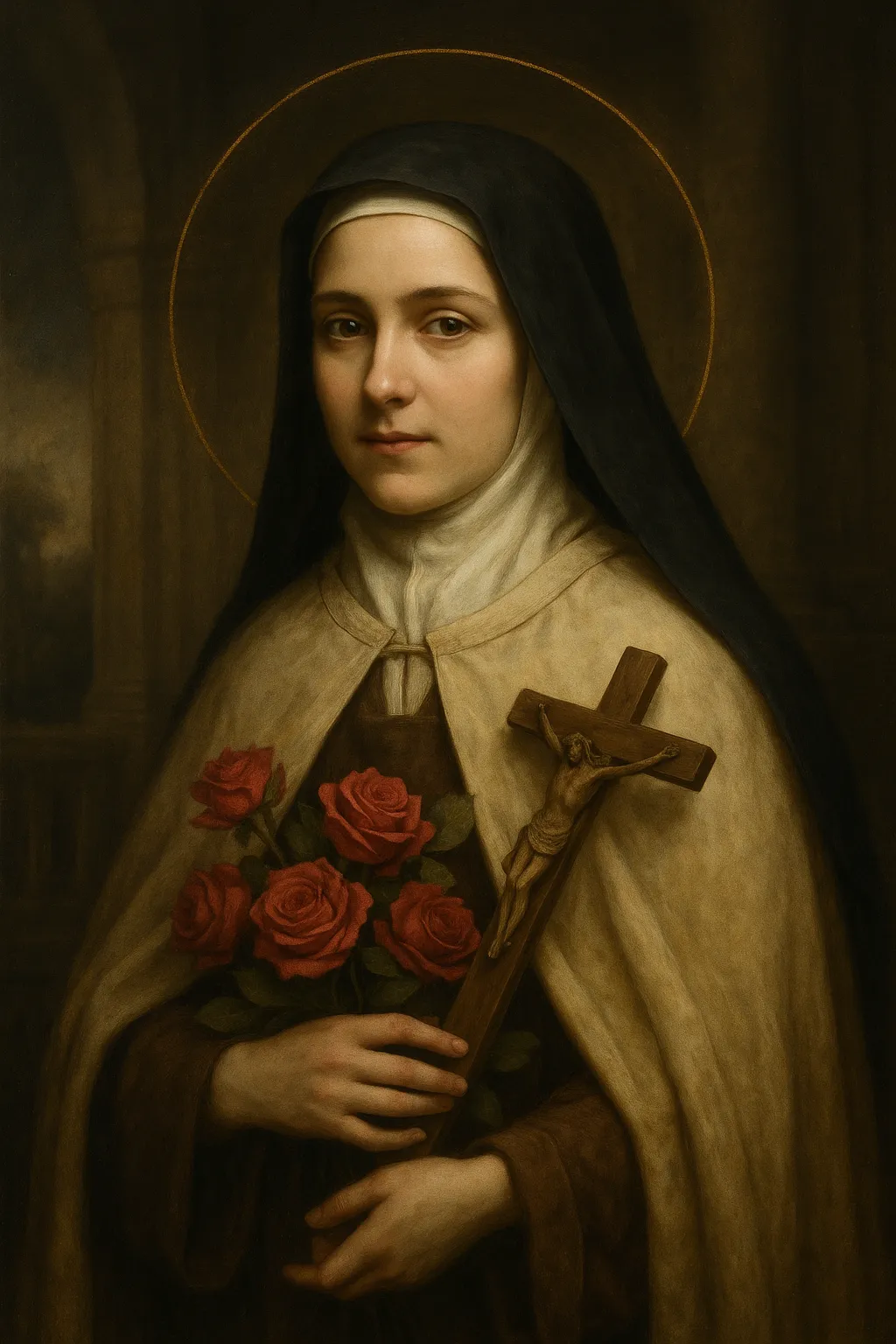
Kept on December 1.
December 1 is his feast, the day he was killed at Tamanrasset in 1916. The spiritual families that trace themselves to him, the Little Brothers and Little Sisters of Jesus among them, keep the day, as does the Church in Algeria.
His tomb is at El Menia in the Algerian Sahara, in the cemetery beside the church of Saint Joseph. Southern Algeria carries travel restrictions and the journey should be arranged through the Diocese of Laghouat-Ghardaia rather than independently.
Photo credits
- Saint page. Anonymous, public domain, via Wikimedia Commons. Converted to WebP by Eternal Roam. Public Domain.
- The tomb of Saint Charles de Foucauld, El Menia. Bernard Gagnon, CC BY 4.0, via Wikimedia Commons. Source. CC BY 4.0.