
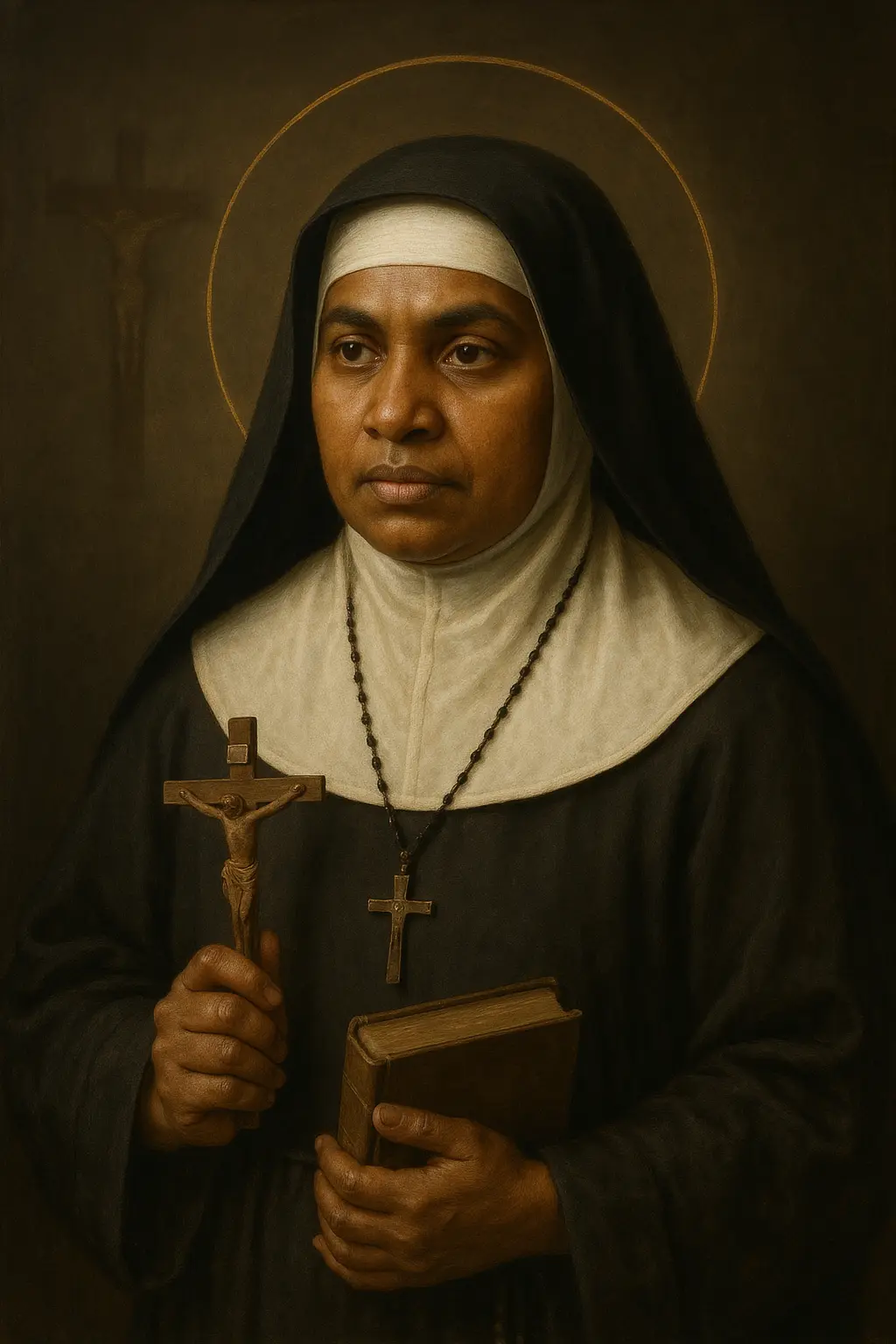
St. Bernadette Soubirous
A poor French girl whose simple, steady testimony opened the world to the apparitions of Lourdes.
Que soy era Immaculada Councepciou: I am the Immaculate Conception.
The Lady at Massabielle, March 25, 1858, in Bernadette's testimony to the canonical inquiry Documented
The girl of Lourdes whose testimony gave the Church one of its clearest Marian shrines
Bernadette Soubirous was born to a struggling miller's family in Lourdes, in the foothills of the French Pyrenees. In the winter and spring of 1858, when she was fourteen, the Blessed Virgin Mary appeared to her eighteen times at the grotto of Massabielle. The Church has since recognized these apparitions as worthy of belief, and Lourdes has become one of the great Marian pilgrimage shrines of the Catholic world.
The Soubirous family was poor enough that they had lost the Boly Mill and were living in a single damp room in a former prison, the Cachot. Bernadette was small, asthmatic, illiterate in French, and spoke Occitan at home. On February 11, 1858, while gathering firewood with her sister and a friend along the Gave River, she saw at the grotto of Massabielle a young Lady, dressed in white, with a rosary on her arm. Over the next five months the Lady appeared to her eighteen times. She asked Bernadette to pray for sinners, to come in procession, and to drink and wash at a spring Bernadette uncovered by scraping at the muddy floor of the grotto.
The diocese opened a canonical inquiry. Bernadette was questioned again and again by civil officials, doctors, and Church investigators, and her testimony stayed simple, consistent, and unembellished across every examination. On March 25, when Bernadette pressed the Lady for her name, she answered in the Occitan dialect of the Pyrenees: "Que soy era Immaculada Councepciou", "I am the Immaculate Conception." Pope Pius IX had defined that dogma only four years earlier, in 1854; Bernadette herself did not know what the phrase meant. In 1862, Bishop Laurence of Tarbes formally recognized the apparitions as worthy of belief.
Bernadette wanted to be hidden. In 1866 she entered the Sisters of Charity of Nevers at the motherhouse of Saint-Gildard, far from the growing crowds at Lourdes. She lived there in religious obedience for thirteen years, often ill, refused most special treatment, and spoke of the apparitions only when required. She died at Nevers on April 16, 1879, at the age of thirty-five. Catholics have long venerated her body in the chapel at Saint-Gildard, where it rests today. She was beatified in 1925 and canonized by Pope Pius XI in 1933.
Bernadette's witness is unusual among the great visionaries: nothing elaborate, nothing self-promoting, no later writings, no ministry of preaching. She received what she was given, told the truth about it under questioning, and asked to disappear. Lourdes and Nevers together hold her memory, the place of the apparitions and the place of her hidden religious life, and the Church receives her testimony as a gift to the poor, the sick, and the simple of heart.
A life, in years and approximate ages.
-
1844BirthBirth at the Boly MillMarie-Bernarde Soubirous is born on January 7 to François Soubirous, a miller, and Louise Castérot, in Lourdes in the foothills of the Pyrenees. She is the eldest of nine children, of whom only four survive infancy.
-
1858 (Feb 11)14First apparition at the Grotto of MassabielleWhile gathering firewood with her sister and a friend along the Gave River, Bernadette sees a young Lady, dressed in white, holding a rosary, in the grotto of Massabielle. It is the first of eighteen apparitions over the following five months.
-
1858 (Mar 25)14The Lady names herself the Immaculate ConceptionOn the feast of the Annunciation, after repeated requests from Bernadette, the Lady answers in the Occitan of the Pyrenees: "Que soy era Immaculada Councepciou", "I am the Immaculate Conception." The dogma had been defined by Pius IX only four years earlier; Bernadette herself does not know what the phrase means.
-
1858 (Jul 16)14Final of the eighteen apparitionsBernadette sees the Lady for the last time on the feast of Our Lady of Mount Carmel, from a position outside the now-barricaded grotto. She later said this was the most beautiful of all the encounters.
-
186218Bishop Laurence formally approves the apparitionsAfter four years of canonical inquiry, Bishop Bertrand-Sévère Laurence of Tarbes formally declares the apparitions worthy of belief and authorizes Catholic devotion at the grotto. Lourdes begins its trajectory toward becoming a major Marian shrine.
-
186622Enters the Sisters of Charity of NeversBernadette leaves Lourdes for the motherhouse of Saint-Gildard in Nevers, far from the growing crowds at the grotto. She takes the religious name Sister Marie-Bernard and lives the remaining thirteen years of her life in religious obedience and hiddenness.
-
1879 (Apr 16)35Death at NeversAfter years of asthma, bone tuberculosis, and prolonged suffering, Bernadette dies at the Convent of Saint-Gildard. Her last reported words include a prayer to the Blessed Virgin: "Holy Mary, Mother of God, pray for me, a poor sinner."
-
1909After deathFirst of three canonical recognitions of her bodyAs part of the canonical investigation toward her beatification, Bernadette's body is exhumed at Nevers on September 22, 1909. Two further recognitions follow, in 1919 and 1925. After the third, the body is laid in a reliquary of gold and crystal in the chapel of Saint-Gildard, where Catholics have venerated it ever since.
-
1925After deathBeatification by Pope Pius XIPope Pius XI declares Bernadette Blessed on June 14, 1925, recognizing her heroic virtue and the witness of her hidden life at Nevers as much as her testimony at Lourdes.
-
1933After deathCanonization by Pope Pius XIOn December 8, 1933, the feast of the Immaculate Conception, Pope Pius XI canonizes Bernadette in St. Peter's Basilica, joining the witness of her life to the dogma the Lady of Lourdes had named.
Dates are approximate where the surviving record is traditional or incomplete.
5 places where this witness remains visible.
Prefer a ready-made pilgrimage? See the Bernadette's Lourdes & Nevers Route.

Boly Mill
Begin where Bernadette began. The watermill on the edge of Lourdes where she was born in 1844, before the family's slide into poverty. A quiet first stop. The poverty that follows begins to make sense here.

The Cachot
The single damp room in a former prison where the Soubirous family was living in the winter of 1858. The poverty of this room is part of the witness; do not rush past it on the way to the Grotto.
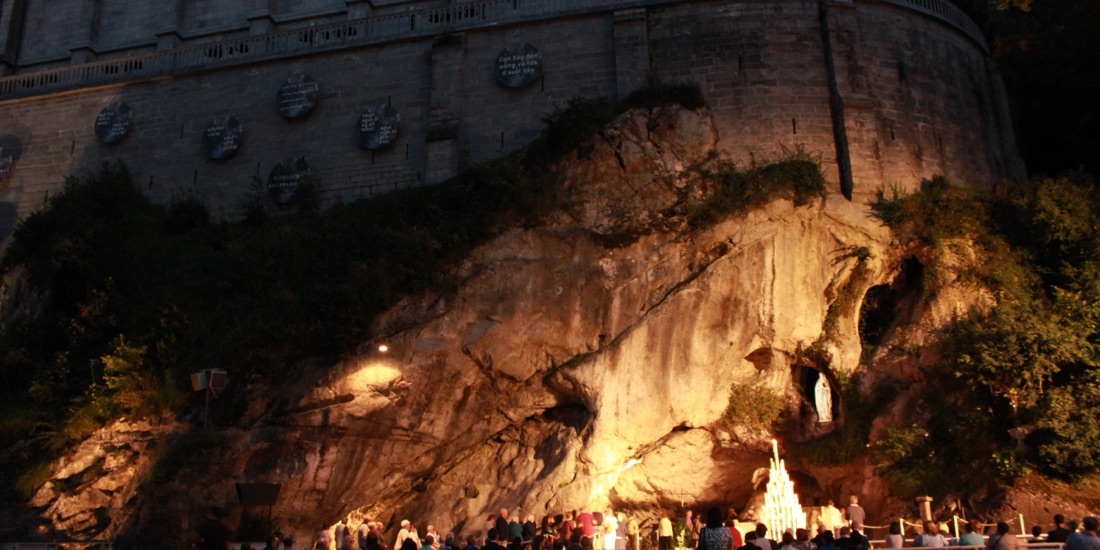
Grotto of Massabielle
The place of the eighteen apparitions and of the spring Bernadette uncovered at the Lady's direction. Pray the Rosary here. The Church has recognized the apparitions as worthy of belief; pilgrims have prayed at this grotto in unbroken procession ever since.
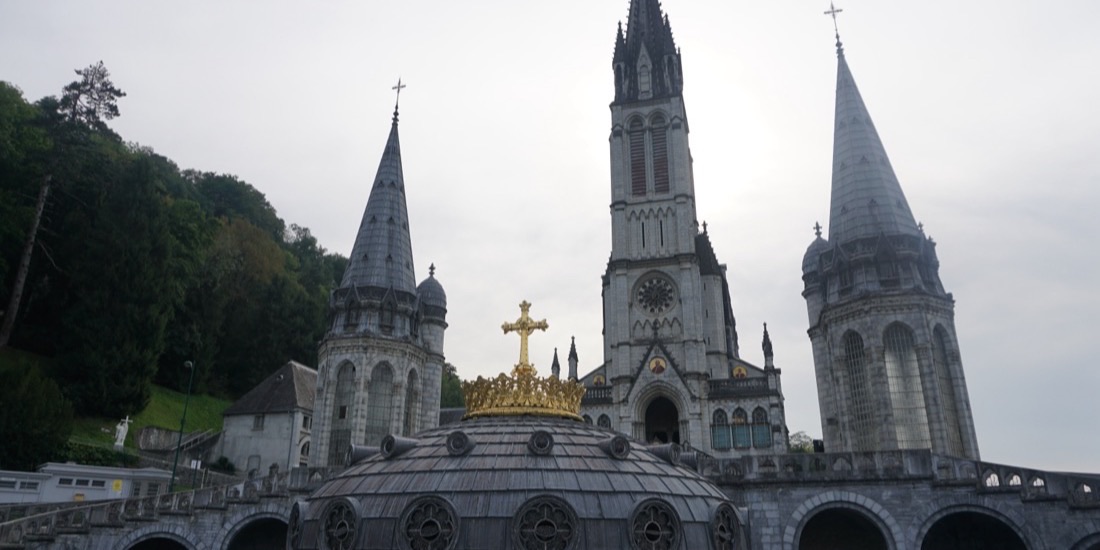
Sanctuary of Our Lady of Lourdes
The wider sanctuary built around the Grotto: the basilicas, the baths, the candlelight procession, the care for the sick. Follow the rhythm the sanctuary directs rather than improvising your own.

Convent of Saint-Gildard, Nevers
Conclude, when possible, where Bernadette herself wanted to end: hidden in religious life at the motherhouse of the Sisters of Charity of Nevers. Catholics have long venerated her body in the chapel here. A restrained shrine for the saint who asked to be forgotten.
Where the body is venerated.
The saint is publicly venerated at a named tomb.
- Principal tomb or body site
- The place the Church and long pilgrimage practice treat as holding the saint's body.
- Other documented publicly venerated relic
- A smaller relic holding that is publicly venerated and documented by the church or shrine that keeps it.
Body of Saint Bernadette
The motherhouse of the Sisters of Charity of Nevers, where Bernadette lived her hidden religious life and died in 1879. Catholics have long venerated her body in the chapel at Saint-Gildard, where it has rested since 1925 in a reliquary of gold and crystal. Fine wax was laid over the face and hands at the recognition of that year, and it is what pilgrims see.
- The body of Saint Bernadette, venerated in the chapel at Saint-Gildard
A quiet, restrained shrine, fitting Bernadette's own preference for hiddenness. Pair this with Lourdes for the full shape of her witness, but allow Nevers its own pace.
Personal relics of Saint Bernadette
The grotto of Massabielle, where Bernadette saw the Blessed Virgin Mary in 1858, and the basilicas built around it. The apparitions have been recognized by the Church as worthy of belief, and the sanctuary preserves the place itself, the spring, and the rhythm of prayer Bernadette received.
- Personal items of Saint Bernadette preserved by the sanctuary
- The Grotto of Massabielle as the place of the apparitions
Lourdes is the apparition site, not the tomb site. Begin at the Grotto with the Rosary, take part in the candlelight procession, and observe the sanctuary's current practice for the water gesture and confession.
Bernadette's places ask pilgrims to slow down and stay poor.
Lourdes is not a spectacle. It is a sanctuary of confession, the Rosary, fragile bodies, and Mary's nearness to the poor. Nevers is quieter still: a hidden convent for a saint who asked to be forgotten. Read both places as one witness, and let the rhythm the Church has set at each one carry you.
Begin with Bernadette's own testimony from the canonical inquiry, short, plain, and unembellished across years of questioning. Pair it with René Laurentin's biography for context, and carry in mind the prayer Mary asked for at the Grotto: penance, prayer for sinners, and procession. No theology of her own, no later writings; her witness is the testimony and the silence that followed it.
At Lourdes, give the Grotto of Massabielle real time before doing anything else: the Rosary, the spring, the silence. Then follow the sanctuary's direction for the water gesture, confession, and the evening candlelight procession. Walk through the Cachot and Boly Mill so the poverty of her childhood is not abstract. At Nevers, the chapel of Saint-Gildard is small and quiet, pause at her body without rushing on, the way the convent itself has held her for over a century.
Look for poverty, illness, and obedience as the substance of the witness rather than its setting. Look for truthfulness under pressure: civil officials, doctors, and Church investigators questioned a fourteen-year-old peasant for four years, and her testimony never wavered or grew. Look for hiddenness as a positive choice: when Lourdes became famous, Bernadette left for Nevers and asked to be allowed to pray.
Read Lourdes and Nevers as one path with two halves. Lourdes is the apparition site: the Grotto, the Cachot, the parish church, the candlelight procession, the care for the sick. Nevers is the hidden life, the convent where she lived in religious obedience and where Catholics have long venerated her body. The Church has recognized the apparitions as worthy of belief; the body at Saint-Gildard is venerated, not put on display as a wonder. Treat both sites with the restraint Bernadette herself asked for.
Kindred witnesses
-
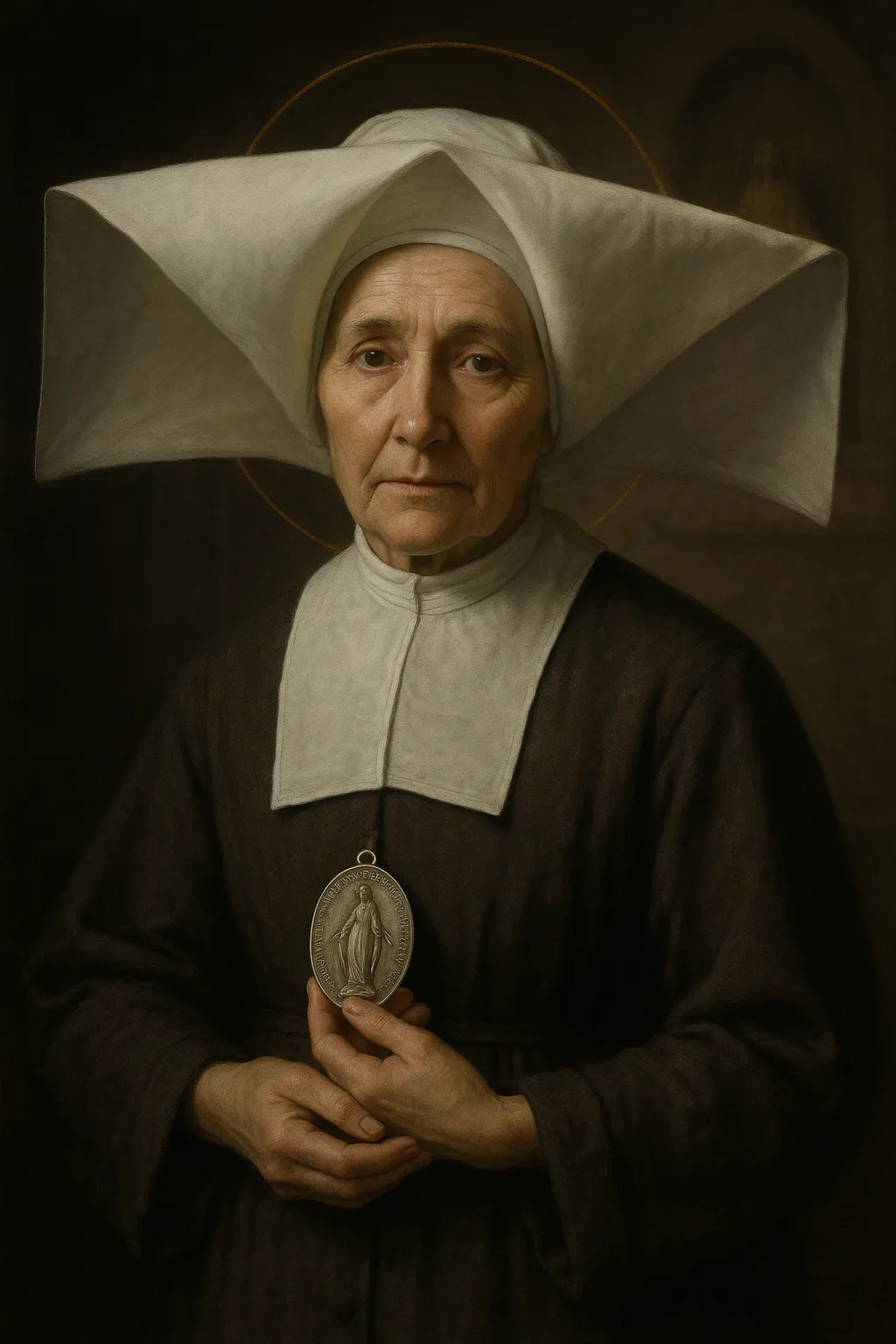
Saint Catherine Labouré
A French Daughter of Charity whose recognized Marian apparitions of the Miraculous Medal anticipate the witness of Lourdes by a generation. -
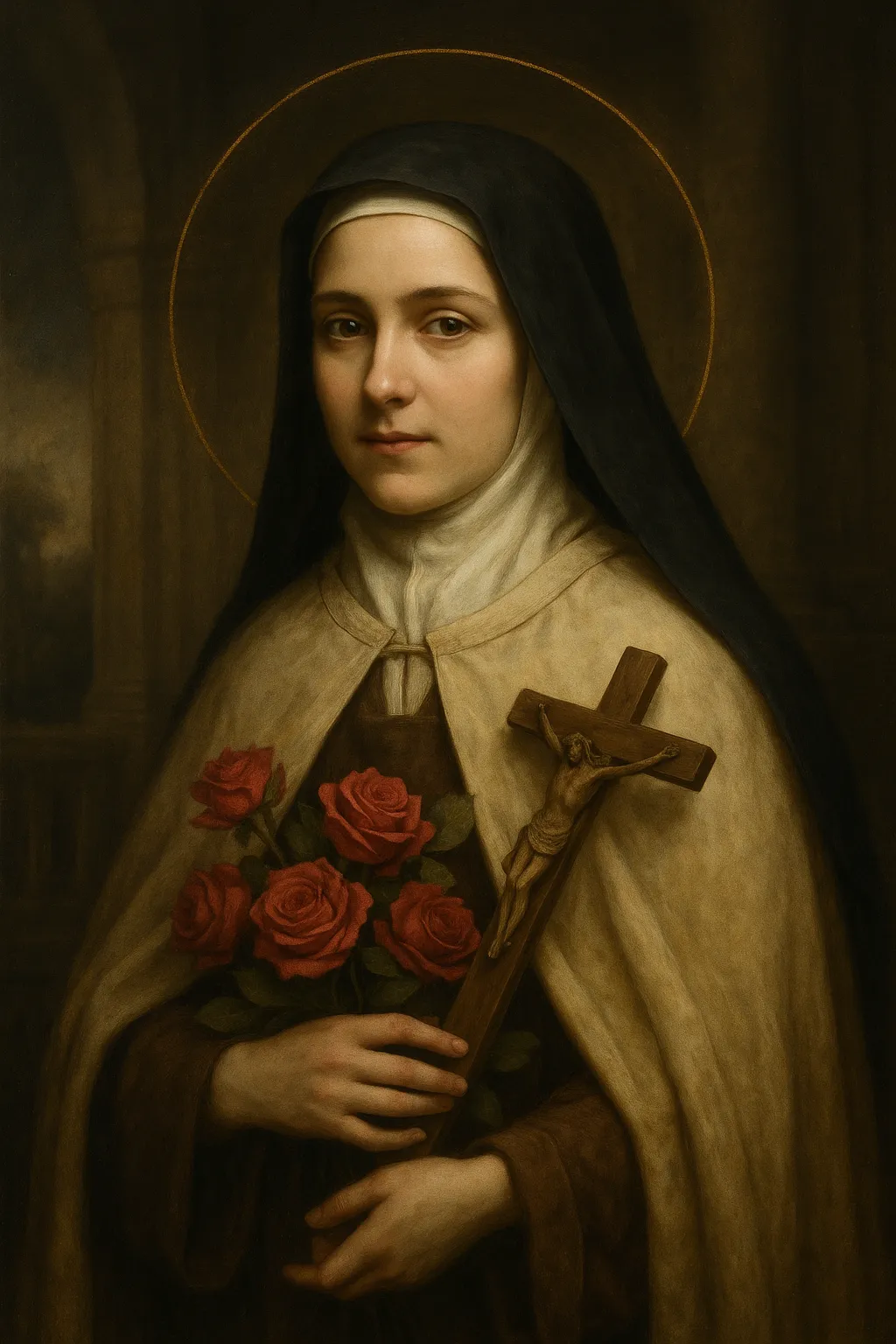
Saint Thérèse of Lisieux
A contemporary French saint whose hidden, suffering witness runs alongside Bernadette's own. -
Saint Alphonsa Muttathupadathu
An Indian religious sister who, like Bernadette, bore long illness within an obedient and hidden vocation.
Bernadette's Lourdes & Nevers Route · 5 stops.
Bernadette's pilgrimage moves between two places that should not be collapsed into one. Lourdes is the apparition site: poverty, the Grotto, prayer, and care for the sick. Nevers is the hidden religious life, the convent where she asked to disappear and where her body rests. Begin in Lourdes; conclude, when possible, at Saint-Gildard.
-
01 Birthplace
Boly Mill
Lourdes, Hautes-Pyrénées, FranceBegin where Bernadette began. The watermill on the edge of Lourdes where she was born in 1844, before the family's slide into poverty. A quiet first stop. The poverty that follows begins to make sense here.
-
02 Lived here
The Cachot
Lourdes, Hautes-Pyrénées, FranceThe single damp room in a former prison where the Soubirous family was living in the winter of 1858. The poverty of this room is part of the witness; do not rush past it on the way to the Grotto.
-
03 Apparition site
Grotto of Massabielle
Lourdes, Hautes-Pyrénées, FranceThe place of the eighteen apparitions and of the spring Bernadette uncovered at the Lady's direction. Pray the Rosary here. The Church has recognized the apparitions as worthy of belief; pilgrims have prayed at this grotto in unbroken procession ever since.
-
04 Publicly venerated relic · Apparition site
Sanctuary of Our Lady of Lourdes
Lourdes, Hautes-Pyrénées, FranceThe wider sanctuary built around the Grotto: the basilicas, the baths, the candlelight procession, the care for the sick. Follow the rhythm the sanctuary directs rather than improvising your own.
-
05 Tomb
Convent of Saint-Gildard, Nevers
Nevers, Nièvre, FranceConclude, when possible, where Bernadette herself wanted to end: hidden in religious life at the motherhouse of the Sisters of Charity of Nevers. Catholics have long venerated her body in the chapel here.
Kept on April 16.
April 16 is Bernadette's feast day, marking her death at Nevers in 1879. The day is observed with particular devotion at the Sanctuary of Lourdes and at the Convent of Saint-Gildard at Nevers, where her body is venerated. February 11, the date of the first apparition, is celebrated separately as the feast of Our Lady of Lourdes and as the World Day of the Sick.
A full Bernadette pilgrimage moves between two places: Lourdes, where the apparitions happened, and Nevers, where she lived her religious life and where her body rests. Begin at the Grotto of Massabielle in Lourdes; conclude, when possible, at Saint-Gildard. The two sites together hold her witness more honestly than either does alone.
How Lourdes and Nevers hold Bernadette
Bernadette is connected not only to an apparition, but to the Grotto where she knelt, the town that grew around it, the hidden religious life she chose at Nevers, and the Church's careful handling of private revelation. These places and devotions hold her memory together.
-
City
Lourdes
The market town in the foothills of the Pyrenees where Bernadette was born poor in 1844 and where the apparitions at Massabielle began in 1858.
-
Devotion
Our Lady of Lourdes
The Marian title given at the Grotto in Bernadette's own dialect, "I am the Immaculate Conception," which the Church reads as confirming a truth already held.
Recognized apparitionRecognized by the Church as worthy of belief; received as private revelation.
-
Shrine
Sanctuary of Our Lady of Lourdes
The sanctuary built around the Grotto of Massabielle, the heart of the great healing pilgrimage of the Church, where the poor and the sick are kept at the center.
-
Where her body rests
Saint-Gildard, Nevers
The motherhouse of the Sisters of Charity of Nevers, where Bernadette lived hidden for thirteen years and where her body has long been venerated.
-
Official source
lourdes-france.org
The official site of the Sanctuary of Our Lady of Lourdes.
The apparitions of Lourdes are recognized by the Church as worthy of belief. Like all private revelation, they invite prayer, penance, and conversion rather than adding to the deposit of faith. Bernadette's body has long been venerated in the chapel at Saint-Gildard in Nevers.
Photo credits
- Boly Mill. France-002064B - Boly Mill - Home of St. Bernadette (15749908326). Dennis G. Jarvis / Wikimedia Commons (CC BY-SA 2.0). Source. CC BY-SA 2.0.
- The Cachot. Peter Potrowl / Wikimedia Commons (CC BY-SA 4.0). Source. CC BY-SA 4.0.
- Grotto of Massabielle. Grotto of Massabielle in Lourdes at night. Pedro Pablo / Wikimedia Commons (CC BY-SA 2.0). Source. CC BY-SA 2.0. Cropped from the original.
- Sanctuary of Our Lady of Lourdes. Hammondtravels / Wikimedia Commons. Source. CC BY-SA 4.0. Cropped from the original.
- Convent of Saint-Gildard, Nevers. FredSeiller / Wikimedia Commons (CC BY-SA 3.0). Source. CC BY-SA 3.0.