
Saints for real life
Patron Saint of Lost Things
St. Anthony of Padua
Catholics have long turned to St. Anthony when something has been lost or misplaced. His story, though, is larger than a single devotion. He was a Franciscan preacher, a theologian, and a Doctor of the Church, and the basilica raised over his tomb in Padua has drawn pilgrims for nearly eight centuries.
“Let your words teach and your actions speak.”
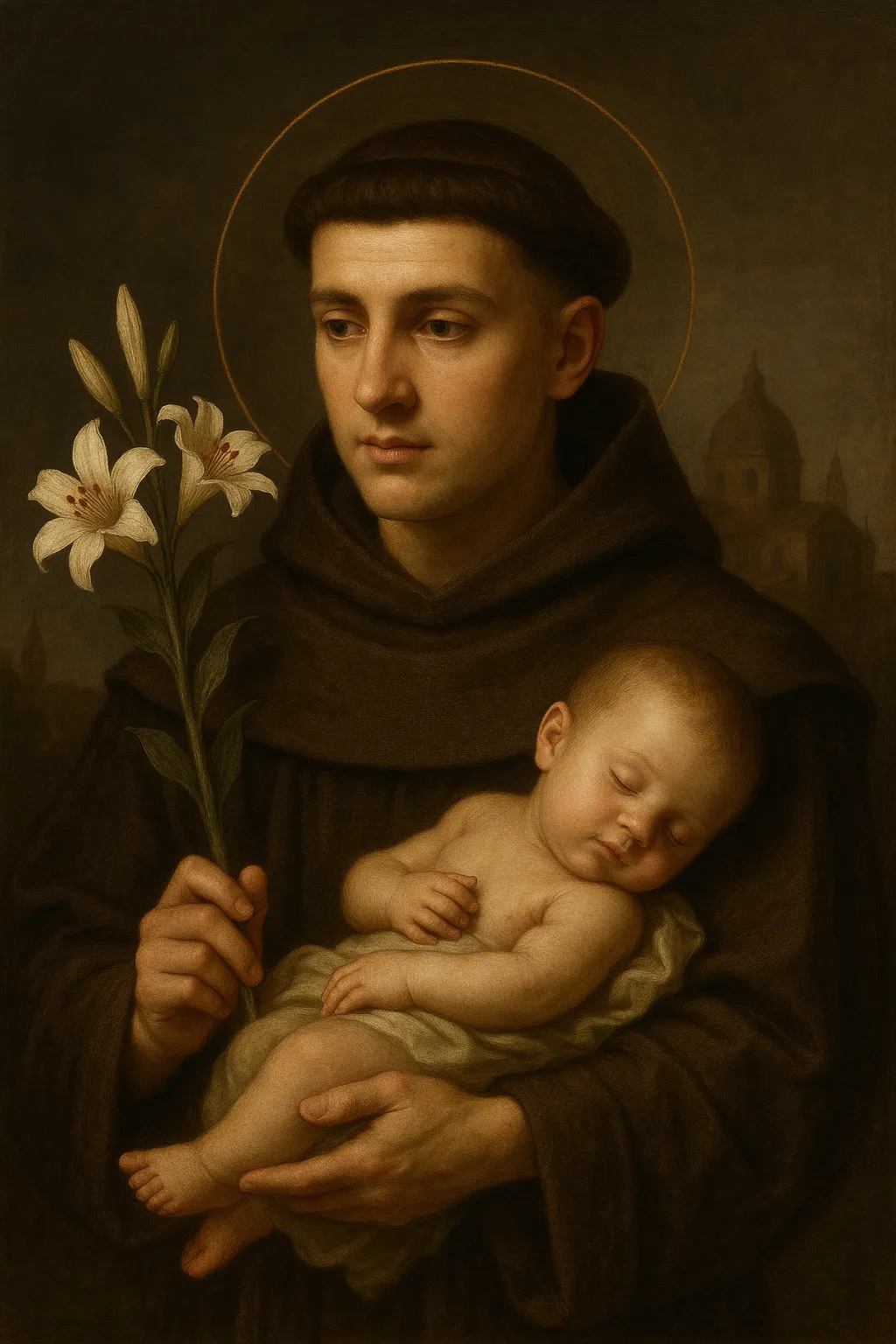
- Primary patronage Lost things
- Feast day June 13
- Where to visit Basilica of St. Anthony, Padua
- Best for A first saint pilgrimage, Franciscan heritage, families
Why Catholics turn to St. Anthony
-
 Finding what is lost
He is the saint most Catholics name first when something has gone missing: a set of keys, a document, a bearing.
Finding what is lost
He is the saint most Catholics name first when something has gone missing: a set of keys, a document, a bearing.
-
 Asking for help in confusion
The same prayer is made for what cannot be held: clarity, a decision, a person out of touch.
Asking for help in confusion
The same prayer is made for what cannot be held: clarity, a decision, a person out of touch.
-
 Ordinary needs, and the poor
Anthony preached steadily for those crushed by debt. The old custom of the "bread of Saint Anthony" gives alms in thanksgiving.
Ordinary needs, and the poor
Anthony preached steadily for those crushed by debt. The old custom of the "bread of Saint Anthony" gives alms in thanksgiving.
-
 Devotion that becomes a journey
For many the devotion ends at his tomb, in a Franciscan basilica that has kept his memory since 1232.
Devotion that becomes a journey
For many the devotion ends at his tomb, in a Franciscan basilica that has kept his memory since 1232.
Start with the answer
Why is St. Anthony the patron saint of lost things?
St. Anthony of Padua is the Catholic saint most commonly invoked as the patron saint of lost things. The association is traditionally traced to an account of a stolen psalter that was later returned. His feast is June 13, and his principal pilgrimage shrine is the Basilica of St. Anthony in Padua, Italy.
The patronage rests on a story told of Anthony after his death rather than on anything he wrote. A novice is said to have left the community taking with him a psalter Anthony used to teach, a book carrying his own notes and, in the thirteenth century, a costly object to replace. Anthony prayed for its return, and the account has the novice bringing it back and returning to the community.
That story is not in the earliest life of Anthony, the Assidua, written within a year or so of his death in 1231. It appears in later Franciscan collections, and it is best read as devotional tradition rather than documented biography. What the tradition preserves is the shape of the prayer people still make: something is gone, and Anthony is asked to help find it.
The devotion spread through generations of Catholics who turned to Anthony for help in ordinary needs, and it fits the saint. Anthony spent his short life making difficult things findable: Scripture for people who could not read it, justice for people buried in debt. Catholics still ask him for what is lost, and for what matters more than the thing itself.
“Let your words teach and your actions speak.”
Padua, and where his story begins
Visit St. Anthony
-
 The Basilica
Begun within a year of his death and built around the tomb. Padua calls it simply "il Santo."
The Basilica
Begun within a year of his death and built around the tomb. Padua calls it simply "il Santo."
-
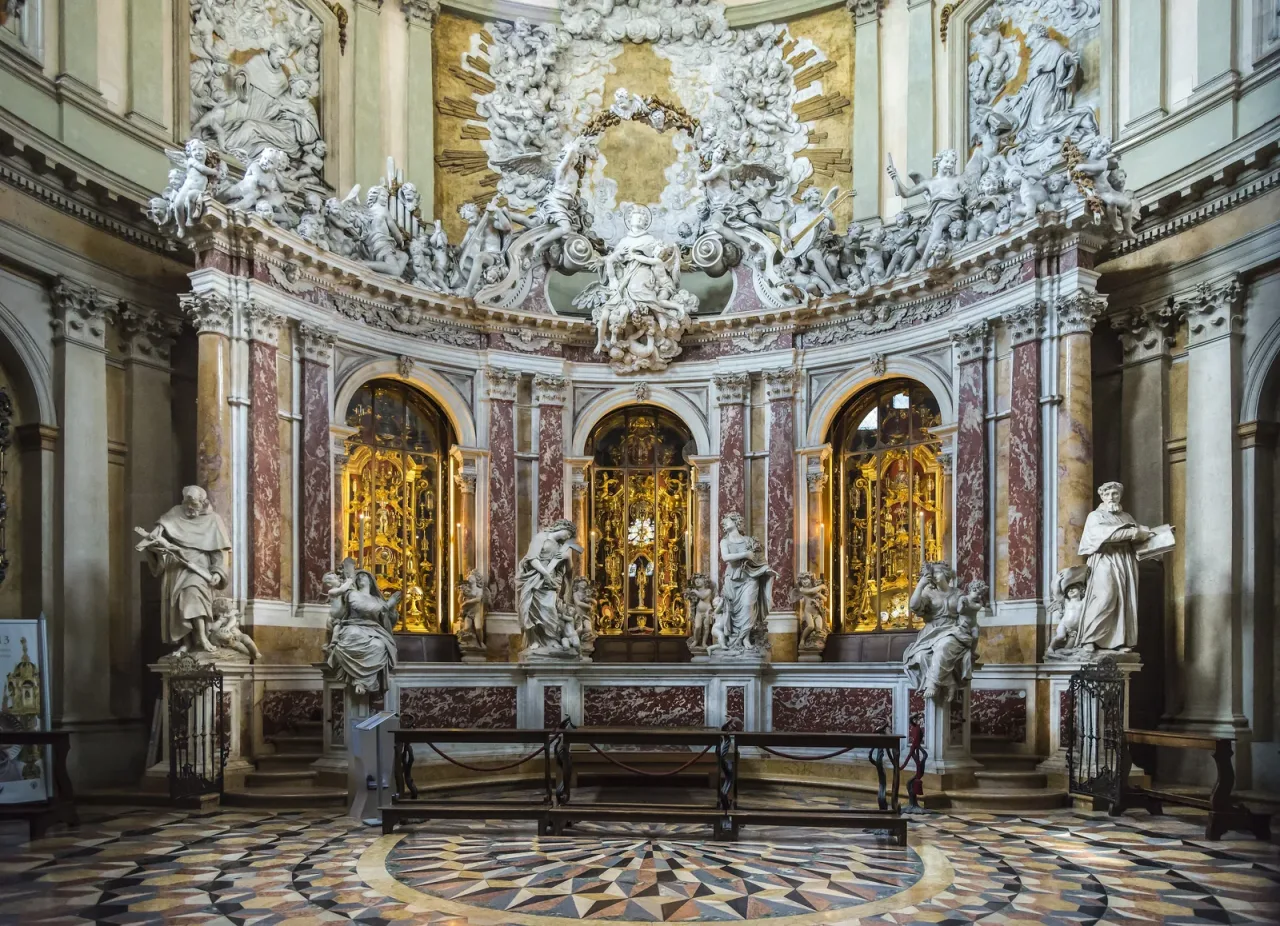
The tomb and the relic chapel
Pilgrims still queue to lay a hand on the tomb. The Chapel of the Relics behind the high altar is a separate stop.
-
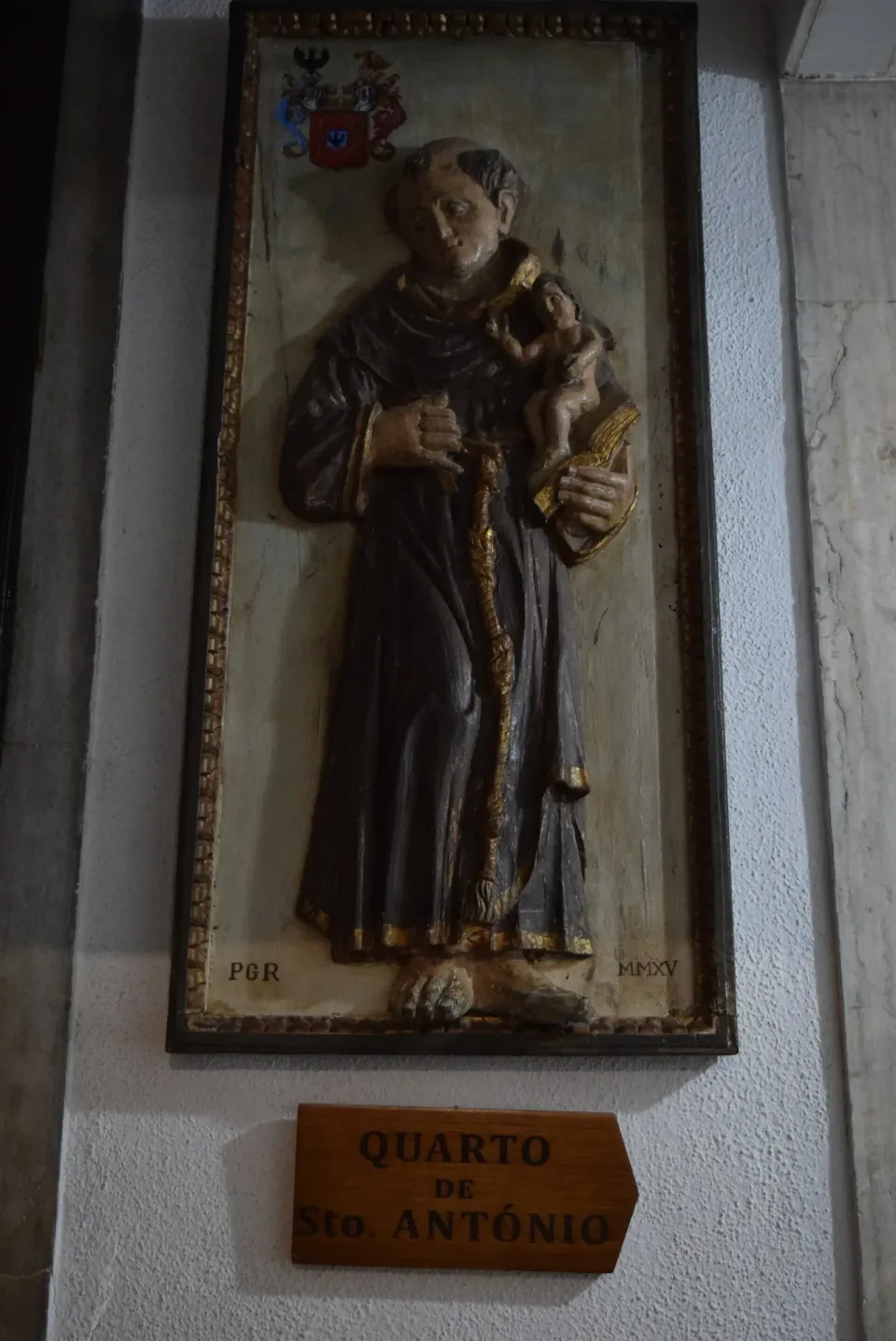
 Lisbon, where he began
The world calls him Anthony of Padua. Lisbon, where he was born and baptized, has never called him anything but Santo António.
Lisbon, where he began
The world calls him Anthony of Padua. Lisbon, where he was born and baptized, has never called him anything but Santo António.
Plan a pilgrimage
View pilgrimage guides-
A morning at the basilica
The tomb, the Chapel of the Relics, and the cloisters. Come early, before the queue builds.
-
Follow the Franciscans
Assisi is the other half of the story: Francis approved Anthony to teach theology to the friars.
-
Or begin in Lisbon
His birthplace church and the cathedral font, a minute apart in the Alfama.
Related saints
Explore more saints

Photo credits
- Hero; The Basilica. Basilica Santo Antonio in Padova. Petar Milošević / Wikimedia Commons. Source. CC BY-SA 3.0.
- Finding what is lost; The tomb and the relic chapel. Didier Descouens / Wikimedia Commons. Source. CC BY-SA 4.0.
- Asking for help in confusion. Quarto de Santo António - Igreja de Santo António de Lisboa - Lisbon (52750124327). Haydn Blackey / Wikimedia Commons. Source. CC BY-SA 2.0.
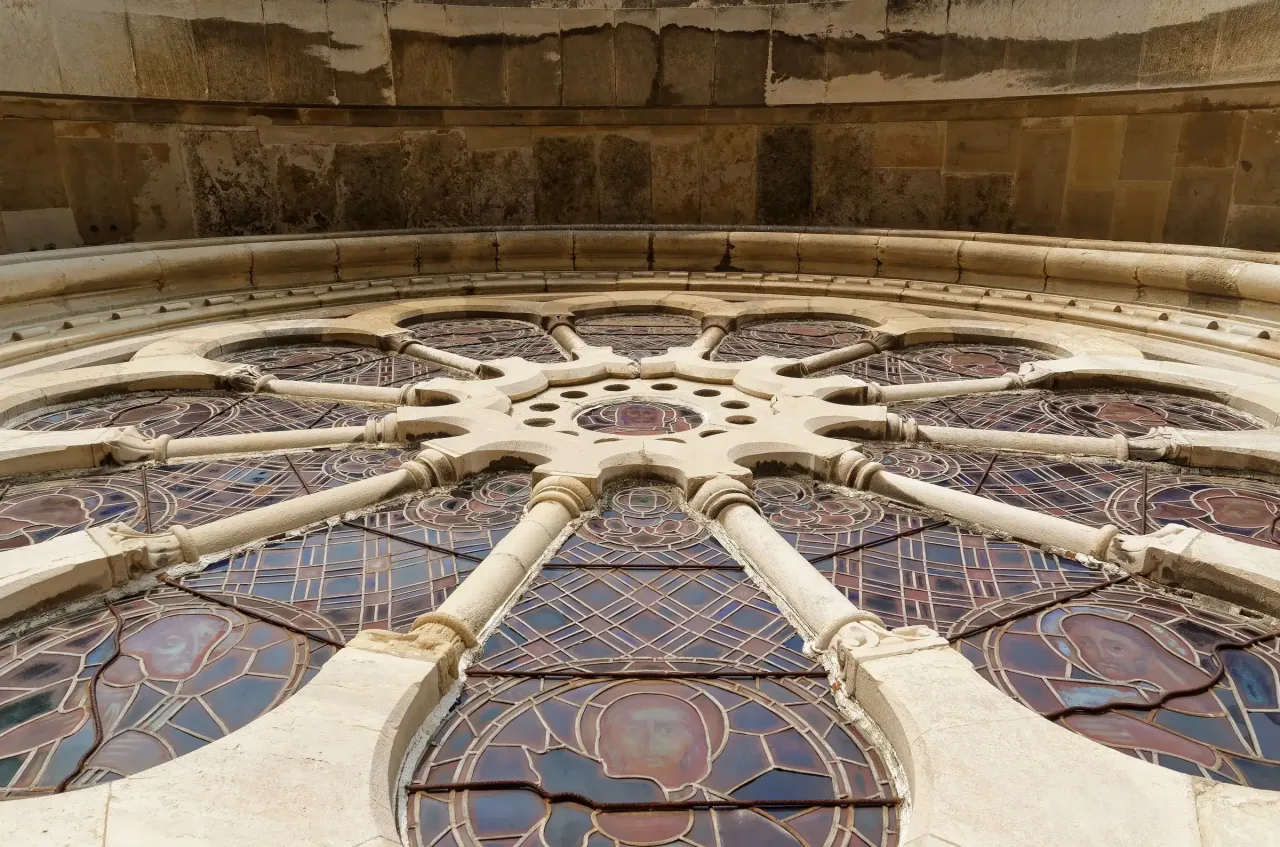
- Ordinary needs, and the poor. Jakub Hałun / Wikimedia Commons. Source. CC BY 4.0.
- Devotion that becomes a journey. Terragio67 / Wikimedia Commons. Source. CC BY-SA 4.0.
- Lisbon, where he began. Dguendel / Wikimedia Commons. Source. CC BY 4.0.