
Capernaum
Capernaum lets the pilgrim receive the public ministry of Jesus at the scale of a village: house, synagogue, shore, and road.
- Location
- Capernaum, Galilee
- 32.8803° N · 35.5743° E
- Type
- Biblical town and archaeological sanctuary
- Archaeological village, house-church remains, later octagonal church, and modern memorial
- Dedication
- The public ministry of Jesus and the house of Saint Peter
- Time Needed
- 1 to 2 hours
Enter the village Jesus made his own
Come because the Gospel scenes here belong to a small lakeshore settlement where Jesus taught with authority, healed Peter's mother-in-law, forgave and healed the paralytic, and called people into discipleship. Pray first with the Gospel, then notice the short distances between house, synagogue, and water. The place offers a sober nearness: not a claim that every exposed wall belongs to one verse, but gratitude that a village repeatedly named in the New Testament still has legible ground.
A house remembered by a worshipping community
The Franciscan archaeological area preserves ancient Capernaum. One domestic complex received special treatment over time: plaster, devotional markings, and architectural changes support its interpretation as an early Christian gathering place traditionally identified with Peter's house. A fifth-century octagonal church was built above it. Nearby, the white-stone synagogue is later, though earlier basalt remains beneath it matter. The Custody presents these layers together without confusing tradition, archaeological interpretation, and Scripture.
The modern memorial is suspended above Peter's house, protecting the archaeology while allowing pilgrims to look down into it. Its circular form contrasts with dark basalt village walls and pale synagogue blocks. Read the site horizontally: domestic rooms, gathering place, synagogue precinct, and lake. Capernaum is not a monumental city; its power lies in how ordinary ground became the setting for teaching, healing, hospitality, forgiveness, and faith.
The Gospels place Jesus teaching, healing, and calling disciples in and around Capernaum.
Archaeology identified a domestic complex later adapted for Christian worship and covered by an octagonal Byzantine church.
The visible limestone synagogue is later than the Gospel period, while earlier basalt remains beneath it preserve an older layer.
Spiritual Significance
Pray for the grace to hear Christ's word and respond, especially through the Gospel accounts of healing, forgiveness, and discipleship.
Do Not Miss
Visit Plans
-
1 to 2 hours Pilgrims receiving Capernaum as one Gospel village.
House, synagogue, and shore
Move through the three parts that make its Gospel scale visible.
- Pray at the memorial over Peter's house.
- Read the synagogue and its layered construction.
- Finish at the lakeshore with a Gospel passage.
How to Visit
Begin with the Gospel, pray at Peter's house, walk to the synagogue, and finish by the lake. Consult the Custody for current access.
Connected Saints
- Saint Andrew the Apostle Galilean apostle Andrew shared the fishing world of the lakeshore and appears with Peter in the Gospel call narratives.
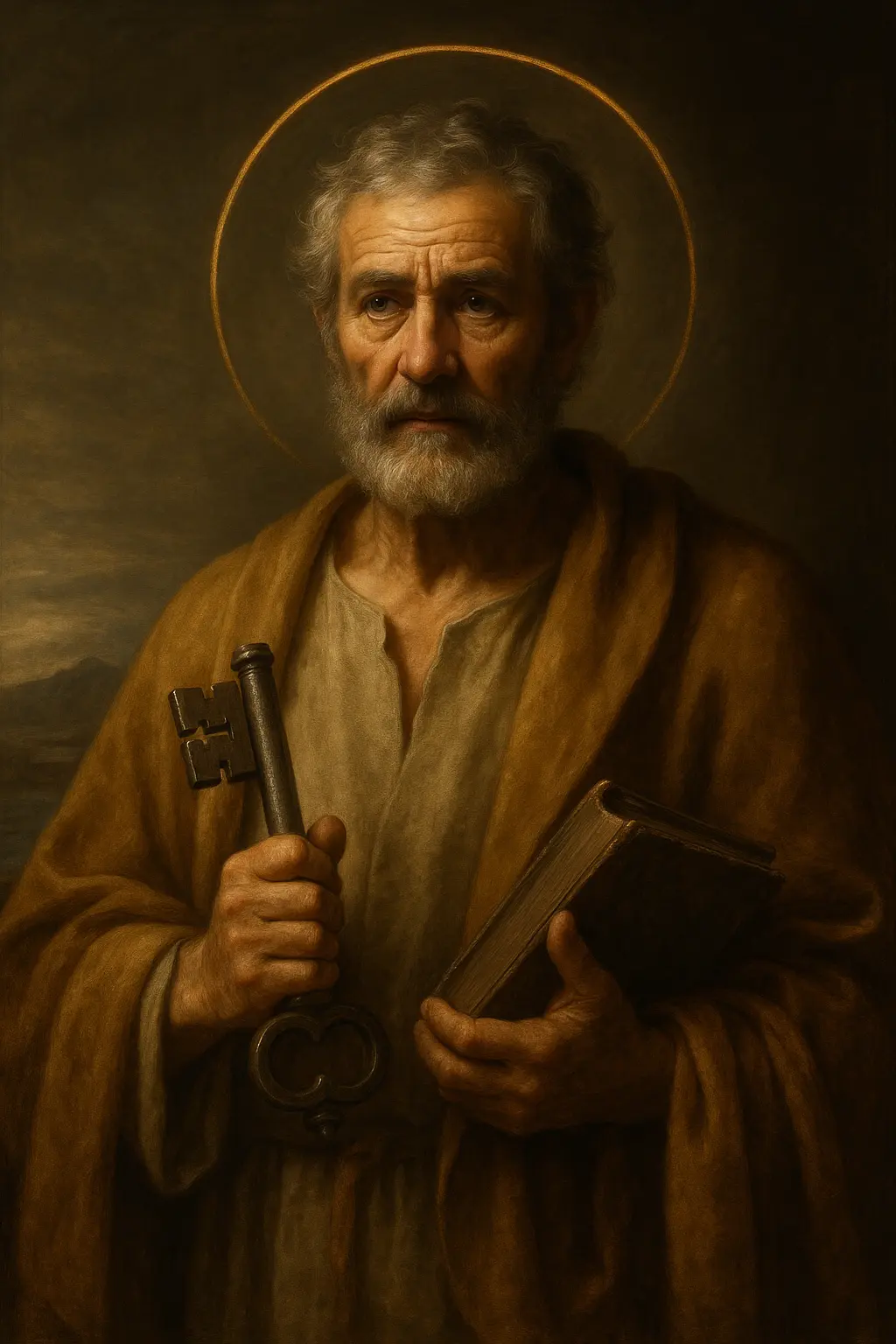
- Saint Peter the Apostle House tradition The Gospel names Peter's household in Capernaum, and the excavated house beneath the modern memorial has long been venerated in connection with him.

Continue Your Pilgrimage
-
Sacred place
Church of the Multiplication at Tabgha
A distinct lakeshore sanctuary.
-
Sacred place
Church of the Primacy of Saint Peter
A distinct sanctuary of John 21.
-
Sacred place
Mount of Beatitudes
A separate hill sanctuary.
-
Sacred place
Bethsaida and Sea of Galilee context
A distinct apostolic and lakeshore context.
Map
Photo credits
- Hero. Berthold Werner / Wikimedia Commons (Public Domain). Source. Public Domain.
- The house tradition. Fallaner / Wikimedia Commons (CC BY-SA 4.0). Source. CC BY-SA 4.0.