
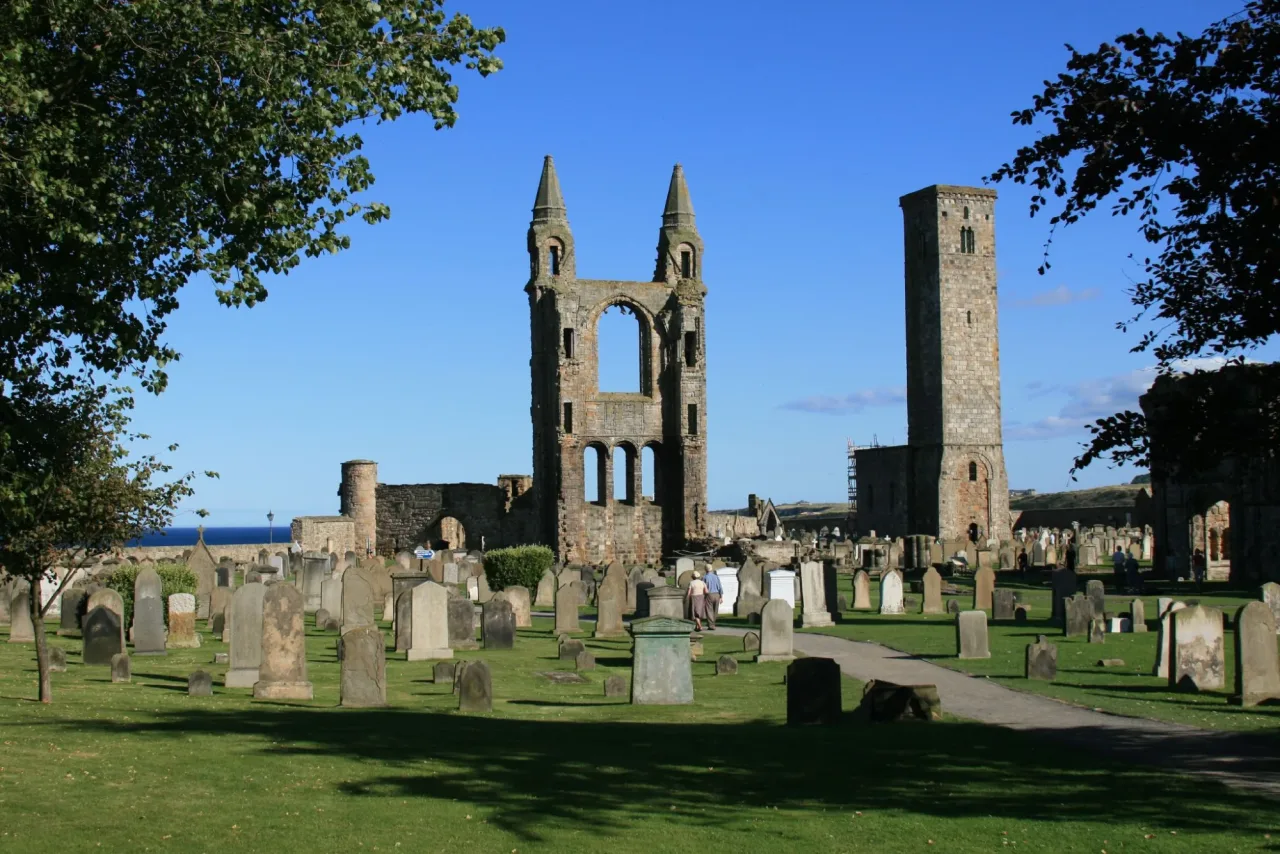
St Andrews Cathedral and Saint Andrew's Shrine
St Andrews gathers an apostolic shrine tradition, Scotland's greatest medieval cathedral, and a coastal pilgrim town around the memory of Saint Andrew.
- Location
- St Andrews, Scotland 56.3398° N · 2.7889° W
- Type
- Ruined cathedral, apostolic shrine precinct, and graveyard Romanesque St Rule's Tower and Gothic cathedral ruins
- Dedication
- Saint Andrew the Apostle
The apostolic shrine that named a town
Come to stand where medieval Scotland gathered around Saint Andrew.
The cathedral is ruined and its relic shrine was broken, yet the scale of the precinct, the sea beyond the east gable, and St Rule's Tower still disclose why this became the country's greatest apostolic pilgrimage. Andrew matters here not as a national emblem detached from the Gospel, but as the fisherman called by Christ and the brother who brought Peter to Jesus. The place invites prayer for Scotland and for the unity of the Church Andrew helped found.
From a relic church to Scotland's largest cathedral
The origin of the relic tradition is layered. Medieval accounts told how relics of Andrew reached the east coast, while historians distinguish those traditions from what can be securely documented. A church dedicated to the apostle became the center of an important religious community and episcopal see. St Rule's Tower rose beside the earlier shrine church and served as a visible landmark for pilgrims. Work on the great cathedral began around 1160. The building grew over roughly a century and a half and was dedicated in 1318. It became the headquarters of the medieval Scottish Church and the setting for an Augustinian cathedral priory. The Scottish Reformation brought worship in the cathedral to an end in 1559, and the shrine and building were dismantled over time.
The roofless east gable and west front reveal the exceptional length of the Gothic cathedral. St Rule's Tower is earlier and more compact, surviving from the Romanesque church that preceded it. The graveyard, chapter-house remains, walls, and relationship to the sea make the whole precinct readable as a sacred city in miniature. Conservation restrictions can close individual areas. The visible ruins are not an untouched medieval shrine, but they remain the authentic ground on which that shrine and cathedral stood.
St Andrews was built around an apostolic claim: that Scotland could gather at the shrine of Andrew, the first-called brother of Peter.
The cathedral is now a heritage monument and burial ground rather than a functioning Catholic church. Pray with reverence, respect graves and conservation barriers, and distinguish the apostolic devotion from claims that surviving relics remain on site.
Do Not Miss
-
St Rule's Tower
The earlier tower marked the shrine church and served as a beacon to pilgrims.
-
The cathedral's east gable
Stand within the long footprint and receive the scale of the church dedicated in 1318.
-
The relationship to the sea
The coast explains both the approach and the enduring visual power of the shrine town.
Visit Plans
-
Andrew's Cathedral Precinct
4 ordered stopsTrace the pilgrim approach, cathedral footprint, tower, and coast before continuing into the town.
- See the east gable and St Rule's Tower from outside the precinct.
- Walk the cathedral footprint toward the former shrine end.
- Pause near St Rule's Tower and pray for Scotland and Christian unity.
- Continue into St Andrews without treating the ruins as a complete relic shrine.
How to Visit
Begin outside the precinct for the full view, enter the cathedral grounds, trace the long nave toward the east gable, and finish near St Rule's Tower. Check current closures before planning a tower ascent or museum visit.
The grounds remain meaningful even when buildings are closed.
Historic Environment Scotland lists the cathedral grounds as free to visit during opening hours. The museum and shop remain closed, and parts of the graveyard are fenced off around unstable gravestones. Check the current notice before travel.
- Time needed
- About ninety minutes for the grounds and a prayerful reading of the precinct.
- Getting there
- The cathedral stands at the east end of central St Andrews. The nearest rail station is Leuchars, with onward bus or taxi connections.
- Best time
- A clear morning or late afternoon gives the ruins and sea room to speak, but access notices should determine the plan.
Current access
- April 1 to September 30: daily, 9:30 AM to 5:30 PM. October 1 to March 31: Friday through Monday, 10:00 AM to 4:00 PM; closed Tuesday through Thursday.
- Last entry is 45 minutes before closing. Closed December 25 and 26, and January 1 and 2.
- Sections of the graveyard are fenced off around unstable gravestones. Respect barriers and confirm any access needs with Historic Environment Scotland before travel.
Prayer and custody
- Keep clear of graves and active conservation work.
Relics, Tombs, Sacred Objects
Tomb and Burial
- This was a relic shrine rather than the apostle's bodily tomb. Andrew was martyred at Patras according to ancient Christian tradition.
Relics and Sacred Tradition
- Medieval tradition held that relics of Saint Andrew were brought to this place. The Reformation dispersed the shrine, and no intact apostolic relics are claimed to remain in the ruins.
Sacred Objects
- St Rule's Tower, built before the great cathedral and visible as a beacon to pilgrims
- The east gable and surviving cathedral walls
- The cathedral precinct and graveyard on the edge of the North Sea
Scotland's eastern shrine road
-
Abbey and royal shrine
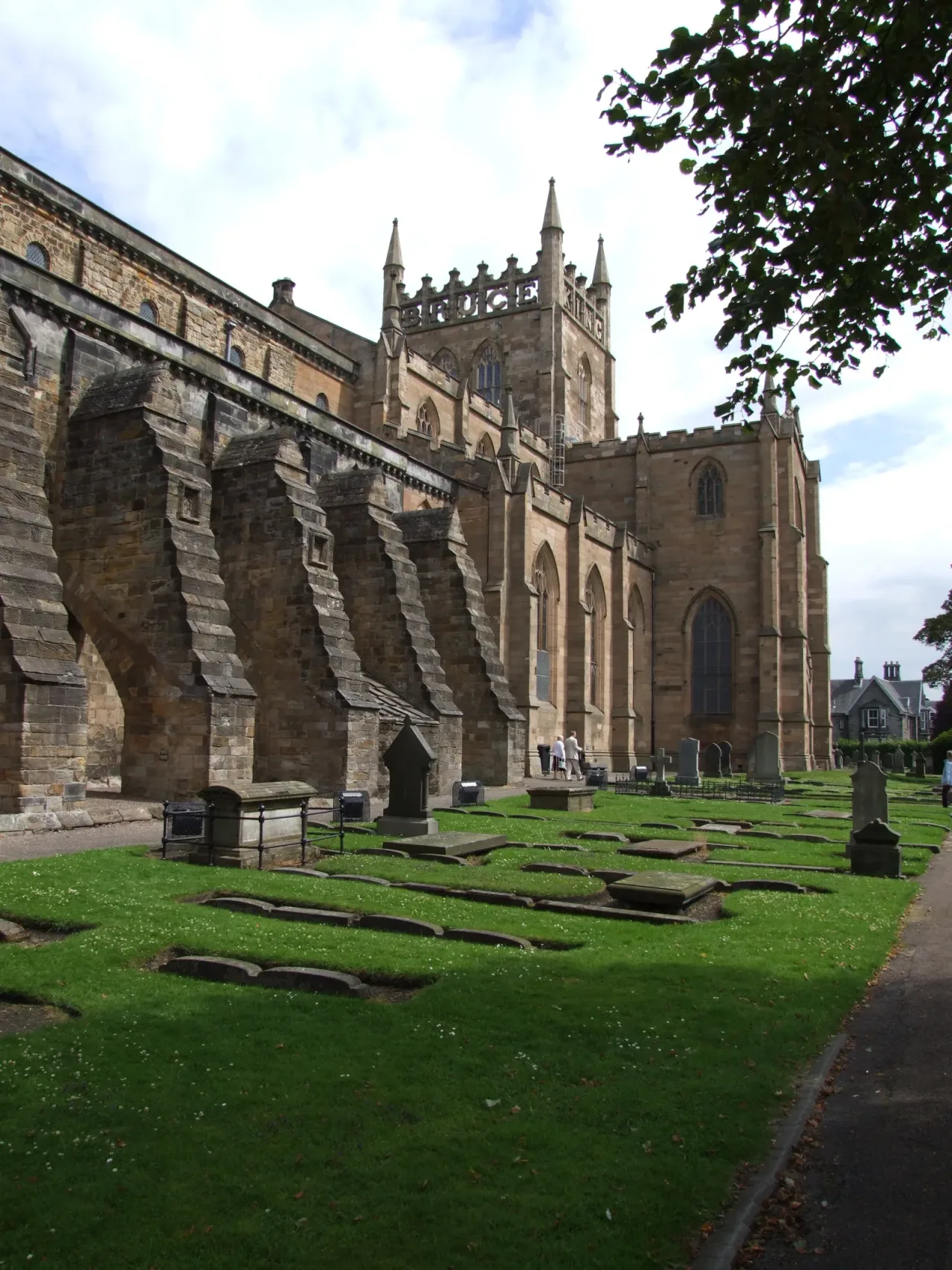
Dunfermline Abbey and Saint Margaret's Shrine
The royal shrine of Saint Margaret lies across Fife and forms the natural second eastern day.
-
Island monastery
Iona Abbey and Saint Columba's Shrine
A separate western-island pilgrimage that requires ferry planning and its own travel day.

Map
Official church sources.
August 10, 2026
Photo credits
- Hero. St Andrews cathedral and St Rules tower. Andy Hawkins / Wikimedia Commons. Source. CC BY-SA 2.0.
- The earlier tower and later cathedral. Steven1991 / Wikimedia Commons. Source. CC BY-SA 4.0.