
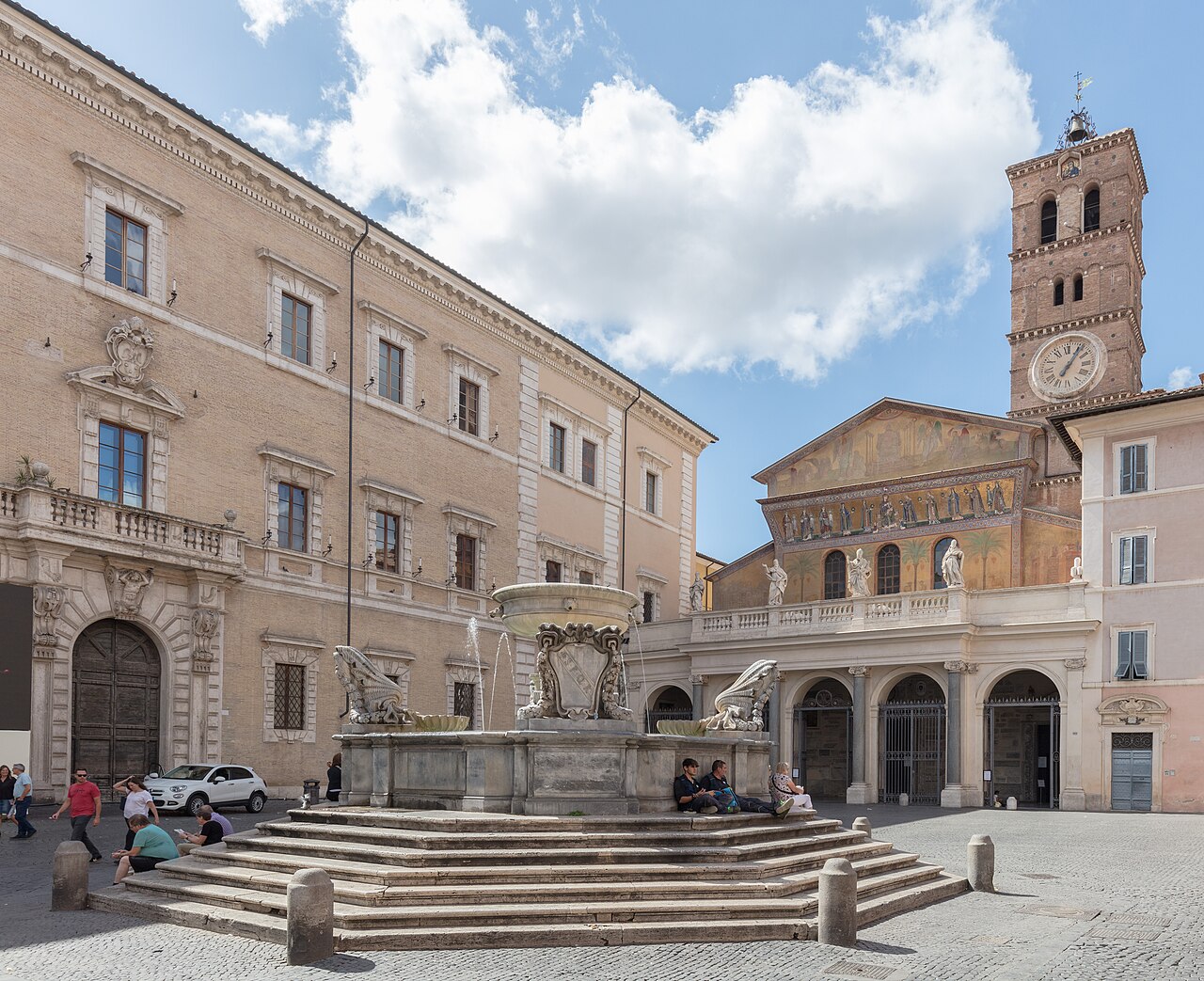
Basilica of Santa Maria in Trastevere, Rome
Trastevere's Marian basilica, with a tradition of Christian worship on the site from the third century, an apse in which the Virgin is crowned and seated beside her Son, and a crypt of Roman martyrs.
- Location
- Rome, Italy 41.8896° N · 12.4693° E
- Type
- Minor basilica, titular church and parish A twelfth-century basilica raised on a much older titulus, with a mosaic facade, a medieval campanile, and reused ancient columns in the nave
- Dedication
- The Blessed Virgin Mary The apse mosaic and the Madonna della Clemenza
- Time Needed
- 1 hour to half a day
Why Go
The Virgin enthroned beside her Son
Come for the apse. In the twelfth century the mosaicists here did something that had not been done in Rome before: they seated the Virgin on the throne beside Christ, at his right hand, with his arm around her shoulder and a scroll in her hand. It is the Coronation read as enthronement, and it is a statement about who she is rather than a decoration above an altar. Come also because the basilica is not a monument. The piazza outside is Trastevere's living room, and the church is the parish at the centre of it.
A titulus, an oil spring, and a rebuilding
The tradition of this place runs back further than the building. Pope Callixtus I, who died about 222, is remembered as founding a Christian meeting place here, and the church carried the name titulus Callisti. The basilica itself was raised by Pope Julius I around the middle of the fourth century, and the title is attested by the fifth. Because of that the basilica has long been called the first church in Rome dedicated to Our Lady, a claim carried by an inscription on the episcopal throne. Santa Maria Maggiore is named for the same honour, and the question has never been settled.
The other tradition of the site is the Fons Olei. A spring of oil is said to have risen from the ground here, which Christians later read as a sign pointing to the Christ, the Anointed One. The Roman annals that record an oil spring in Trastevere place it in the year 38 before Christ, and the tradition ties the two together. The basilica marks the spot in the floor of the sanctuary. It is a tradition the church has kept for many centuries and it is presented here as exactly that, without archaeology behind it.
What a visitor stands in is the rebuilding carried out under Innocent II between about 1138 and 1148, which gave the basilica its transept, its apse and its mosaics, and reused ancient columns for the nave. Innocent II is buried here. In 1291 Pietro Cavallini added the Stories of the Virgin below the apse, six scenes that mark the moment Roman mosaic began to find weight and depth again after centuries of flatness.
Beneath the altar the crypt holds relics venerated as those of Callixtus I, Calepodius, and Pope Cornelius, who was brought in from the cemetery of Callixtus on the Appian Way. The same movement that filled Santa Prassede filled this crypt.
A twelfth-century basilica with a mosaic facade above a portico, a Romanesque campanile carrying its own small mosaic of the Virgin, and a nave of twenty-two reused ancient columns. The apse and transept belong to Innocent II's rebuilding; the Cavallini mosaics sit below the apse conch.
The facade mosaic, which is lit in the evening and is the face of the piazza
The twenty-two ancient columns of the nave, taken from earlier Roman buildings
The piazza itself, which functions as the basilica's forecourt and is full at every hour
Spiritual Significance
The apse crowns her and seats her beside her Son. No church in Rome had said it that way before.
Busier and more ordinary than most great Roman churches, and better for it. People cross the piazza and come in without ceremony. The basilica has kept the habit of being used, and the Community of Sant'Egidio, whose life grew up in this quarter, holds its Christmas lunch for the poor inside it. A church that seats the poor at table beneath a thirteenth-century mosaic is doing what the mosaic is about.
Do Not Miss
-
The apse mosaic
Twelfth century. Christ and his Mother enthroned together, his arm about her shoulder. Sit with it rather than photographing it.
-
Cavallini's Stories of the Virgin
Set beneath the apse in 1291. Six scenes, and the point at which Roman mosaic recovers depth and weight.
-
The Madonna della Clemenza
An encaustic icon of the Virgin enthroned with the Child and angels. Most date it to the sixth century, some to the eighth.
-
The Fons Olei
Marked in the sanctuary floor. The tradition of the oil spring that Christians read as pointing to the Anointed One.
-
The crypt relics
Callixtus I, Calepodius and Pope Cornelius, reached through the fenestella confessionis. Cornelius came in from the cemetery of Callixtus.
What to notice
- That Christ's arm is around his Mother's shoulders, which is not a formula but a decision
- The twenty-two nave columns, no two quite alike, taken from older Roman buildings
- How the facade mosaic changes completely once the piazza lights come on
- That people come in from the square without stopping being in the square
- The scroll in the Virgin's hand, and what it says
Visit Plans
-
The apse, the Cavallini scenes and the icon.
-
With the crypt and time in the piazza.
-
With Santa Cecilia a few minutes away, which is the Trastevere pairing.
Late afternoon into evening. Yield to the parish liturgy. Pair with Santa Cecilia in Trastevere, and climb to Sant'Onofrio if you have the legs.
How to Visit
How to Visit
Come at the end of the day. Sit in the nave long enough for the apse to resolve, then take the Cavallini scenes one at a time from the left. Find the Fons Olei in the sanctuary floor before you go, and step outside after dark to see the facade lit.
- A working parish at the centre of Trastevere, with the piazza as its forecourt
- Marian devotion, which is the whole orientation of the building
- The Community of Sant'Egidio, whose life is bound to this quarter, and whose Christmas lunch for the poor is held in this basilica
- A station church in the Roman stational tradition
Relics, Tombs, Sacred Objects
Tomb and Burial
- The crypt holds relics venerated as those of Pope Saint Callixtus I, Saint Calepodius, and Pope Saint Cornelius, reached through the fenestella confessionis beneath the high altar.
- Pope Cornelius was brought here from the cemetery of Callixtus on the Appian Way, in the same medieval movement of martyrs from the catacombs into the city.
- Innocent II, who rebuilt the basilica in the twelfth century, is buried here.
Relics and Sacred Tradition
- The relics of Callixtus I, Calepodius and Cornelius in the crypt
- The relics of many martyrs gathered here in the medieval translations from the cemeteries outside the walls
Sacred Objects
- The apse mosaic of the twelfth century, showing Christ and his Mother enthroned together, with Christ's arm about her shoulder
- Pietro Cavallini's Stories of the Virgin, set below the apse in 1291
- The Madonna della Clemenza, an encaustic icon of the Virgin enthroned with the Child and angels, dated by most to the sixth century and by some to the eighth
- The Fons Olei, marked in the floor of the sanctuary, where the tradition places the spring of oil
Connected Saints
Continue Your Pilgrimage
-
City hub
Rome
Where this church sits within the wider Catholic geography of Rome.
-
Basilica
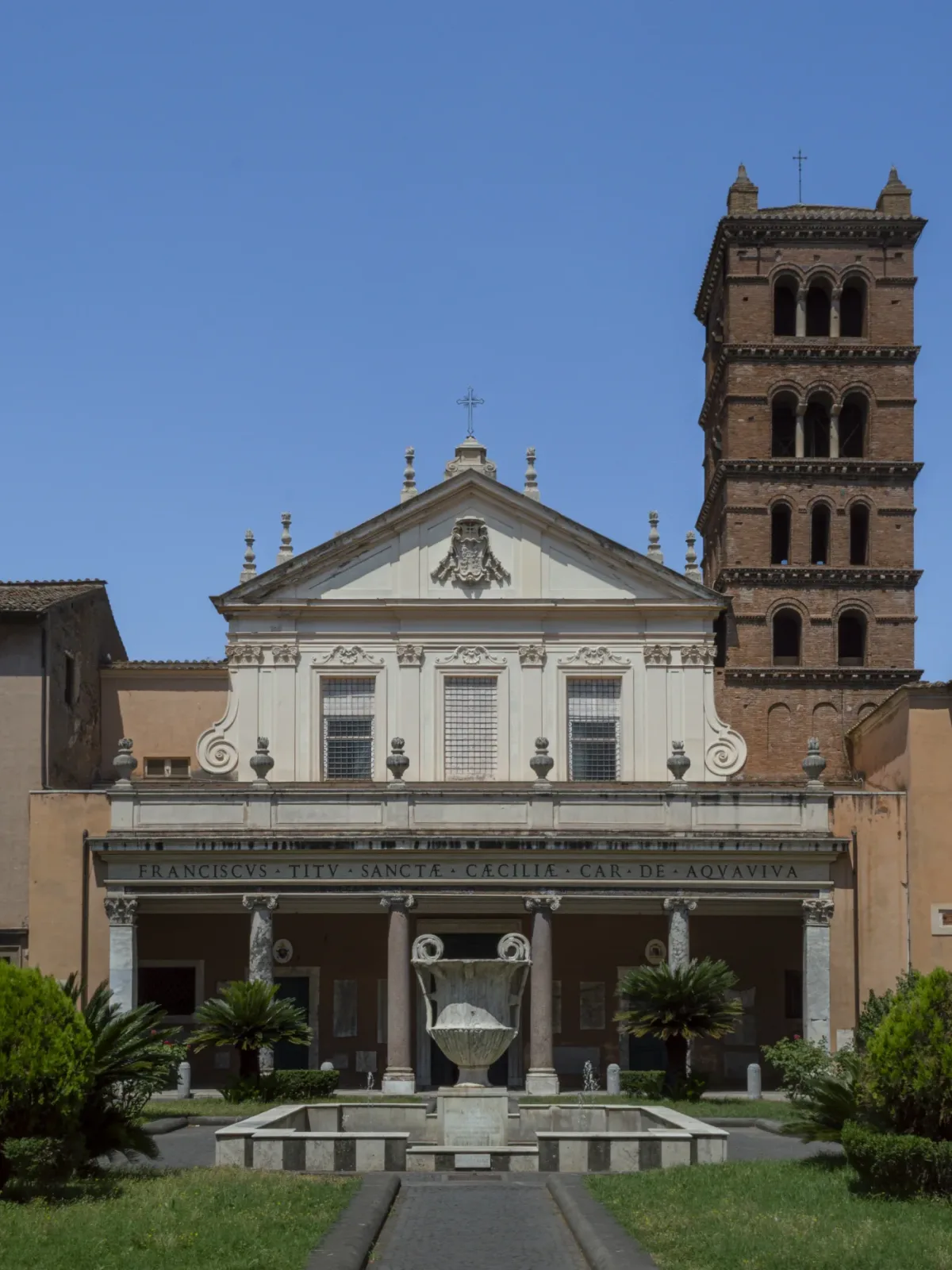
Basilica of Santa Cecilia in Trastevere
The other great church of Trastevere, over the house tradition associates with Cecilia and holding her tomb. The two are the natural Trastevere pairing.
-
Church and convent
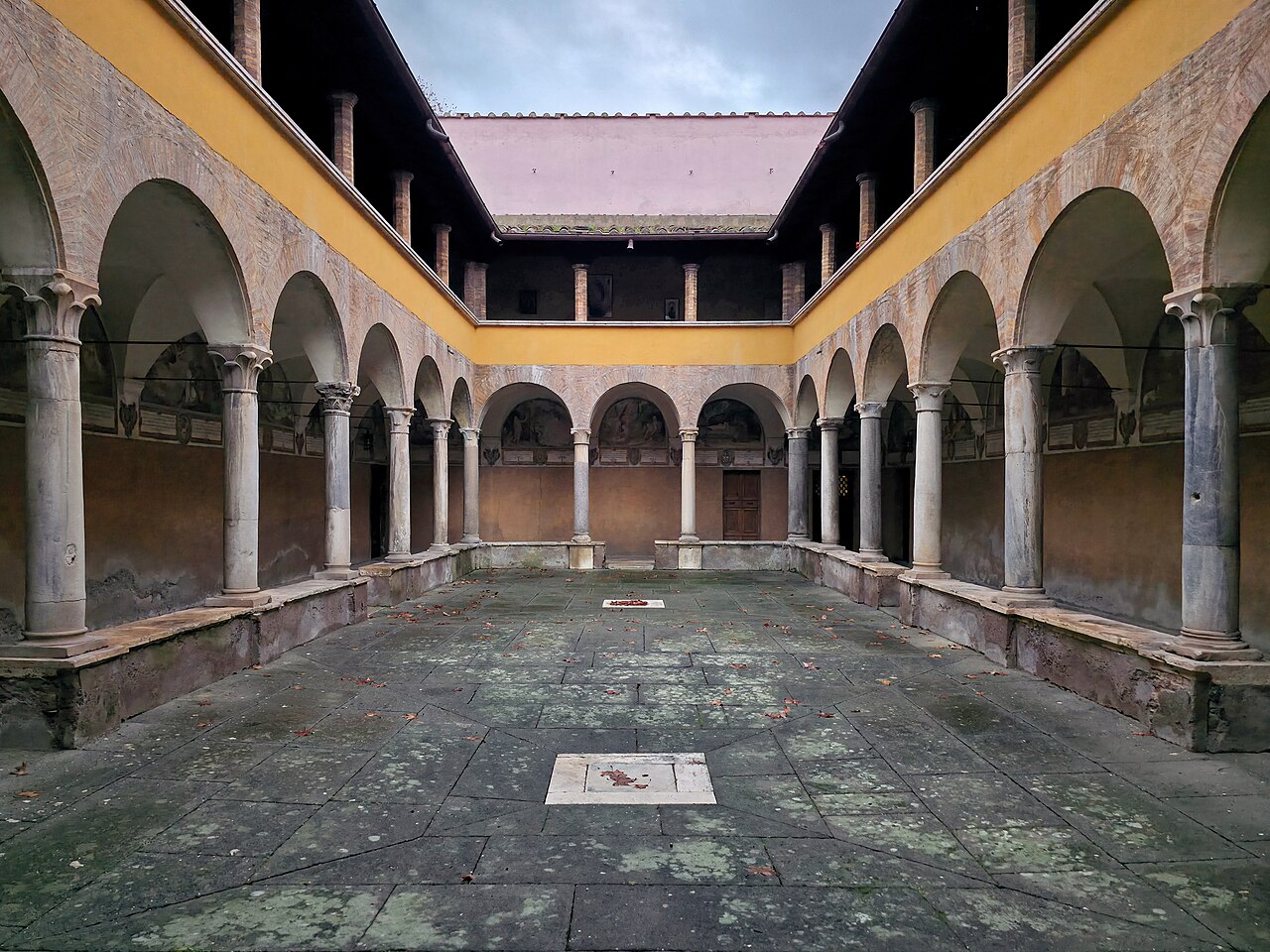
Sant'Onofrio al Gianicolo
Up the Janiculum above Trastevere, the church of the Equestrian Order of the Holy Sepulchre, with frescoes by Pinturicchio and Peruzzi.
-
Catacomb
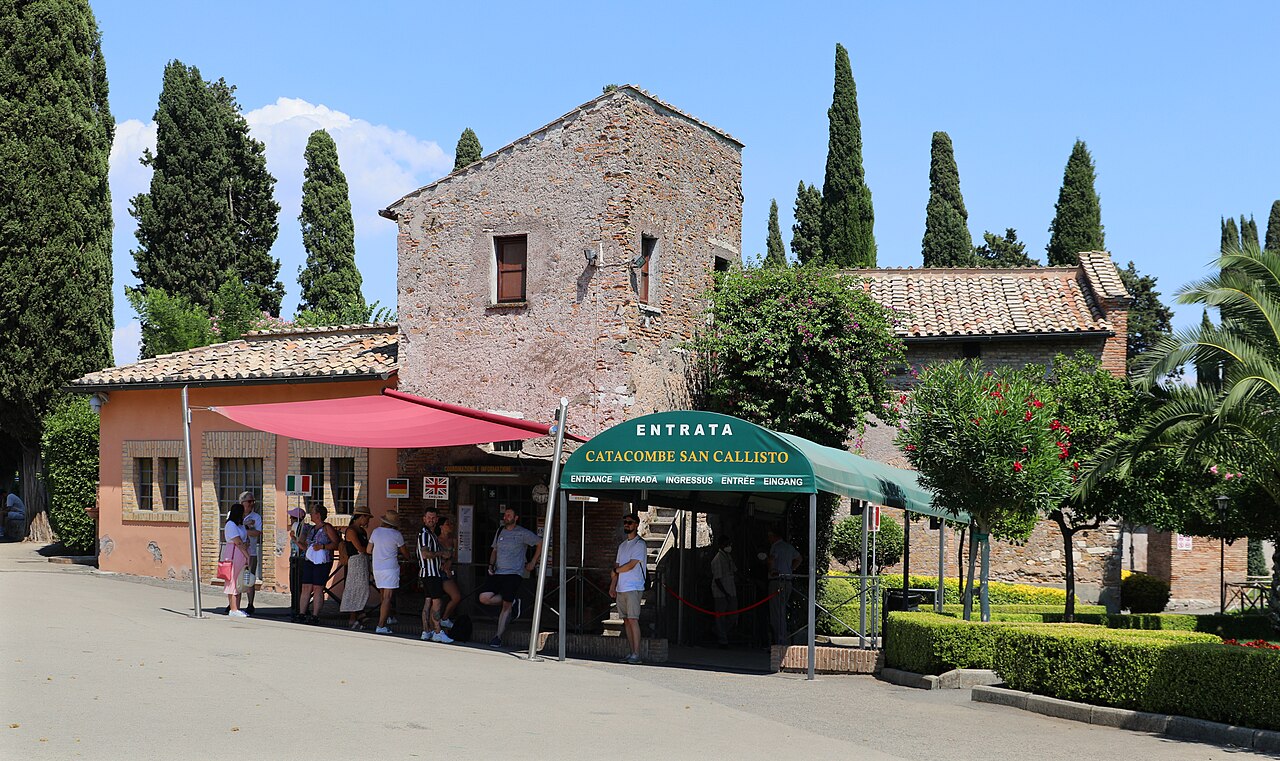
Catacombs of San Callisto
The cemetery Callixtus administered and where Cornelius was buried. The relics in this crypt came from there, which makes the two sites one story.
Map
Editorial sources
Cathopedia, with the Italian episcopal and civic descriptions.
Official
Awaiting source.
Last reviewed
September 13, 2026
Photo credits
- Hero. Diego Delso / Wikimedia Commons (CC BY-SA 4.0). Source. CC BY-SA 4.0.