The altar screen
Colonial sacred artRead it from Saint Michael at the top down to the altar.
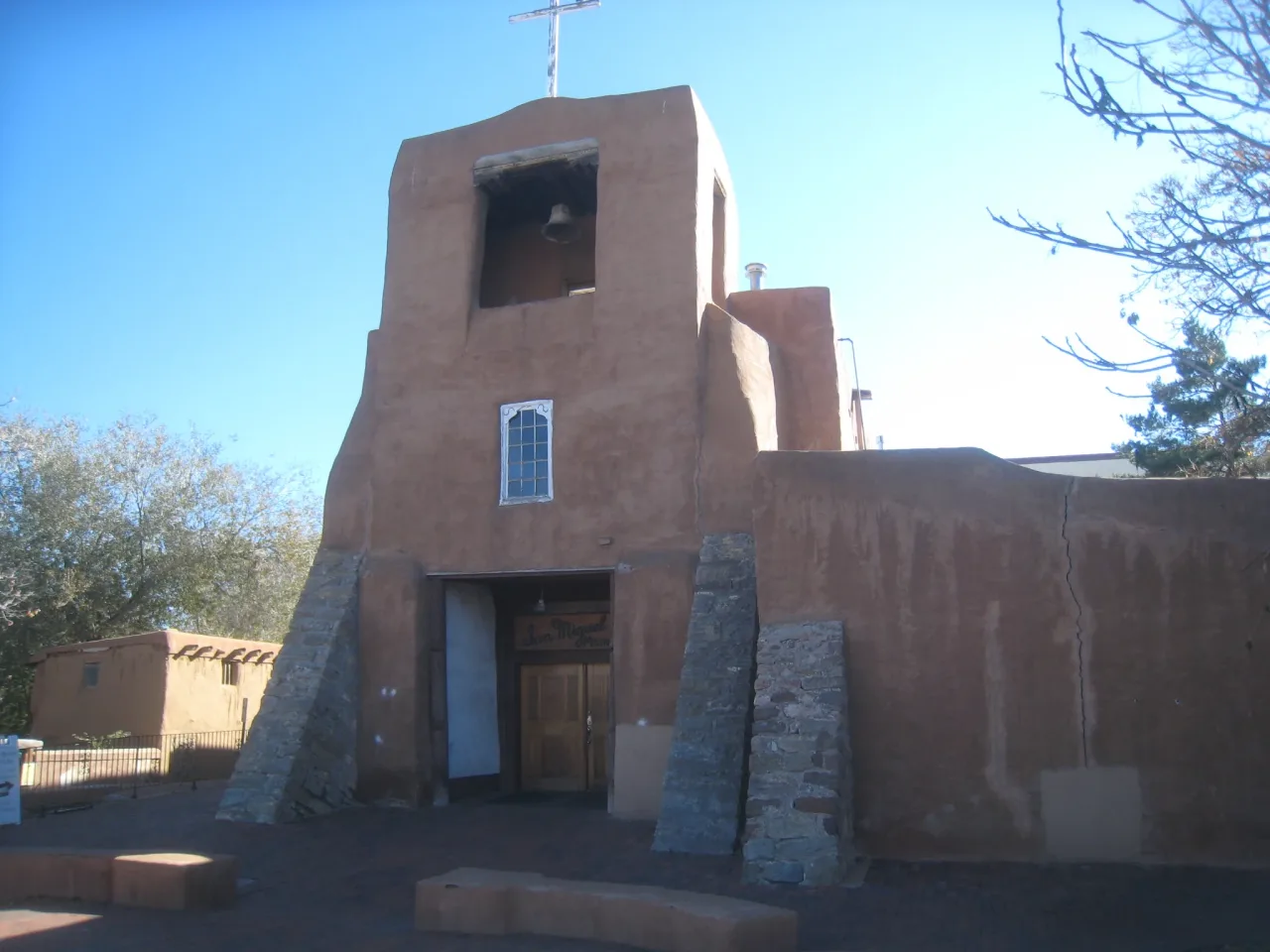
San Miguel ChapelThe chapel of the Tlaxcalan barrio across the river from the Plaza, rebuilt in 1710 on its seventeenth-century site, with an altar screen of 1798 crowned by Saint Michael.
Analco means the other side of the river. In the first decades of Santa Fe, the Spanish lived around the Plaza, and many of the people who built and worked for them lived here, south of the Santa Fe River: Tlaxcalans from central Mexico, who had come north as Catholic allies and settlers of the Spanish. San Miguel was their church.
It is a plain adobe building with stone buttresses and a square tower, small enough to take in from the street. Inside, the room is narrow, under dark beams, and everything leads to one wall: an altar screen of 1798, painted in blue-green, red and gold, with Saint Michael at the top.
The chapel's own history dates the first church here to about 1610, the year Santa Fe was founded; the National Park Service gives 1620. It was built by Tlaxcalan settlers under Franciscan direction, on ground where a Tewa pueblo had stood three centuries earlier. A provincial governor at odds with the friars damaged it in 1640, and in the Pueblo Revolt of 1680 its roof was burned and its walls broken.
After Diego de Vargas resettled the city, the chapel was rebuilt on the same site. A beam under the choir loft names the governor, the Marqués de la Peñuela, and the year 1710, and tree-ring dating of the timbers agrees. Most of what a visitor sees belongs to that rebuilding and to later repairs: the buttresses of the late 1880s, the altar screen cleaned in 1955, the adobe plaster renewed since 2010.
So the chapel's claim to be the oldest church in the continental United States rests on its site and its dedication more than on its walls. The worship goes back to the first years of Santa Fe; the walls go back to 1710. Since 1859 the chapel has belonged to St. Michael's, the school the Christian Brothers founded at Lamy's invitation. The school keeps it open, and the archdiocese provides its Masses.
The present tower is later than the chapel. The three-tiered tower of 1848 was brought down by a windstorm in 1872, and its bell, the San José bell, has been kept inside the chapel since 1895. Through the door the nave runs straight to the sanctuary under its beams. Small windows set into the floor near the altar show the earth floor beneath. The altar screen fills the east wall, with Solomonic columns, painted niches, oval portraits of saints and, at the top, Saint Michael. Two paintings on hide hang on the walls.
First built for the Tlaxcalan settlers of the Barrio de Analco in the early seventeenth century
Burned in the Pueblo Revolt of 1680
Rebuilt in 1710, the year carved on the choir-loft beam
Owned since 1859 by St. Michael's, the Christian Brothers' school
A chapel without a parish. A school keeps it, visitors pay a small admission, and Mass is celebrated once a month. Most people walk through in a few minutes; the altar screen rewards anyone who stays and sits.
Made in 1798 and attributed to the Laguna Santero; cleaned of five coats of white paint in 1955.
The painting the chapel attributes to Bernardo Miera y Pacheco, about 1755.
A Crucifixion on buffalo hide and a saint on elk or deer hide, teaching images from the mission era.
Small panes in the sanctuary floor showing the earth floor beneath.
Hung in the tower in 1856, brought down by the windstorm of 1872, and kept inside since 1895.
Sit in a pew before reading the panels, and give the altar screen time. Look down through the floor windows near the sanctuary, find the San José bell, and look for the 1710 beam under the choir loft on the way out.
The chapel has no parish or resident priest. A small admission supports its preservation.
Worship
Visiting
The chapel points visitors to the state tourism lot across Old Santa Fe Trail from the Roundhouse.
Read it from Saint Michael at the top down to the altar.
San Miguel ChapelAsk Saint Michael for protection, as the chapel's dedication invites.
San Miguel ChapelLook at them as the Gospel carried on foot: rolled up, carried to a village, and unrolled.
San Miguel ChapelSource note Traditional attributions are presented as tradition, with documentation named where it exists.
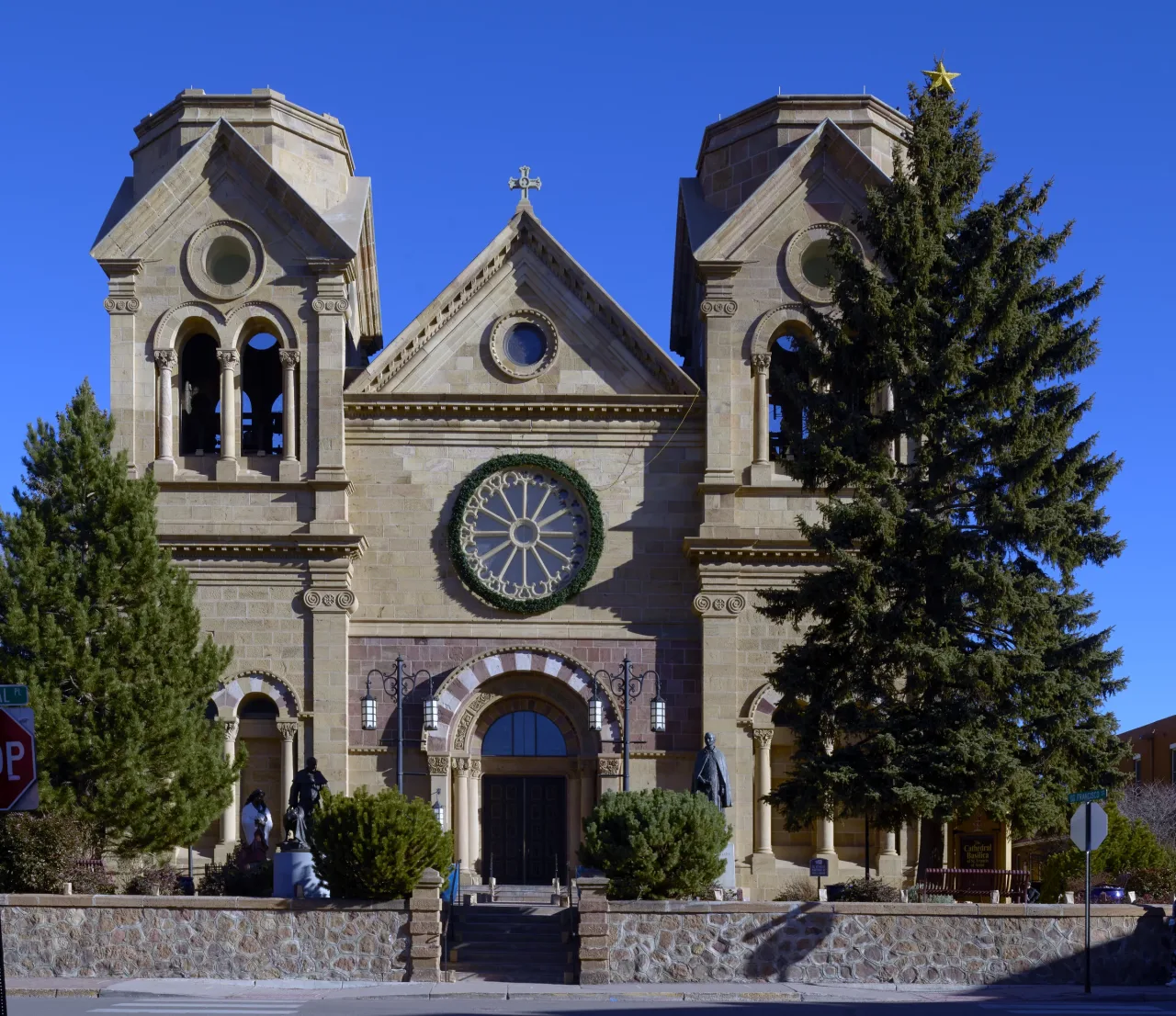
Lamy's cathedral and La Conquistadora, about seven minutes on foot across the river.
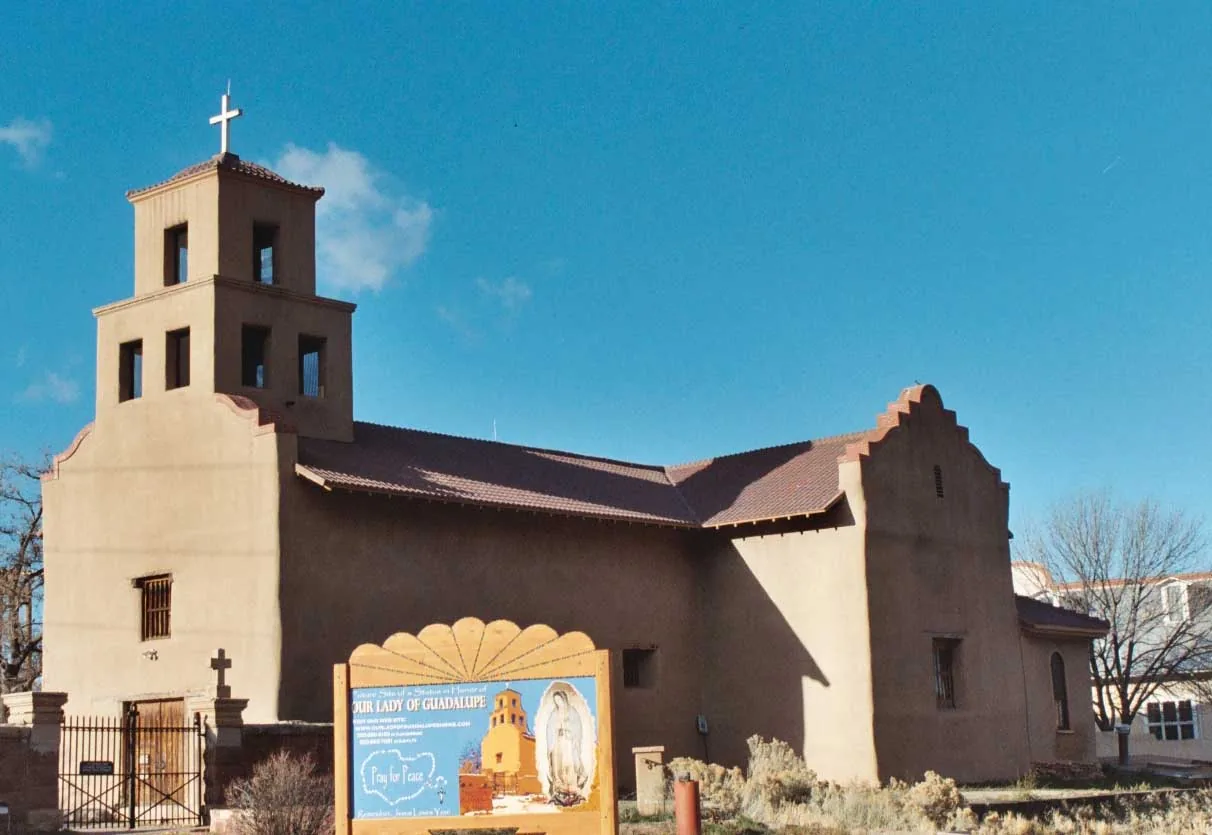
The Guadalupe Santuario and its 1783 altar painting, about fifteen minutes on foot.
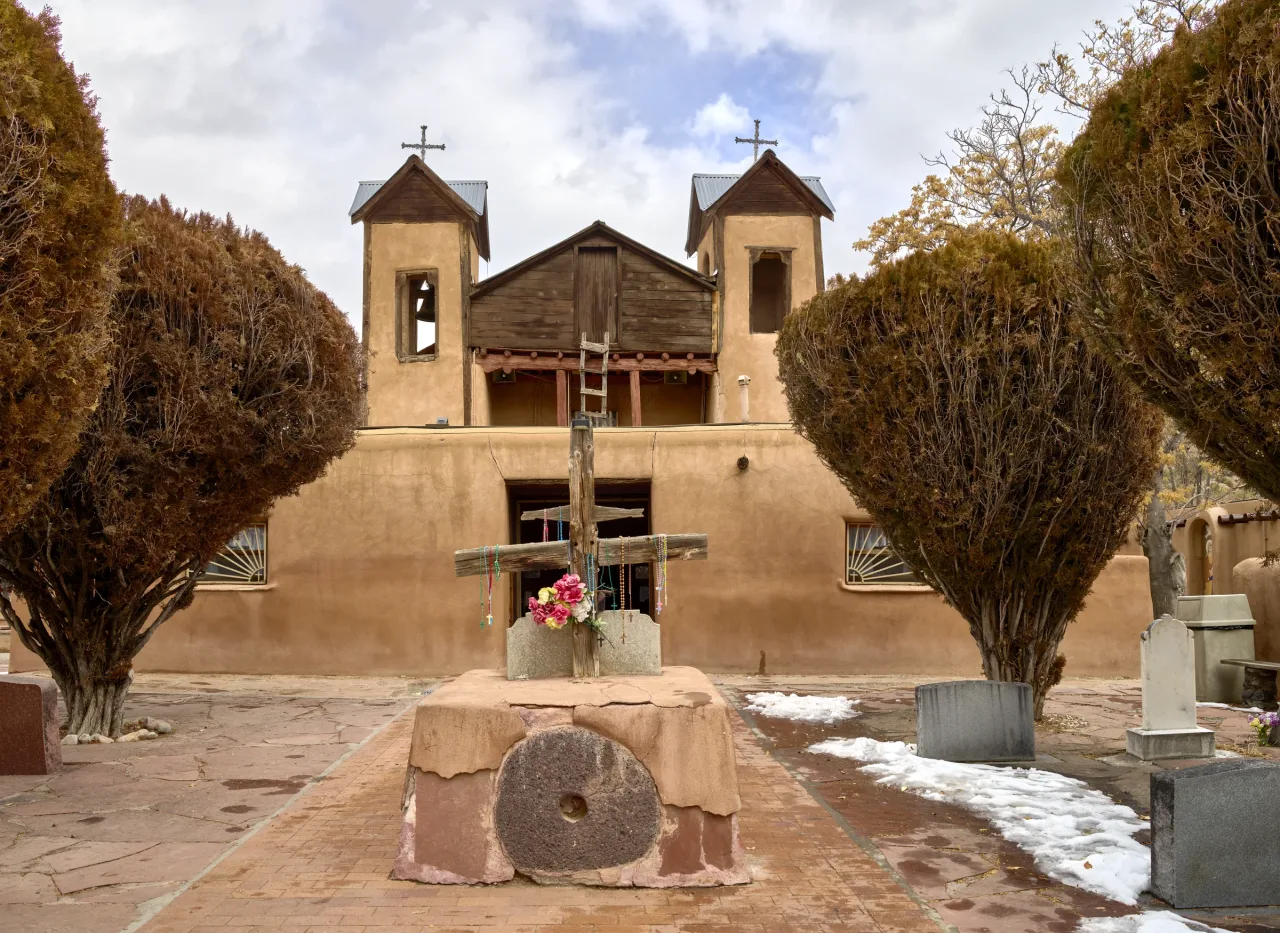
The Santuario of Our Lord of Esquipulas, about 45 minutes north on the High Road.
Official church sources.
November 3, 2026
Use this for corrections, broken links, missing places, and planning ideas.