
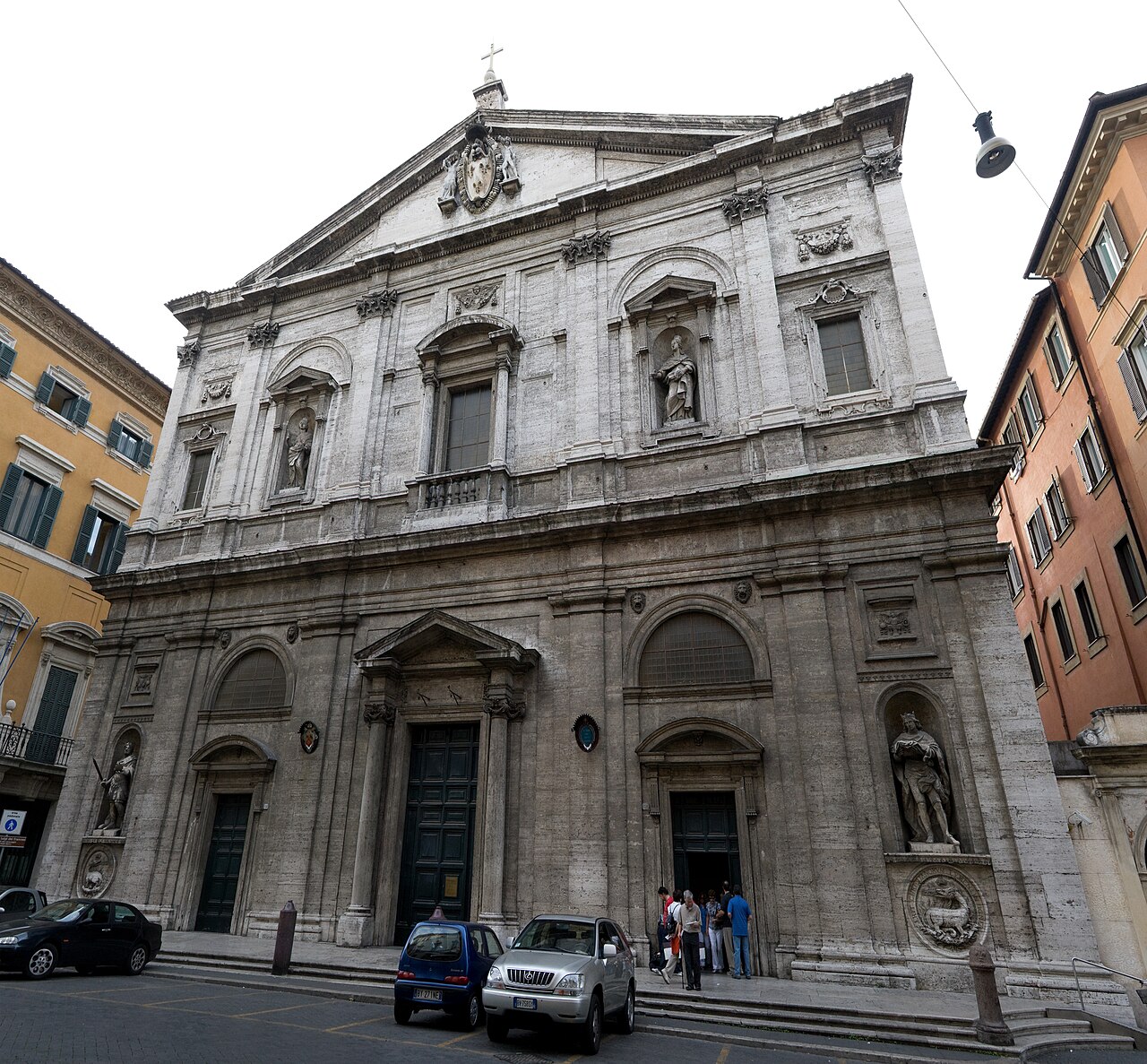
Church of San Luigi dei Francesi, Rome
Three paintings about one man's vocation, still in the chapel they were painted for, in the French national church a few minutes from the Pantheon.
- Location
- Rome, Italy 41.8988° N · 12.4762° E
- Type
- National church of France and parish A late Renaissance church completed in 1589 by Domenico Fontana to a design by Giacomo della Porta
- Dedication
- Saint Louis, king of France; with the Virgin and Saint Denis The Contarelli Chapel
- Time Needed
- 1 hour to half a day
Why Go
Where a calling was painted
Come because these paintings have never left the room they were made for. That is rarer than it sounds and it changes what they are. In a gallery the Calling of Saint Matthew is a famous picture; here it is one wall of a chapel where the Mass is said, hung so that the light in the painting runs the same way as the light from the chapel window. Caravaggio was painting a sacrament of vocation, not a genre scene, and the chapel still functions as the setting for that argument.
A cardinal's chapel, a difficult painter, and a rejected altarpiece
Mathieu Cointrel, a French cardinal known in Rome as Matteo Contarelli, bought the chapel in 1585 and left instructions for its decoration around the life of Saint Matthew. The work stalled. Caravaggio signed his contract on July 23, 1599 for the two side walls, and the Calling and the Martyrdom were in place by 1600. The altarpiece came after, and it came twice: the first version was refused by the clergy, and it later passed into a Berlin collection where it was destroyed in 1945. What stands above the altar today is Caravaggio's second attempt, painted to be acceptable in the place where Mass is offered.
That refusal is worth holding on to, because it is the clearest evidence that this chapel was never a gallery. The picture had to serve the altar. A rejected altarpiece is a liturgical judgment, not an aesthetic one.
The church around the chapel is older in intention than in fabric. Cardinal Giulio de' Medici, who became Clement VII, founded it for the French in Rome in 1518; it was completed in 1589 by Domenico Fontana on Giacomo della Porta's design. It remains the national church of France, and the arms of France on the facade are a statement about who prays here.
A late Renaissance facade with the French royal arms, and a rich interior of side chapels. The Contarelli Chapel is the last on the left. The second chapel of the right aisle is given to Saint Cecilia, frescoed by Domenichino with an altarpiece by Guido Reni, which makes this church a companion to her basilica across the river.
The order of the three Caravaggios, which is a sequence and not a display
The coat of arms of France on the facade, which says what kind of church this is
The lighting box at the chapel, which most visitors feed without looking at the altar beneath
Spiritual Significance
The Calling hangs where it was commissioned to hang, and it is still an altarpiece before it is a masterpiece.
This is a busy church with a crowd in one corner of it, and the crowd is quiet in a way that surprises people. The chapel is roped, lit by coin, and closed for the liturgy. Coming early, or coming when Mass has just ended, is the difference between seeing the paintings and standing behind three rows of phones.
Do Not Miss
-
The Calling of Saint Matthew
Left wall. A hand, a shaft of light, and a man who has not yet understood that it means him. The most quoted gesture in Roman painting.
-
Saint Matthew and the Angel
The altarpiece, and Caravaggio's second version. The first was refused by the clergy and was destroyed in Berlin in 1945.
-
The Martyrdom of Saint Matthew
Right wall. The apostle struck down at the altar, which is where the chapel's own altar stands. The placement is the argument.
-
The Cecilia chapel
Second on the right, frescoed by Domenichino with an altarpiece by Guido Reni. Almost nobody turns around to find it.
-
The arms of France
On the facade. This is a national church, and the liturgy here is French.
What to notice
- That the light in the Calling enters from the same side as the chapel's real window
- How much of each painting is darkness, and how little needs to be lit
- That the Martyrdom is set at an altar, hung beside a real one
- The rail, the coin box, and the fact that the chapel shuts for Mass
- How quickly the room empties when the lights go out
Visit Plans
-
The Contarelli Chapel properly, and the Cecilia chapel.
-
The whole church without hurrying, and a second look at the Calling.
-
With the Pantheon and the Minerva, which are both a few minutes away.
Early morning or just after a weekday Mass. Avoid the middle of the afternoon. Pair with the Pantheon and Santa Maria sopra Minerva.
How to Visit
How to Visit
Read the chapel in order. The Calling on the left, then the altarpiece, then the Martyrdom on the right: summons, work, death. Stand back far enough to see all three at once before looking at any one closely. Then find the Cecilia chapel, which nearly everyone walks past.
- The liturgy of the French community in Rome, celebrated in French
- The feast of Saint Louis on August 25
- Mass at the Contarelli altar, beneath the Caravaggio that was painted to stand there
- A working church whose most famous chapel closes for the liturgy
Relics, Tombs, Sacred Objects
Tomb and Burial
- No major shrine or tomb of a saint is here. The church is a national church and a parish of the French community, not a pilgrimage tomb.
Relics and Sacred Tradition
- The church is not a relic shrine. What draws pilgrims is a chapel of paintings about a calling.
Sacred Objects
- The Calling of Saint Matthew, on the left wall of the Contarelli Chapel
- Saint Matthew and the Angel, the altarpiece, which is Caravaggio's second version of that subject
- The Martyrdom of Saint Matthew, on the right wall, showing the apostle struck down at the altar
- The frescoes of the life of Saint Cecilia by Domenichino in the second chapel of the right aisle, with an altarpiece by Guido Reni
Connected Saints
Continue Your Pilgrimage
-
City hub
Rome
Where this church sits within the wider Catholic geography of Rome.
-
Basilica
The Pantheon (Santa Maria ad Martyres)
The ancient temple consecrated as a church of the Virgin and the martyrs in 609. The natural next stop on this square of streets.
-
Basilica
Santa Maria sopra Minerva
The Dominican church of Rome, with the tomb of Saint Catherine of Siena, just beyond the Pantheon.
-
Basilica
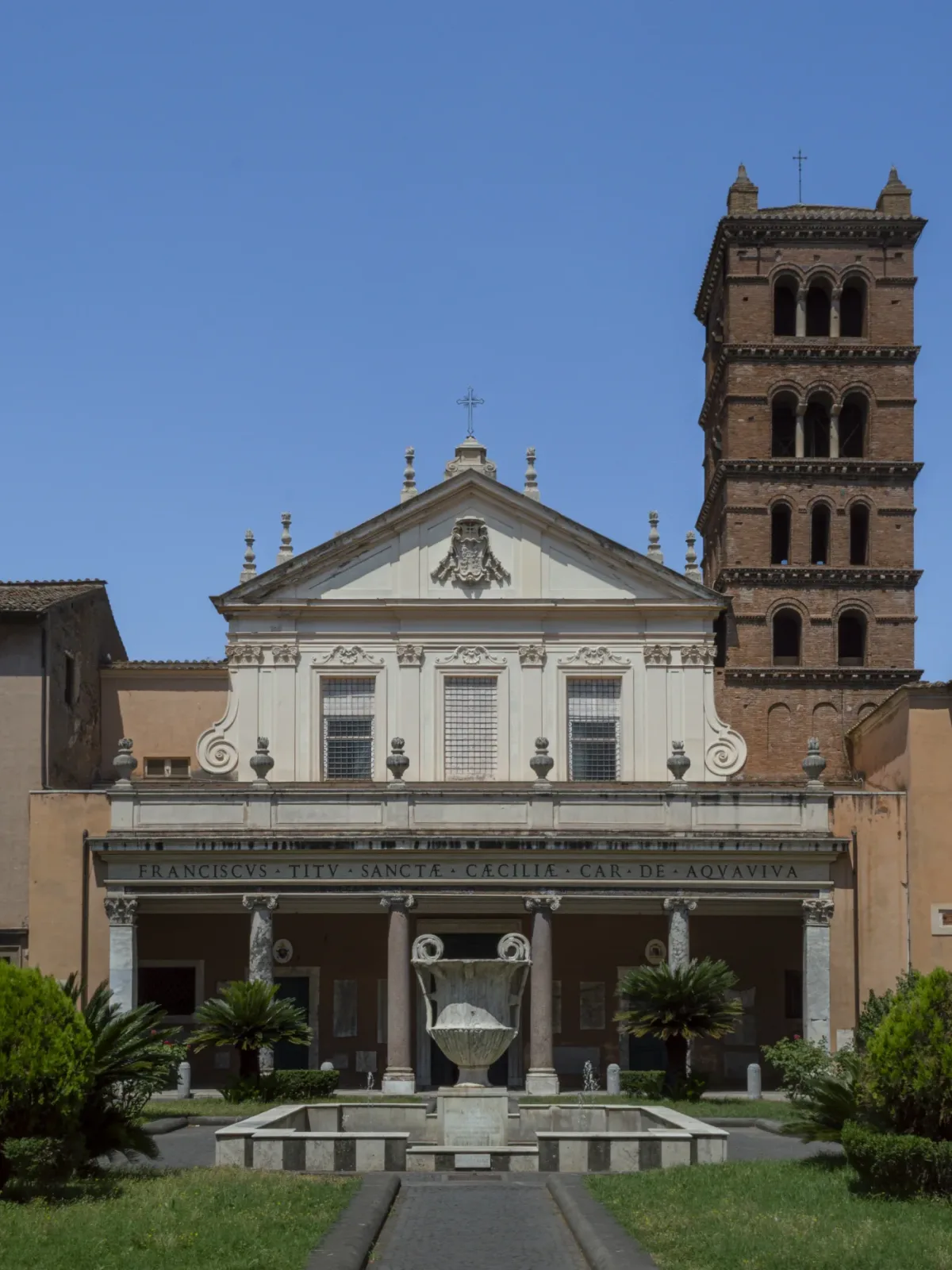
Basilica of Santa Cecilia in Trastevere
Her own basilica and tomb. The Domenichino chapel here was painted in the years when her cult in Rome was at its height.
Map
Editorial sources
The city's cultural service and the documented Contarelli Chapel commission.
Official
Awaiting source.
Last reviewed
September 13, 2026