
Sanctuary of Las Nazarenas and the Lord of Miracles
Las Nazarenas is the sanctuary of the Lord of Miracles, a wall image of the crucified Christ painted by an enslaved man of Angolan origin, whose Afro-Peruvian confraternity and October procession are at the heart of Lima's devotion.
- Location
- Lima, Peru 12.0456° S · 77.0375° W
- Type
- Sanctuary of the Lord of Miracles in the historic center of Lima An eighteenth-century church raised around the surviving painted wall, rebuilt after earthquakes, on Avenida Tacna
- Dedication
- The Lord of Miracles (Senor de los Milagros)
The Lord of Miracles
Come here to meet the devotion that most fills the streets of Lima. The Lord of Miracles began with an enslaved African painter and a wall that survived the earthquakes, and it is carried still by the confraternity born among Afro-Peruvian Catholics.
A Wall, an Earthquake, and a People
In the middle of the seventeenth century, in the Lima neighborhood of Pachacamilla where African confraternities gathered, an enslaved man of Angolan origin painted an image of the crucified Christ on the wall of a humble meeting place. When the great earthquake of 1655 brought down the buildings around it and the wall was left standing, the survival was received as a sign, and a devotion began to grow. Further earthquakes across the following century spared the image again, and the devotion spread through the city. In the eighteenth century a church was raised around the wall and entrusted to a community of Nazarene Carmelite nuns, and a confraternity, rooted among the Afro-Peruvian Catholics who had first honored the image, took up its care. The Afro-Peruvian and Angolan origin of the Lord of Miracles is not a footnote to the devotion; it is its beginning.
The sanctuary is an eighteenth-century church, repaired after later earthquakes, built so that the surviving painted wall stands at its heart behind the high altar. The image kept for the procession is a copy of that wall painting, set on a heavy silver-framed litter, the anda, that is carried by the confraternity through the streets. The purple of the confraternity's habit colors the whole October season in Lima.
The image was painted by an enslaved man of Angolan origin in the Pachacamilla neighborhood, a district of African confraternities.
The wall survived the earthquakes that levelled much of Lima, and the survival was received as a sign that drew a growing devotion.
The confraternity of the Lord of Miracles, rooted among Afro-Peruvian Catholics, has carried the devotion for more than three centuries.
The October procession is among the largest acts of Catholic devotion in the Americas.
Spiritual Significance
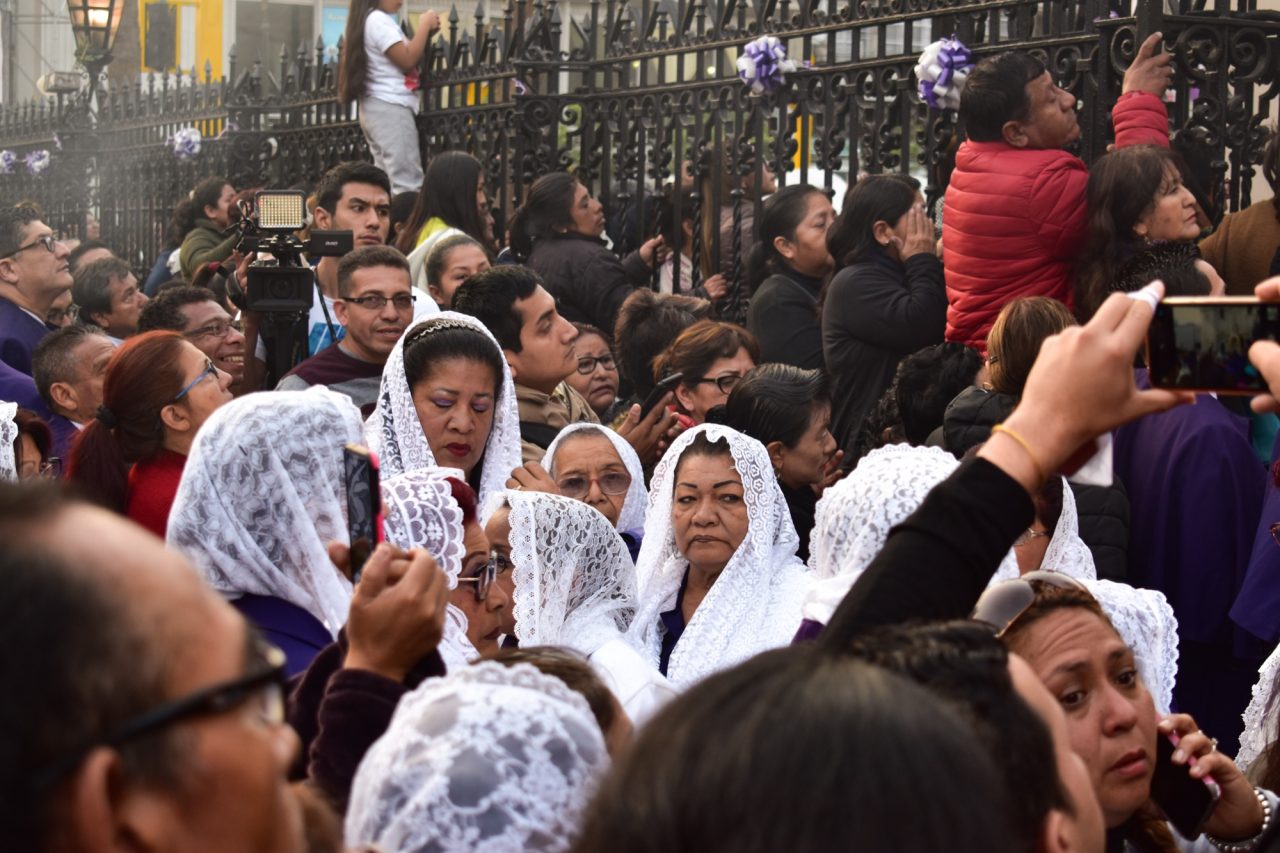
For much of the year Las Nazarenas is a quiet church of daily prayer. Each October it becomes the center of the city's devotion, as the Lord of Miracles is carried in procession over several days, preceded by the sahumadoras with their incense and followed by immense crowds. It is a devotion that Afro-Peruvian Catholics gave to the whole city and, through Peruvian migration, to the world.
Do Not Miss
-
The wall image of the Lord of Miracles
The seventeenth-century painting of the crucified Christ that survived the earthquakes, kept at the heart of the sanctuary.
-
The Afro-Peruvian story
The devotion began with an enslaved man of Angolan origin and the confraternity of Pachacamilla.
-
The October procession
One of the largest acts of Catholic devotion in the Americas, carried by the confraternity in purple.
-
The sahumadoras
The women of the incense guild who walk before the image, a devotion within the devotion.
How to Visit
Visit the sanctuary any time of year to pray before the image and read its Afro-Peruvian story. If you come in October, expect the great processions and vast crowds, and let the devotion set the day rather than a fixed plan.
Come outside October for quiet, or come for the procession.
For most of the year Las Nazarenas is an ordinary parish church, open for prayer with daily Mass. In October the Lord of Miracles is carried in procession on its traditional days and the sanctuary and surrounding streets fill with enormous crowds. Confirm current hours and procession dates locally, and keep normal city awareness in the historic center.
- Time needed
- About thirty to forty-five minutes outside the October season.
- Getting there
- On Avenida Tacna in the historic center, within walking distance of the other churches of the old city.
- Best time
- Any month for a quiet visit; October for the procession, with heavy crowds and altered access.
Opening and access
The October procession
Additional schedule notes
The wall image
The original painted wall stands behind the high altar; ask on arrival about visiting and photography.
A living devotion
This is a working act of faith carried by its confraternity, not a spectacle; join it with respect or pray in the church at a quieter time.
Relics, Tombs, Sacred Objects
Relics and Sacred Tradition
- The devotion centers not on relics of a saint but on the image of Christ crucified painted on the surviving wall, traditionally venerated as the Lord of Miracles.
Sacred Objects
- The original wall image of the crucified Christ, painted in the seventeenth century and kept at the heart of the sanctuary.
- The processional canvas and litter, the anda, carried through the streets each October.
- The purple habit of the confraternity and the incense of the sahumadoras, the women who walk before the image.
Map
Photo credits
- Hero. Emile Saico / Wikimedia Commons (CC BY-SA 4.0). Source. CC BY-SA 4.0.
- The Lord of Miracles. Jossue Zavala / Wikimedia Commons (CC BY-SA 4.0). Source. CC BY-SA 4.0.