High altar and sanctuary
Liturgical centerVisible in the principal church and used in the basilica’s living liturgy.
Basilica official history and walking tourA Polish-American parish built a monumental church; Conventual Franciscans keep it alive as a place of worship, confession, adoration, pilgrimage, and welcome.
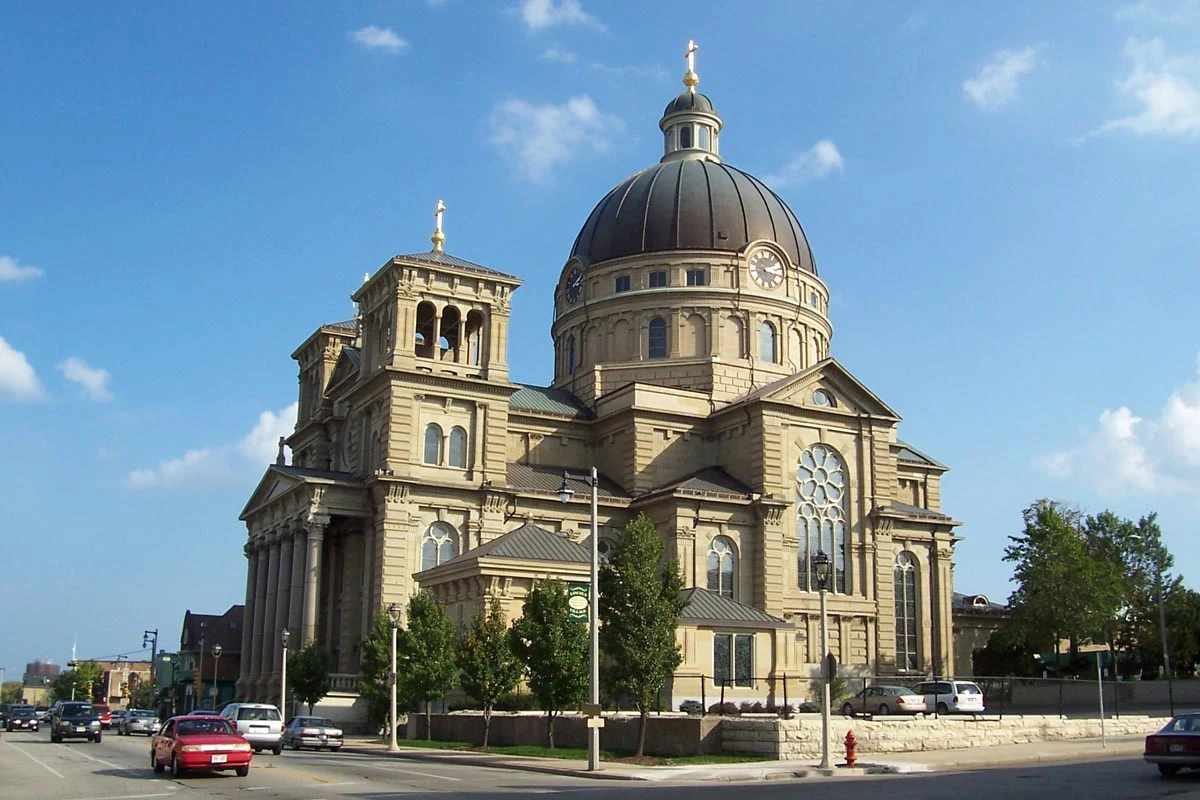
Saint Josaphat earns its place on a Wisconsin pilgrimage for more than architecture. Milwaukee’s Polish Catholic community formed the parish in 1888. The present church opened in 1901, built in part with material salvaged from Chicago’s former federal building. It became the first Polish-American church granted the title of minor basilica in 1929.
That history remains inside a living parish. Conventual Franciscan friars serve the community; Mass, confession, Eucharistic adoration, tours, and organized pilgrimages keep the basilica from becoming a museum of immigrant achievement. Come to pray with the Church that built this place, not merely to photograph what it built.
The parish’s scale grew from the needs and confidence of Milwaukee’s Polish Catholic population. After fire damaged an earlier church, the community undertook the present basilica and reused stone and other material from Chicago’s dismantled federal building. The church opened in 1901. Its great painted interior followed in the 1920s, and the basilica title came in 1929.
The Conventual Franciscans now receive that inheritance as pastoral work: liturgy, confession, preaching, parish life, and pilgrimage. The stones tell one generation’s sacrifice; the sacraments show why the sacrifice mattered.
Read the building from the central dome toward the sanctuary. The broad Renaissance Revival volume, twin towers, and dome give Milwaukee a monumental Catholic landmark, but the interior makes the theological claim. Murals, saints, Polish inscriptions, altars, and vaults gather the eye around Christ’s sacrifice and the communion of saints.
The interior can overwhelm a first visit. Stand where nave and crossing meet, then read outward in a deliberate order.
The dome establishes the basilica’s scale and gathers the painted program above the crossing.
The high altar and sanctuary keep the visual abundance ordered toward the Eucharistic life of the church.
The 1920s decorative program surrounds the pilgrim with Scripture, saints, and the worship of the Church.
Look for the signs of the community that built the church and the friars who continue to serve it.
The dome and drum
The sanctuary and high altar
Franciscan imagery
Polish inscriptions and devotional memory
Saint Josaphat is a parish church before it is an architectural destination. Its basilica dignity, Franciscan custody, sacramental schedule, and current pilgrimages establish the sacred character that earns inclusion in this route.
Stand still long enough to see how the dome organizes the whole interior rather than treating it as one more ornate detail.
The building’s splendor exists for the liturgy. Read the sanctuary before the murals.
The murals and ornament completed in 1926–1928 turn the church into a sustained Catholic account of salvation and the saints.
If the schedule allows, remain for Mass, confession, adoration, or a pilgrimage event. That is the basilica’s strongest evidence.
Move from nave to dome, sanctuary, and side altars, then remain for quiet prayer.
Pair a current Mass, confession, adoration period, or official tour with an unhurried reading of the basilica.
Arrive before a scheduled liturgy or tour, read the nave and dome, then protect quiet time at the sanctuary. The optional Milwaukee extension works only when it does not force Holy Hill into a hurried visit.
Enter quietly and first identify whether Mass, confession, adoration, a funeral, or parish prayer is underway. Begin in the nave, pause beneath the dome, and then read the sanctuary and side altars without crossing occupied prayer space. Use the official walking-tour material or a scheduled tour when available.
The basilica keeps parish, sacramental, visitor-center, tour, and event schedules. Confirm the exact date before travel.
Prayer and Sacraments
Tours and Pilgrimage
The basilica offers visitor resources, tours, and explicit pilgrimage programming.
Visible in the principal church and used in the basilica’s living liturgy.
Basilica official history and walking tourRead from the nave and crossing without interrupting worship.
Basilica official history and walking tourPresent through the basilica’s title, imagery, and parish prayer.
Basilica official historySource note Traditional attributions are presented as tradition, with documentation named where it exists.
Use this for corrections, broken links, missing places, and planning ideas.