
St. Peter the Apostle
A fisherman who confessed Christ, denied him, was restored, and was martyred at Rome, where his tomb still anchors the great basilica.
Lord, to whom shall we go? You have the words of eternal life.
John 6:68 Documented
The Galilean fisherman called by Christ, first among the apostles, and martyr at Rome
Simon was a fisherman of Galilee when Jesus called him from his nets and gave him a new name, Peter, the rock. He becomes the most prominent of the Twelve, the first to confess Jesus as the Christ and the one who denies him on the night of the Passion. Restored by the risen Lord, he leads the early Church through Pentecost and beyond, and by ancient tradition ends his life as a martyr at Rome, buried on the Vatican Hill where his tomb is venerated to this day.
Simon was a married fisherman of Bethsaida and Capernaum, working the Sea of Galilee with his brother Andrew. The Gospels remember the day Jesus called the two brothers from their nets, and the new name Jesus gave him: Cephas, Peter, the rock. From that point Peter stands at the center of the Twelve, the one who speaks first and acts first, for better and for worse.
His prominence is matched by his humanity. At Caesarea Philippi he confesses Jesus as the Christ, the Son of the living God, and receives the promise of the keys. Yet the same Peter rebukes Jesus and is corrected, sinks when his faith falters on the water, and on the night of the Passion denies three times that he knows him. The Gospels keep both the confession and the failure, and the Church has never hidden either.
The turn comes after the Resurrection. By the same Sea of Galilee the risen Christ asks Peter three times whether he loves him, and three times commissions him to feed his sheep, undoing the threefold denial. At Pentecost Peter preaches the first public proclamation of the risen Lord, and the Acts of the Apostles follows him through Jerusalem, Judea and Caesarea as a leader of the young Church and a witness to its opening toward the Gentiles. It is Saint Paul, writing to the Galatians, who places Peter later at Antioch, and the tradition of that Church remembers him as its first bishop.
Ancient tradition carries Peter at the last to Rome, where he is remembered as the first bishop of the city and where he was martyred during the persecution under Nero. He was crucified, by long tradition head downward, and buried in a cemetery on the Vatican Hill. The memory of that grave never left the Roman Church.
To follow Peter is to come to Rome. Pilgrims pray at the Confessio beneath the high altar of Saint Peter's Basilica, raised over the place long venerated as his tomb, and they hold his memory with Paul, the other apostle of Rome, whose blood the city honors on the same June day.
Peter left the Church its founding image of office and forgiveness: the apostle who was given the keys and who wept after his denial, restored and sent to strengthen his brethren. Rome keeps his tomb at the heart of its greatest basilica and counts its bishops in succession from him. Pilgrims still meet him at the Confessio of Saint Peter's, and the city honors him with Paul on June 29, the Solemnity of Saints Peter and Paul. A second observance, the Chair of Saint Peter on February 22, marks his teaching office rather than a relic.
A life, in years and approximate ages.
-
Early 1st centuryBirthA Fisherman of GalileeSimon is born at Bethsaida and works the Sea of Galilee, settling at Capernaum with his brother Andrew. The Gospels remember him as a married man and a fisherman.
-
c. 28 ADCalled from the NetsJesus calls Simon and Andrew from their fishing by the Sea of Galilee. To Simon he gives a new name, Cephas, Peter, the rock.
-
c. 29 ADThe Confession at Caesarea PhilippiPeter confesses Jesus as the Christ, the Son of the living God, and receives the promise of the keys of the Kingdom.
-
c. 30 ADDenial and RestorationOn the night of the Passion Peter denies three times that he knows Jesus. After the Resurrection, by the Sea of Galilee, the risen Christ asks him three times whether he loves him and tells him to feed his sheep.
-
c. 30 ADPentecost and the First PreachingFilled with the Holy Spirit at Pentecost, Peter preaches the first public proclamation of the risen Lord, and the early Church gathers in Jerusalem.
-
c. 30s–40s ADLeadership in Jerusalem, and AntiochActs follows Peter as a leader of the young Church, baptizing the centurion Cornelius at Caesarea and witnessing its opening to the Gentiles. Antioch comes from a different source: Saint Paul tells the Galatians that Cephas came there, and the tradition of that Church remembers him as its first bishop.
-
c. 49 ADThe Council of JerusalemAt the Council of Jerusalem Peter speaks for receiving Gentile believers without the full observance of the Law, the question that shaped the mission of the early Church.
-
c. 60s ADPeter at RomeAncient tradition brings Peter to Rome, where he is remembered as the first bishop of the city and a leader of its Christian community in the years before the persecution under Nero.
-
c. 64–67 ADMartyrdom Under NeroTradition holds that Peter was martyred at Rome during the persecution under Nero, crucified, by long tradition head downward, and buried in a cemetery on the Vatican Hill.
-
c. 330 ADAfter deathConstantine's Basilica Over the TombIn the fourth century Constantine raises a great basilica over the Vatican burial ground, marking the place long venerated as the Apostle's grave and giving pilgrims a permanent shrine.
-
1506–1626After deathThe Present BasilicaAcross the Renaissance and Baroque the present Saint Peter's Basilica rises over the same ground, its high altar and Confessio set above the tomb. It was consecrated in 1626.
-
1939–1968After deathExcavation of the Vatican NecropolisExcavations beneath the basilica uncover the ancient necropolis and a grave at the place tradition assigns to Peter. In 1968 Paul VI announces that relics identified as the Apostle's have been found, and they are venerated at the tomb.
Dates are approximate where the surviving record is traditional or incomplete.
2 places where this witness remains visible.
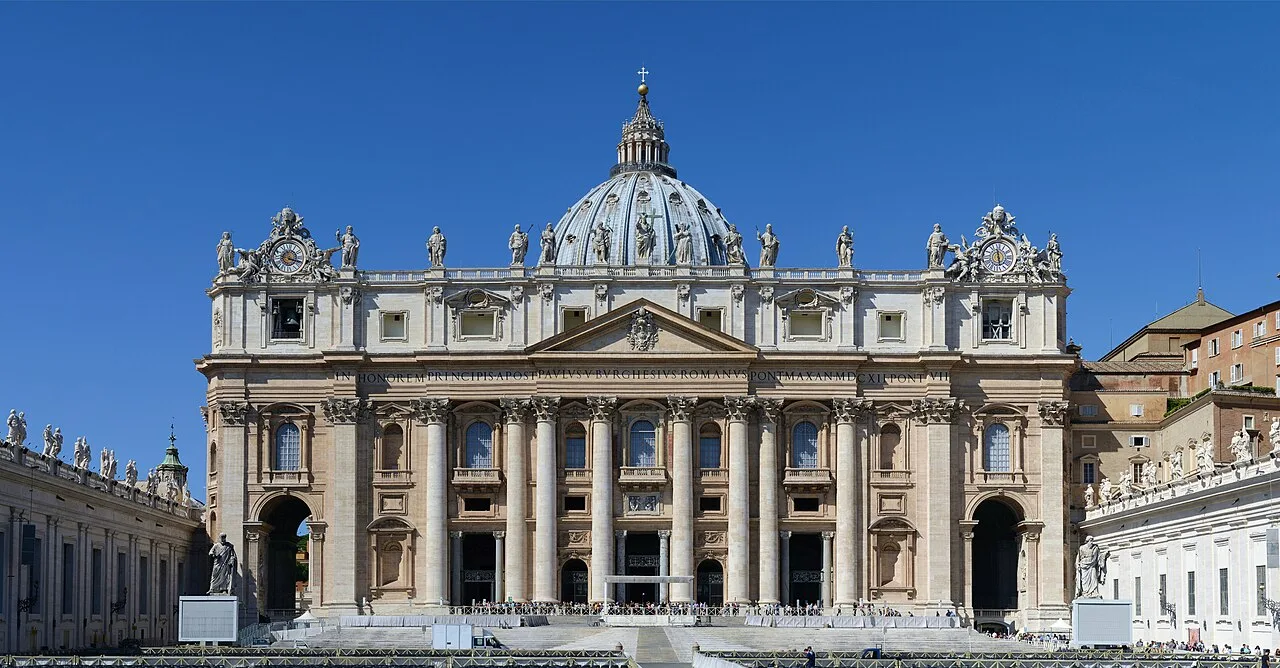
St. Peter's Basilica
The essential Peter pilgrimage stop: a papal basilica on the Vatican Hill raised over the place long venerated as the Apostle's tomb.
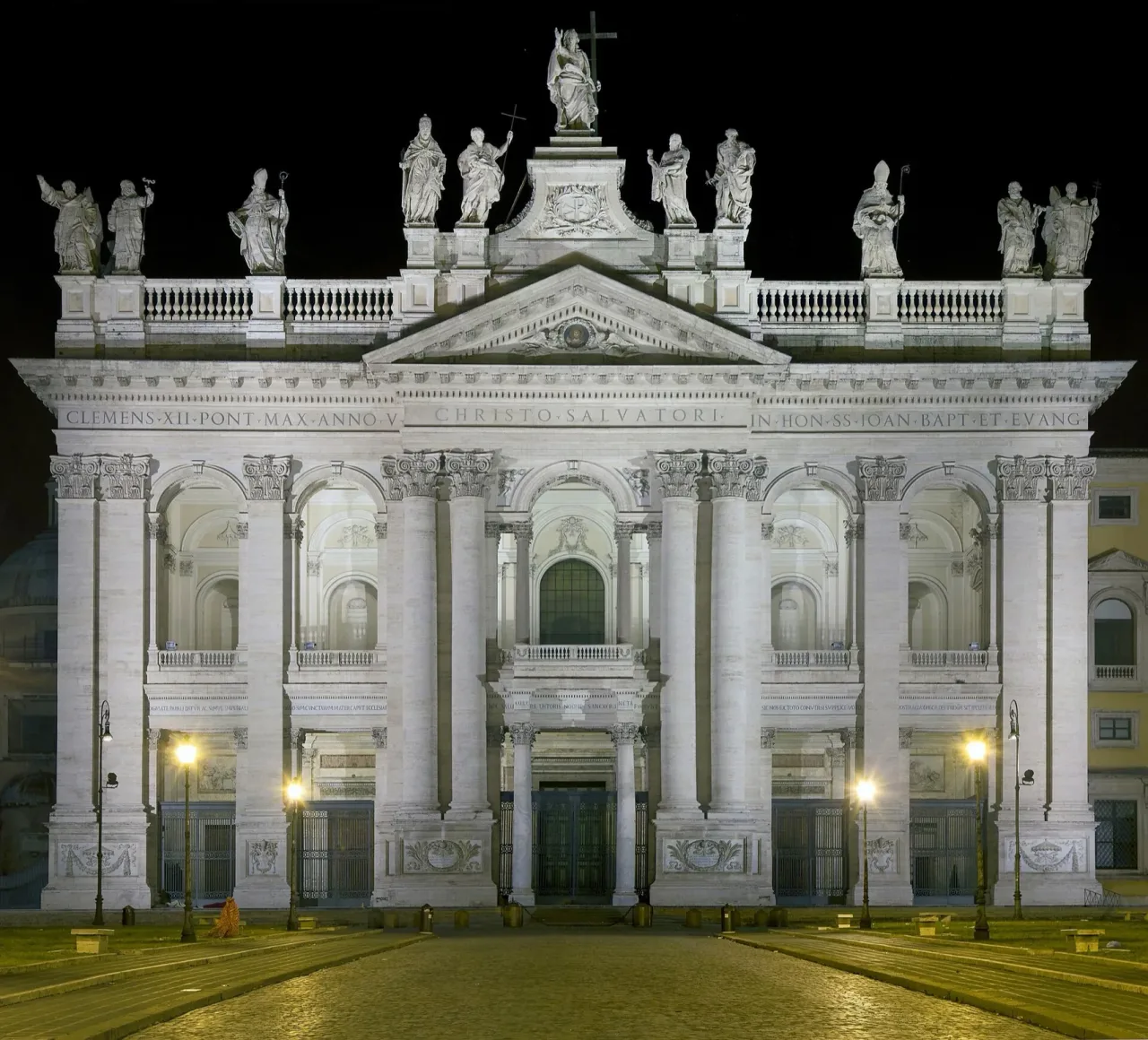
Basilica of St. John Lateran
Traditionally associated with the veneration of the heads of Peter and Paul together at the cathedral of Rome.
Where the relics are venerated.
Rome venerates Peter at the basilica raised over the ancient Vatican burial ground long held as the place of his grave. Pilgrimage to the tomb began at this site in the earliest centuries; Constantine marked it with a basilica in the fourth century, and the present basilica rose over the same ground. Excavations beneath the basilica in the twentieth century uncovered the ancient necropolis and a grave at the spot tradition assigns to the Apostle. Paul VI announced in 1968 that relics identified as the Apostle's had been found there, and they are venerated at the tomb today. Here an ancient apostolic tradition and modern excavation rest on the same ground. A separate tradition venerates the heads of Peter and Paul together at the Basilica of St. John Lateran.
A principal relic site is named, with other fragments or reliquaries noted separately.
Tomb and burial tradition
The essential Peter pilgrimage stop: a papal basilica on the Vatican Hill raised over the place long venerated as the Apostle's tomb.
- Tomb long venerated as Saint Peter's burial place, beneath the high altar at the Confessio
- The Vatican Necropolis, the ancient burial ground excavated beneath the basilica
- Bones recovered near the tomb and venerated since their announcement in 1968
Kindred witnesses
-
Fellow apostle of Rome
Saint Paul the Apostle
The other apostle of Rome, joined with Peter in the city's memory and in the feast of June 29. -
Peter's brother
Saint Andrew the Apostle
Peter's own brother, called from the same nets by the Sea of Galilee.

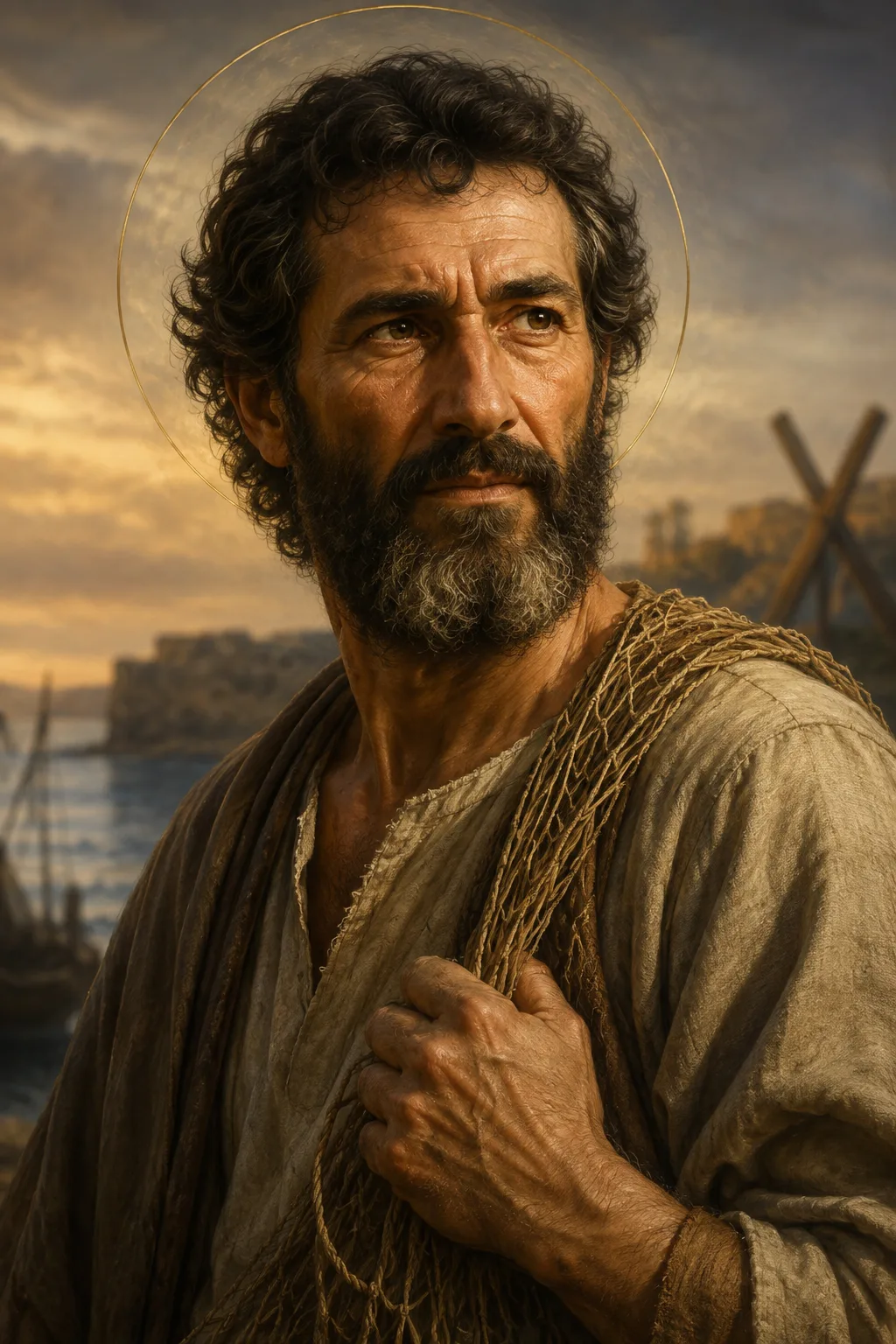
Showing 2 of 4 authored connections with full saint guides.
Kept on June 29.
Peter shares his principal feast, June 29, with Saint Paul as the Solemnity of Saints Peter and Paul, the two apostles Rome honors as its founders. A second observance, the Chair of Saint Peter on February 22, celebrates his teaching office and the unity of the Church rather than a relic or a place.
June 29 is the great day to be in Rome for Peter, when the city keeps its two apostles together and the pallium is blessed at Saint Peter's. For a quieter visit focused on Peter alone, February 22 marks the Chair of Saint Peter.
Follow St. Peter through Rome
Peter's Roman witness centers on his tomb beneath St. Peter's Basilica, held within Rome's ancient memory of the two apostles.
-
Principal tomb
St. Peter's Basilica
The basilica rises over the Vatican grave long venerated as Peter's. Pilgrims descend toward the Confessio beneath the high altar, where Rome's apostolic memory becomes a place of prayer.
TraditionalThe Vatican burial tradition is ancient and is supported by the excavations beneath the basilica; the identification is presented as veneration, not as proof beyond dispute.
-
Relic tradition
Archbasilica of St. John Lateran
At Rome's cathedral, the reliquary above the papal altar keeps Peter within the liturgical memory of the bishop's own church.
TraditionalThe reliquary busts above the papal altar are venerated by long-standing tradition as preserving the heads of Peter and Paul.
-
Follow the thread
Apostolic Rome
Peter and Paul give Rome its apostolic axis: two tomb basilicas, one shared feast, and the cathedral of the bishop whose office the Church traces to Peter.
Traditional attributions are identified in context.
Photo credits
- St. Peter's Basilica. Alvesgaspar / Wikimedia Commons (CC BY-SA 4.0). Source. CC BY-SA 4.0.
- Basilica of St. John Lateran. Livioandronico2013 / Wikimedia Commons (CC BY-SA 4.0). Source. CC BY-SA 4.0.