
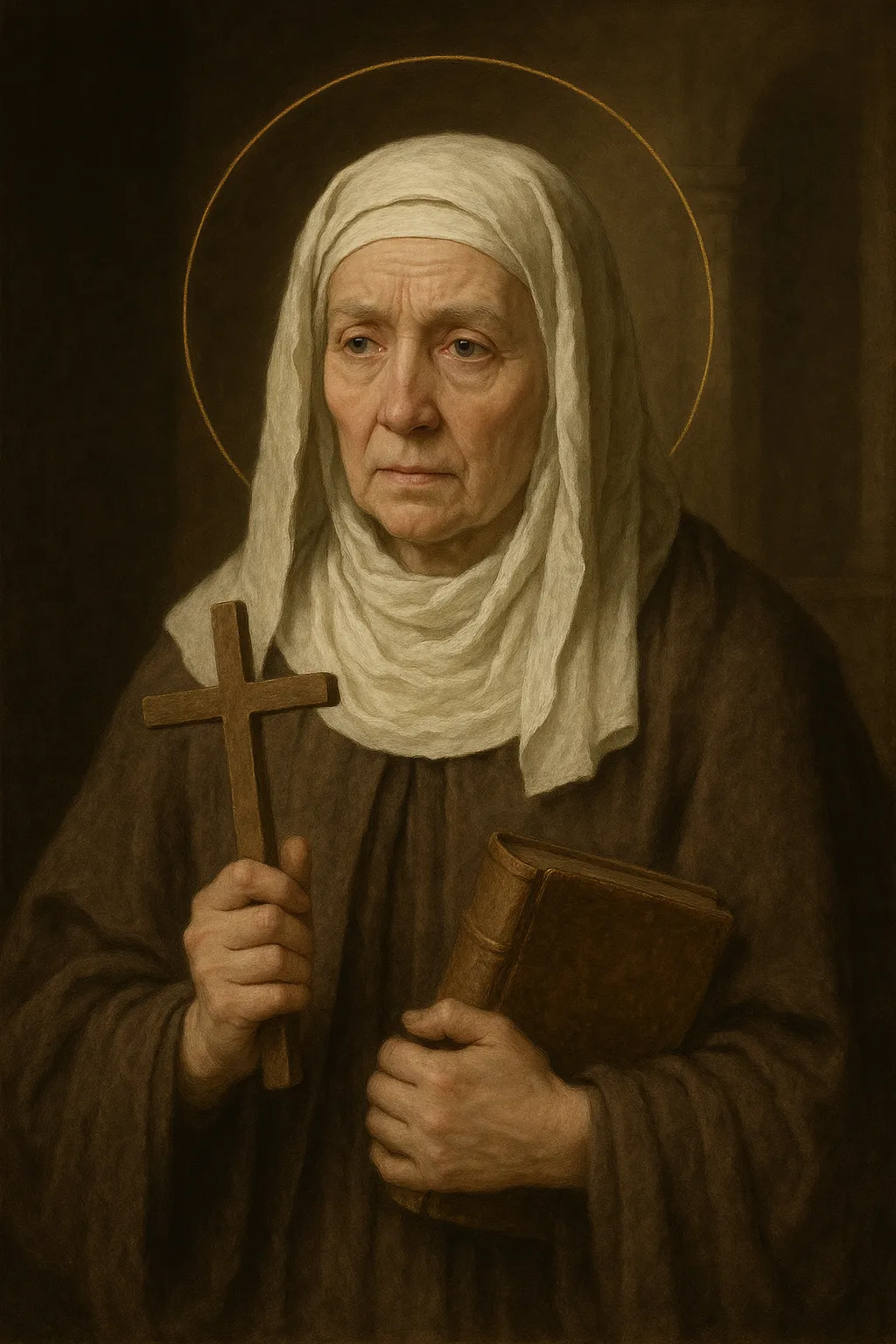
St. Josephine Bakhita
A daughter of Sudan, once enslaved, who found freedom in Christ and spent her religious life in humble charity.
Be good, love the Lord, pray for those who do not know Him.
Holy See biography of Saint Josephine Bakhita Well-attested
The Life and Witness of Josephine Bakhita.
Josephine Bakhita was born free in Darfur, stolen into slavery as a child, and set free by Christ. The cruelty done to her was real, and it is not softened here, but it did not have the last word. What she discovered, and what she gave the Church, was the quiet joy of belonging entirely to God.
Born in Darfur around 1869, she was kidnapped as a child and sold through the slave markets of Sudan. The name by which the Church knows her, Bakhita, was not the name her family gave her. It was the name forced on her after trauma had taken even that first memory.
Her road eventually led to Italy, where she was entrusted for a time to the Canossian Sisters in Venice. There she encountered the Catholic faith, received baptism in 1890, and chose the name Josephine. When pressure came for her to return to her former household, she stood on the freedom recognized by Italian law and chose to remain with the sisters.
Josephine entered the Canossian Daughters of Charity and lived for decades in Schio as a cook, seamstress, sacristan, and porter. The life looked small from outside. From within, it became a steady witness: a woman once treated as property now free enough to serve without bitterness.
Josephine Bakhita is a modern African saint of dignity, healing, anti-trafficking patronage, and freedom in Christ without being reduced to trauma.
A life, in years and approximate ages.
-
c. 1869BirthBirth in DarfurJosephine Bakhita is born in the Darfur region of Sudan, into a family whose original name for her was later lost through trauma.
-
c. 1877About 7 or 8Kidnapped and EnslavedShe is kidnapped at around seven and sold through the slave markets of Sudan, passing through the hands of several masters over the years that follow.
-
1880sTeen yearsBrought to ItalyAfter passing through several households, Bakhita is brought to Italy, where the path toward legal freedom and baptism begins.
-
1890About 21Baptism in VeniceShe receives baptism, confirmation, and First Communion, taking the Christian name Josephine.
-
1896About 27Canossian ProfessionJosephine Bakhita professes vows with the Canossian Daughters of Charity and begins the long hidden service for which Schio remembers her.
-
1947About 78Death in SchioJosephine Bakhita dies at the Canossian convent in Schio after years of ordinary service and prayer.
-
2000After deathCanonizedPope John Paul II canonizes Josephine Bakhita, giving the universal Church a modern African saint of freedom, mercy, and hope.
Dates are approximate where the surviving record is traditional or incomplete.
3 places where this witness remains visible.
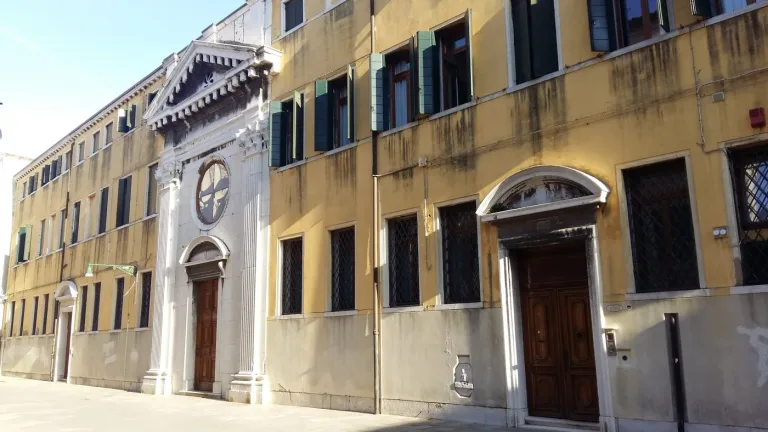
Istituto dei Catecumeni, Venice
Begin where she became free and became a Christian in the same season. Placed with the Canossians here in 1888, Bakhita refused to leave when her legal owner came for her, and an Italian court found that she had never lawfully been a slave. She was baptised on January 9, 1890 by the Patriarch of Venice, Giuseppe Sarto, later Pope Pius X.
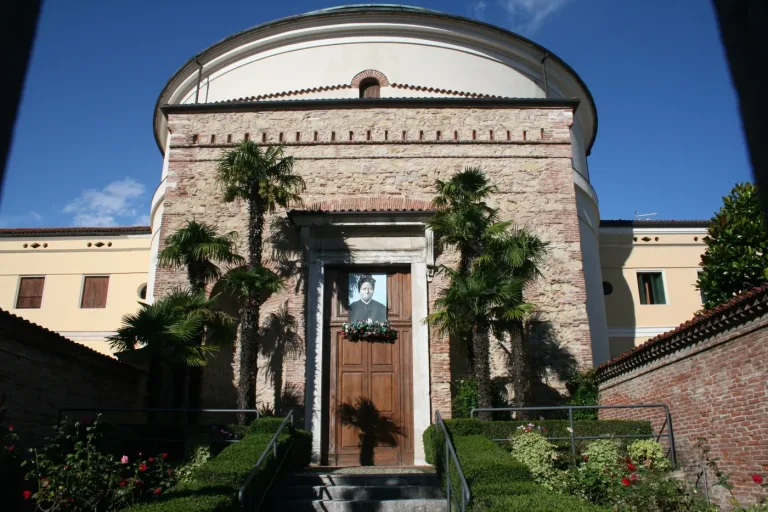
Church of the Holy Family, Canossian Convent, Schio
End at Schio, where she came in 1902 and stayed. She was the cook, then the doorkeeper, and the town called her Madre Moretta. She died here on February 8, 1947, and since 1969 her remains have rested in the presbytery of this church in a bronze and glass urn.
Zianigo, Mirano
Before Venice, Bakhita lived at Zianigo in the household of the Michieli family, where she was nursemaid to their daughter Mimmina. It was from this house that the two were placed with the Canossians in Venice, which is how her freedom and her baptism came about. The village is ordinary and there is no shrine; it is where the turn happened.
Bakhita in the Veneto · 2 stops.
Two places, ninety kilometers apart, hold the free half of her life. Begin in Venice at the house of the catechumens where she was baptised and made her own choice in front of a court, and end at Schio, where she cooked, kept the door, and was loved for forty-five years. The train from Venice to Vicenza and on to Schio makes this a comfortable day.
-
01 Studied and formed here · Place of conversion
Istituto dei Catecumeni, Venice
Dorsoduro, Venice, ItalyBegin where she became free and became a Christian in the same season. Placed with the Canossians here in 1888, Bakhita refused to leave when her legal owner came for her, and an Italian court found that she had never lawfully been a slave. She was baptised on January 9, 1890 by the Patriarch of Venice, Giuseppe Sarto, later Pope Pius X.
-
02 Tomb · Place of death · Lived here
Church of the Holy Family, Canossian Convent, Schio
Schio, Vicenza, ItalyEnd at Schio, where she came in 1902 and stayed. She was the cook, then the doorkeeper, and the town called her Madre Moretta. She died here on February 8, 1947, and since 1969 her remains have rested in the presbytery of this church in a bronze and glass urn.
To see nearby places, open the location page or add this route to a journey.
How to encounter Josephine Bakhita.
Her life turns on freedom: the freedom Christ gave her, which no one could take away. Follow it from Sudan to the convent door in Schio.
Kidnapped and enslaved as a child in Sudan, she lost even the name her family gave her. That truth is held plainly, and it makes the freedom she found in Christ all the greater.
Venice and Schio matter because they mark baptism, legal freedom, religious vocation, and decades of humble charity.
Her patronage belongs especially to those whose dignity has been attacked and to those working for their freedom.
A body venerated in Schio.
Josephine Bakhita died in Schio in 1947. Catholics venerate her remains in the Canossian church there, where her long hidden service became known as holiness.
Schio should remain the principal place of veneration, with Venice and Sudan held as essential context for baptism, freedom, and origin.
A principal relic site is named, with other fragments or reliquaries noted separately.
Church of the Holy Family, Canossian Convent, Schio
Bakhita died at the Canossian house in Schio on February 8, 1947, after forty-five years there. The people of the town filed past her body for three days. Since 1969 her remains have been kept in the presbytery of the convent church in a bronze and glass urn, where pilgrims come to pray, many of them survivors of trafficking and forced labour.
- The remains of Saint Josephine Bakhita, in the presbytery urn
The shrine is open daily and groups are asked to book. Her feast on February 8 is kept internationally as a day of prayer against human trafficking.
Saints Connected to Josephine Bakhita
-
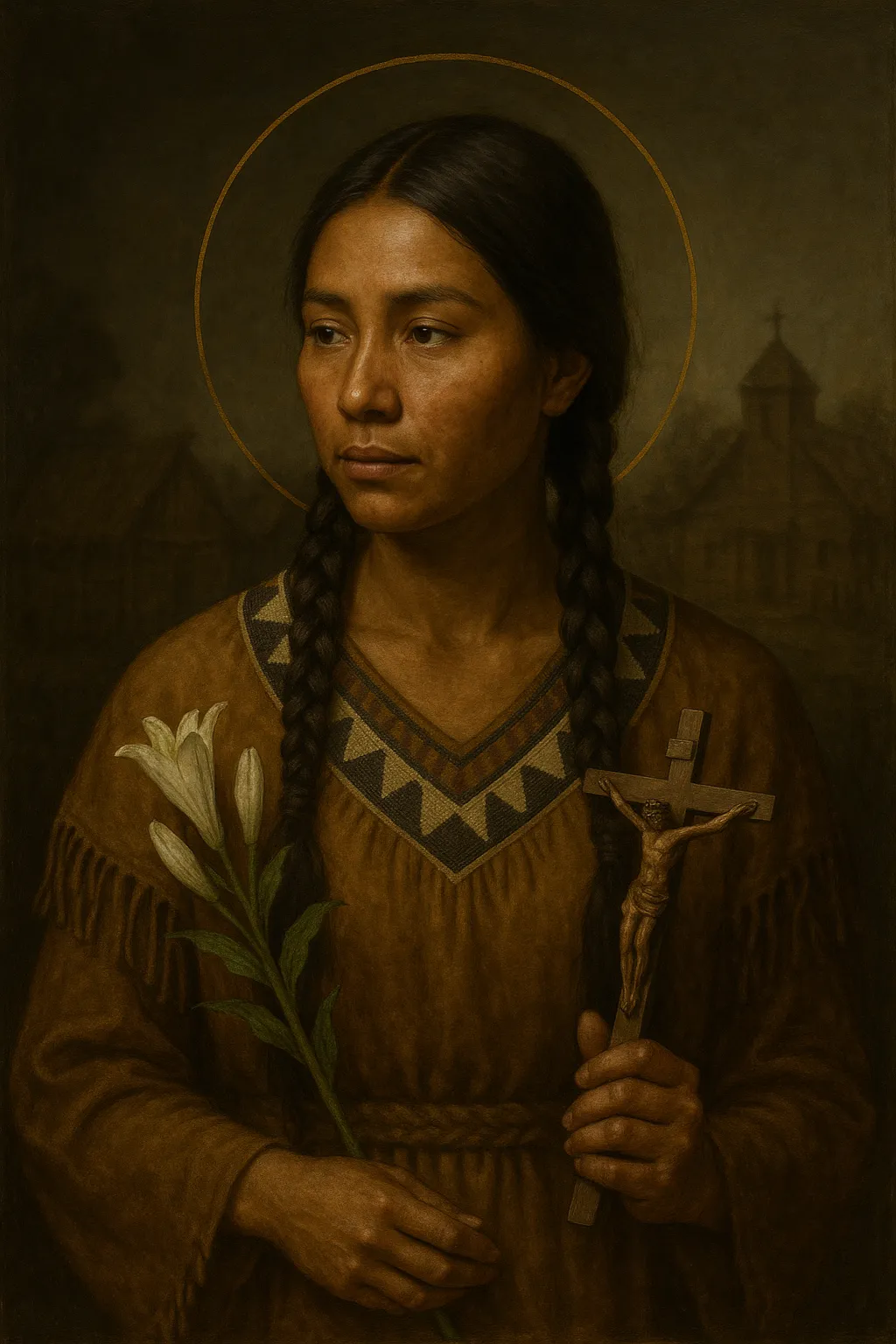
Saint Kateri Tekakwitha
A young Mohawk woman who, like Bakhita, gave her whole self to Christ against real opposition. -
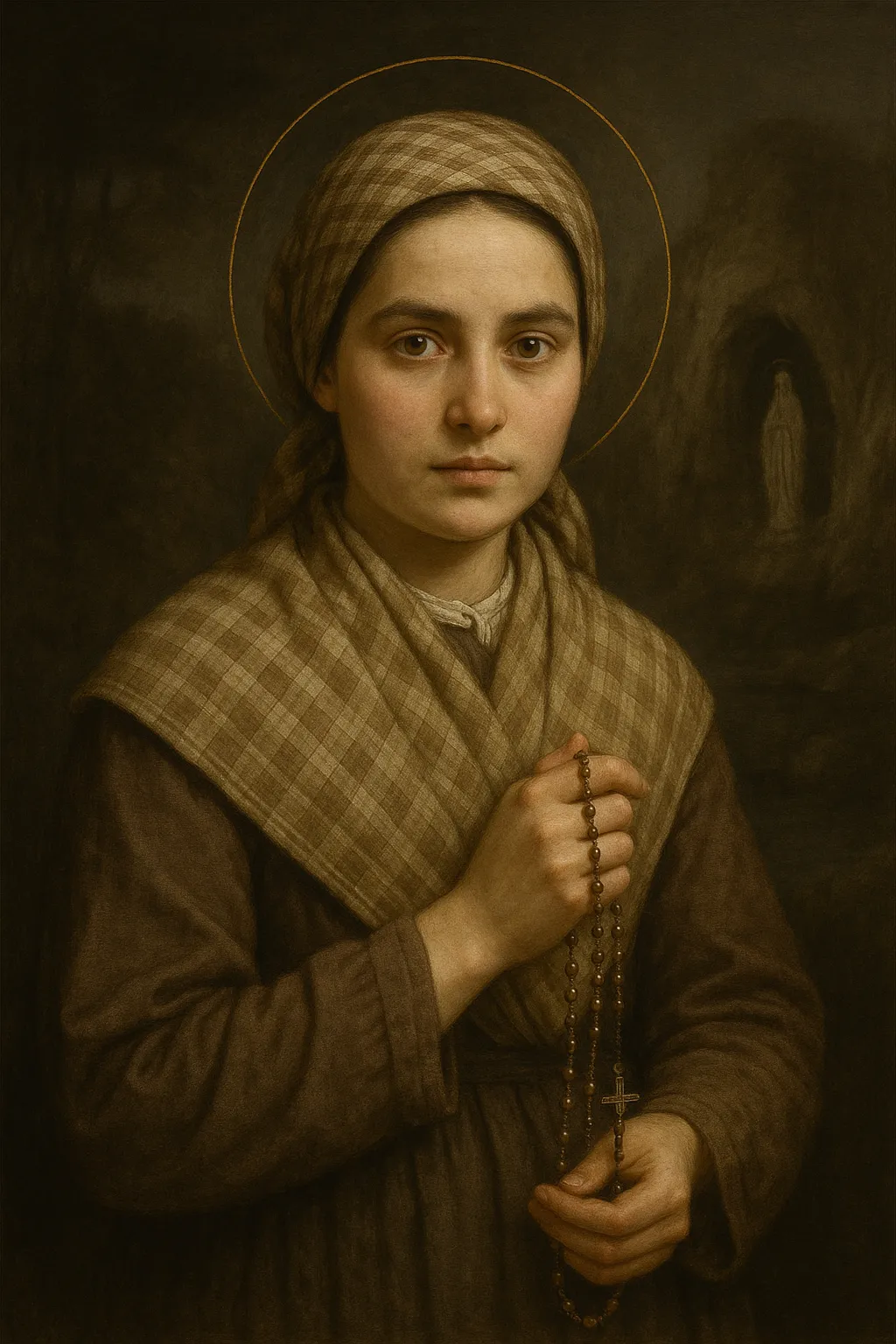
Saint Bernadette Soubirous
A modern saint of humility, illness, and hidden endurance without bitterness. -
Saint Monica
A North African woman whose holiness was carried through patient, hidden fidelity.
Kept on February 8.
February 8 is Josephine Bakhita's feast. It is also observed by Catholics as a day of prayer and awareness against human trafficking.
Her body is venerated in Schio, Italy, at the Canossian church associated with her long religious life.
From Darfur to a convent door in northern Italy.
Josephine Bakhita's sacred geography is not a polished pilgrimage route. It is a path from violation toward freedom, baptism, and chosen service.
Darfur gives the beginning, and it must not be erased. Her African origin is not an aside; it is part of the Catholic memory of her life.
Venice marks the threshold of baptism and freedom. In the care of the Canossian Sisters, she encountered the God she later called the Master.
Schio is where the hidden years became fruitful. Doorway, kitchen, sewing room, chapel: the small places of service became the geography of a free woman.
Photo credits
- Saint page. Eternal Roam devotional rendering. Source. Eternal Roam commissioned generation.
- Istituto dei Catecumeni, Venice. L736E, CC BY-SA 4.0, via Wikimedia Commons. Source. CC BY-SA 4.0.
- Church of the Holy Family, Canossian Convent, Schio. Belllissimo, CC BY-SA 4.0, via Wikimedia Commons. Source. CC BY-SA 4.0.