
St. Bernadette at Nevers
The body of St. Bernadette Soubirous, the visionary of Lourdes, rests in a glass shrine in the chapel of the Convent of Saint-Gildard at Nevers, kept by the Sisters of Charity since her death in 1879 and examined under Church supervision in 1909, 1919, and 1925.
Why pilgrims come
The visionary of Lourdes rests in hiddenness.
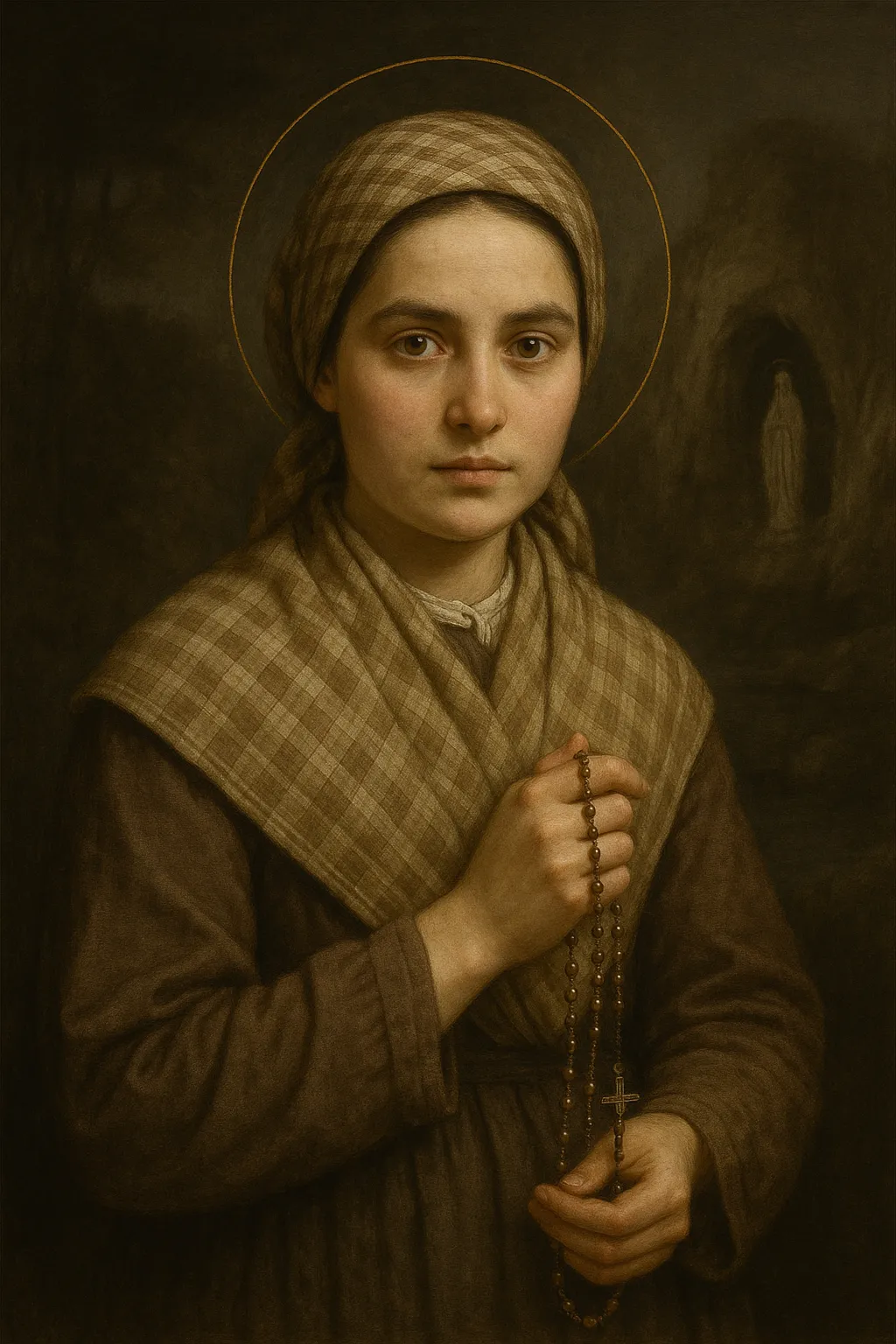
In 1866, eight years after the apparitions, Bernadette Soubirous left Lourdes for the motherhouse of the Sisters of Charity at Nevers. She lived there as Sister Marie-Bernard for thirteen years, in infirmary work, illness, and deliberate obscurity, and died on April 16, 1879, at thirty-five. She asked for hiddenness; the Church gave her a shrine anyway.
The canonization process included recognitions of Bernadette’s body in 1909, 1919 and 1925. The sanctuary describes it as incorrupt. André Ravier, SJ, records the examinations and changes in condition from the convent, diocesan and municipal archives. The visible face and hands have light wax coverings placed for veneration in 1925. Her body has rested in the main chapel’s glass reliquary since August 3, 1925; pilgrims come to pray and ask her intercession.
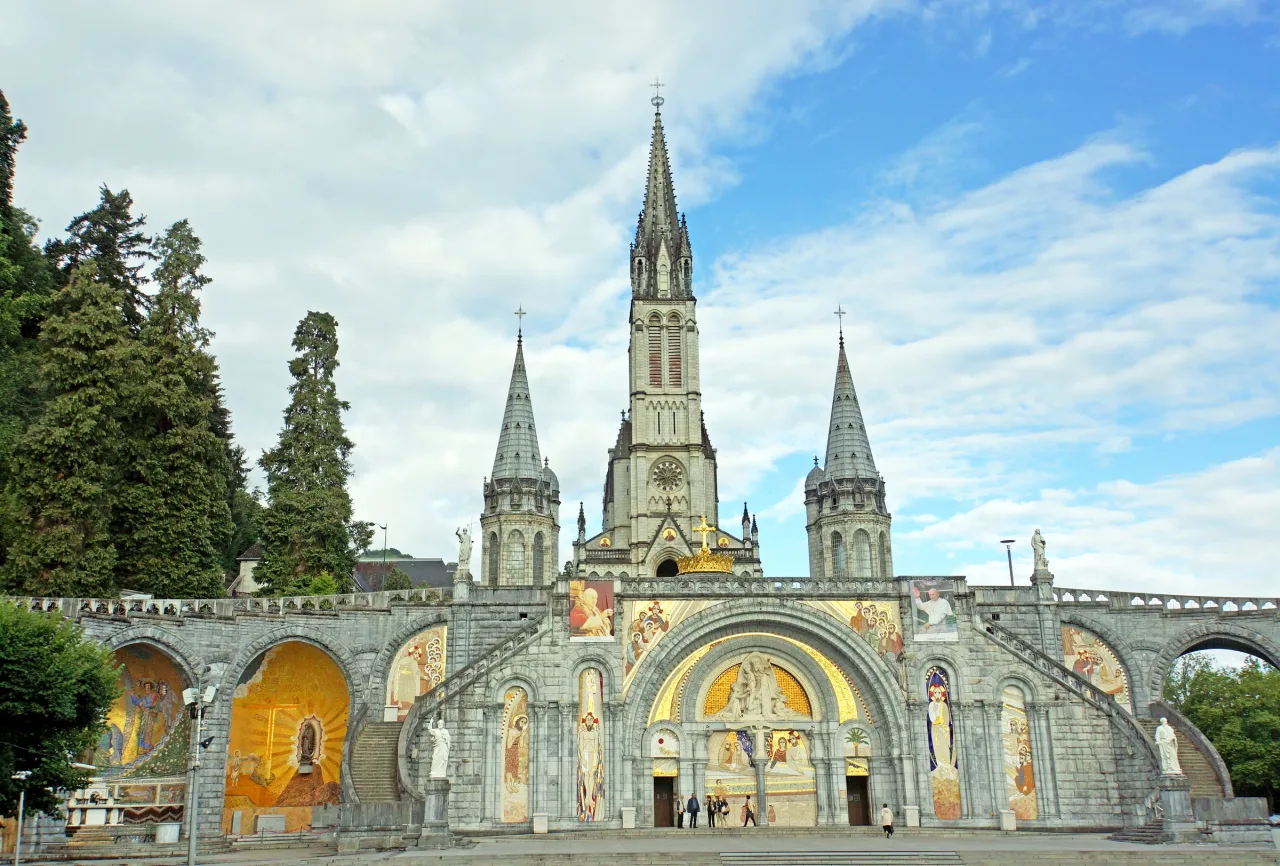
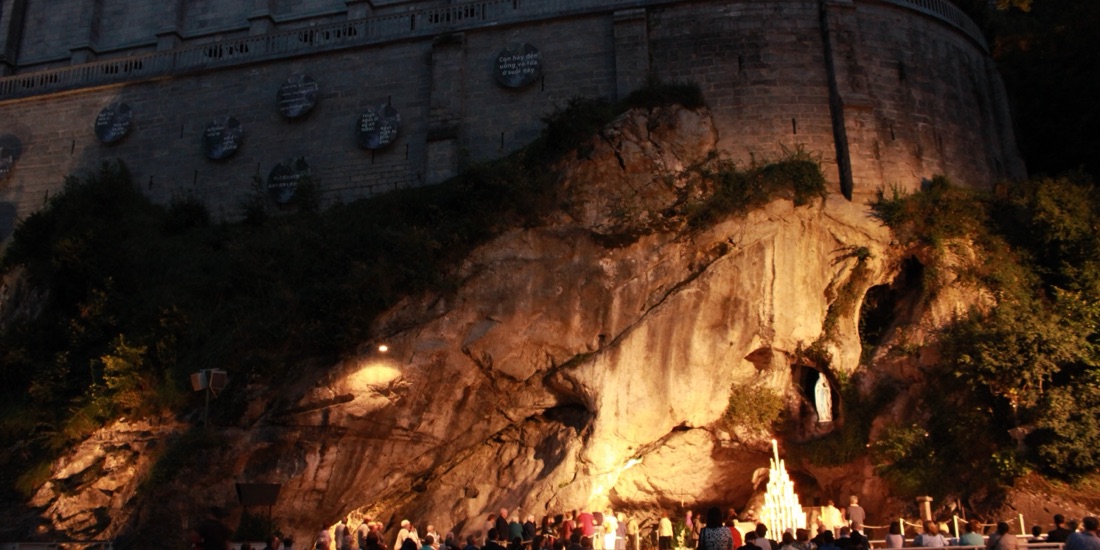
Pilgrims come to Nevers because Lourdes is only half of Bernadette's story. The grotto keeps what she saw; Nevers keeps who she became.
To pray at her shrine is to meet the answer she gave to fame: a small, hidden, obedient life, finished in patience.
What is venerated here
The shrine, the chapel, and the record are distinct things, and the page keeps them distinct.
Bernadette's body, found remarkably preserved at three canonical examinations, rests in a glass-and-bronze shrine in the convent chapel. It is venerated, not displayed as a curiosity.
The main chapel of Saint-Gildard, where the Sisters of Charity still pray. The shrine stands within a living house of prayer, not a museum.
Canonical recognitions took place in 1909, 1919 and 1925. André Ravier’s archival account explains the light wax coverings over the face and hands seen today; their appearance should not be described as untouched.
The motherhouse where Bernadette lived as Sister Marie-Bernard from 1866 to her death in 1879, now also the Espace Bernadette welcome and retreat house.
The chapel, the grounds, and a museum of her life and belongings are open to pilgrims; the sanctuary receives individuals, groups, and retreats through the year.
What a pilgrim can actually see
Stated honestly, with access caveats. Nothing here promises more than the shrine ordinarily offers.
The shrine of St. Bernadette
Open hoursThe glass shrine in the convent chapel, the point of the pilgrimage. Pilgrims pray beside it through the day.
·The chapel is a place of prayer first; liturgies take precedence over visiting.
The chapel of Saint-Gildard
Open hoursDaily Mass and the community's prayer are open to pilgrims, and shape the rhythm of a visit.
·Times vary by season; check the sanctuary's schedule.
The museum and Bernadette's belongings
Open hoursA small museum keeps objects from her life at Lourdes and Nevers, including personal effects from her years in the community.
·Museum and chapel have different visitor windows; check both rather than assuming one is always shorter.
The grounds and garden
Open hoursThe sanctuary gardens and an 1884 replica of the grotto of Massabielle, made after Bernadette’s death, offer places for prayer.
·The grounds close in the evening.
How to visit
A short, practical posture. The shrine will guide you the rest of the way.
Give the chapel time
Begin with prayer before Bernadette and Mass if the current schedule allows. For a full day of prayer, her life story and the gardens, continue to the Saint-Gildard sanctuary page.
Plan Lourdes and Nevers separately
The road journey is roughly 700 km, about 7½ hours before stops. Rail examples take 8½–10 hours with connections. Protect a full transfer day if combining them; Paris is often a simpler independent gateway.
Check times with the sanctuary
Mass, prayer, museum, and seasonal hours are posted by the sanctuary, and groups are asked to announce themselves in advance.
Stay if you need stillness
The Espace Bernadette receives pilgrims and retreatants with simple accommodation. Nevers rewards a slow visit more than a fast one.
Connected saints & places
Every relic belongs to a saint, a church, and a city. Follow the connections outward: each one names its relationship to what is kept here.

Nearby sacred places
Each carries an honest travel cost. "Nearby" means reachable on the same pilgrimage, not merely thematically linked.
Nevers Cathedral
The cathedral of Saint-Cyr-et-Sainte-Julitte, a short walk from the convent through the old town.
How this page was prepared
What the identification rests on, and how confidently. Devotional significance and historical record are named separately.
- Official Sanctuary of Saint Bernadette / Espace Bernadette Soubirous, Nevers: the sanctuary's own pages on the shrine, the chapel, and visiting. Linked below.
- Historical Continuous custody by the Sisters of Charity of Nevers since her burial in 1879, and three canonically supervised examinations (1909, 1919, 1925) with medical reports preserved.
- How we say it We report the preservation as the convent and the examination records describe it, name the 1925 wax masks rather than hiding them, and claim nothing beyond the record.
- Sanctuary of Saint Bernadette, Nevers (Espace Bernadette Soubirous): the sanctuary and the shrine
- Sanctuary of Our Lady of Lourdes: Bernadette Soubirous
- André Ravier, SJ: The Body of St. Bernadette of Lourdes, based on convent, diocesan and municipal archives
- Sanctuary of Saint Bernadette: her body
- SNCF Connect: Lourdes–Nevers connections
Public access varies with liturgy, security, and (where noted) reservation requirements. The official sources above should be consulted for current access before planning around it.
Photo credits
- St. Bernadette at Nevers. FredSeiller / Wikimedia Commons · CC BY-SA 3.0. Source. CC BY-SA 3.0.