
St. Paul in Tarsus: Church and Well
Paul's birth in Tarsus is secure in Scripture. The church of 1850 and the traditional well are later memorials that help a pilgrim orient that memory.
- Location
- Tarsus, Turkey 36.9142° N · 34.8978° E
- Type
- Paired Pauline sites: a memorial church and a traditional house-well site A three-aisled rectangular stone church of 1850, restored between 1997 and 2001
- Dedication
- St. Paul the Apostle
The city is certain, the shrines are later
Come here because Tarsus is one of the rare Pauline places where the city-level claim is stronger than the shrine-level claim.
Paul himself says he was born here. A good pilgrimage begins with that distinction: the church is nineteenth-century, and the well belongs to a local tradition about the site of his house. Praying in the city Paul named as his birthplace, with later Christian memorials to orient the memory, is enough.
Born in Tarsus in Cilicia
In Acts 22:3 Paul identifies himself as “a Jew, born in Tarsus in Cilicia.” Benedict XVI repeatedly identified Tarsus as Paul's birthplace. During the Pauline Year he named Tarsus and other Pauline sites in present-day Türkiye as pilgrimage destinations.
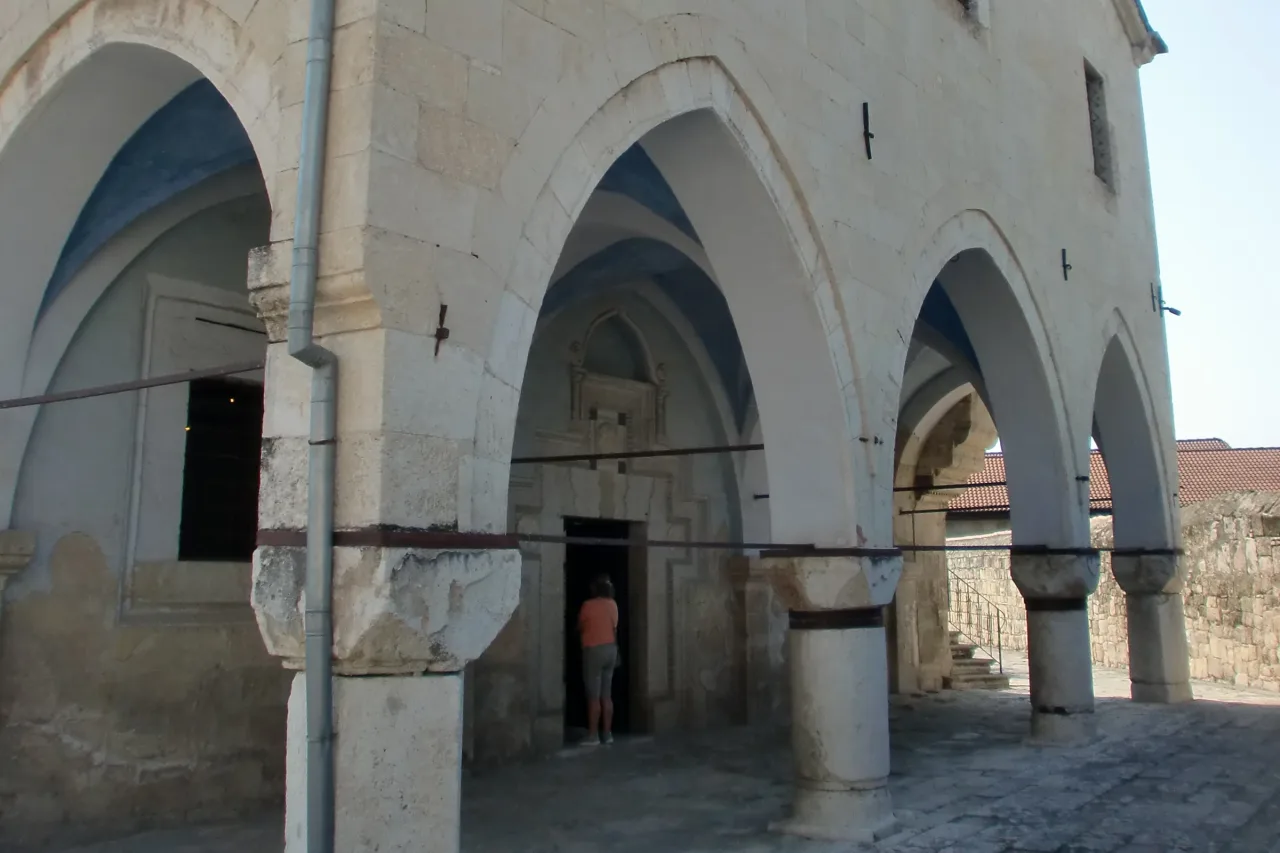
The church. According to the Turkish museum authority, the present church was built in 1850 by the local Orthodox Arab-Greek community. It is a three-aisled rectangular church, and its interior preserves painted imagery including Christ and the Evangelists. It was restored between 1997 and 2001 and opened as the St. Paul Memorial Museum. Visiting domestic and international Christian groups are allowed to hold religious services there. It dates many centuries after Paul.
The well. The well stands in a courtyard traditionally identified as the site of Paul's house. Turkish cultural authorities frame that identification as traditional, not proven. Excavation near the well exposed wall remains and cultural layers reaching the period in which Paul lived. Those layers do not prove that any particular structure was his house. The well and the surrounding remains have long been treated as sacred in local Christian memory. The well itself is a later surviving feature, and it cannot be called Paul's own well as historical fact. The church and the well are separate places.
The church is a three-aisled, nineteenth-century stone building with painted Christian imagery inside, including Christ and the Evangelists. At the well, notice the traditional house courtyard, the well itself, and the protected excavated wall remains and cultural layers nearby.
How to pray in Tarsus.
Begin with what Paul says about himself.
Acts 22:3
Read Paul's own words: “a Jew, born in Tarsus in Cilicia.” Reflect on Paul before Damascus, and on his birthplace and formation.
Keep the levels of certainty apart
Paul's birth in Tarsus is secure. The church is of 1850. The well and courtyard are a tradition about his house. Archaeological layers from Paul's period nearby do not identify his household.
Commemoration, not relic
Pray in the church as a memorial, and at the well as a traditional site. Do not ask either to be more than it is.
Spiritual Significance
The value of Tarsus is not archaeological proof of a surviving Pauline home. It is the experience of praying in the city Paul named as his birthplace. The difference between commemorating a saint and treating every later structure as an authenticated relic of his life is part of the pilgrimage.
Do Not Miss
-
The church interior
Painted imagery including Christ and the Evangelists, in a memorial church that can receive Christian liturgical groups.
-
The well courtyard
A traditional identification of Paul's house, not a proven one.
-
The excavated walls
Protected remains and cultural layers near the well. They do not identify Paul's house.
- The three-aisled layout and the nineteenth-century stone of the church.
- The painted Christian imagery inside.
- The church's present role as a memorial museum that can still receive Christian liturgical groups.
- The well, its courtyard, and the protected excavated walls nearby.
How to Visit
Current hours and ticketing for the St. Paul Memorial Museum are kept by the Turkish museum authority. For the well, consult current Turkish cultural and museum information.
Map
Republic of Türkiye museum and culture authorities; Benedict XVI on Paul of Tarsus and the Pauline Year; Acts 22:3.
September 18, 2026
Photo credits
- Hero. Jordi Gili / Wikimedia Commons (CC BY-SA 4.0). Source. CC BY-SA 4.0. Cropped from the original.
- St. Paul's Well. Nedim Ardoğa / Wikimedia Commons (CC BY-SA 4.0). Source. CC BY-SA 4.0. Cropped from the original.