
The Shrine of the Three Kings
Reliquary venerated as holding the relics of the MagiContinuous public veneration behind the high altar
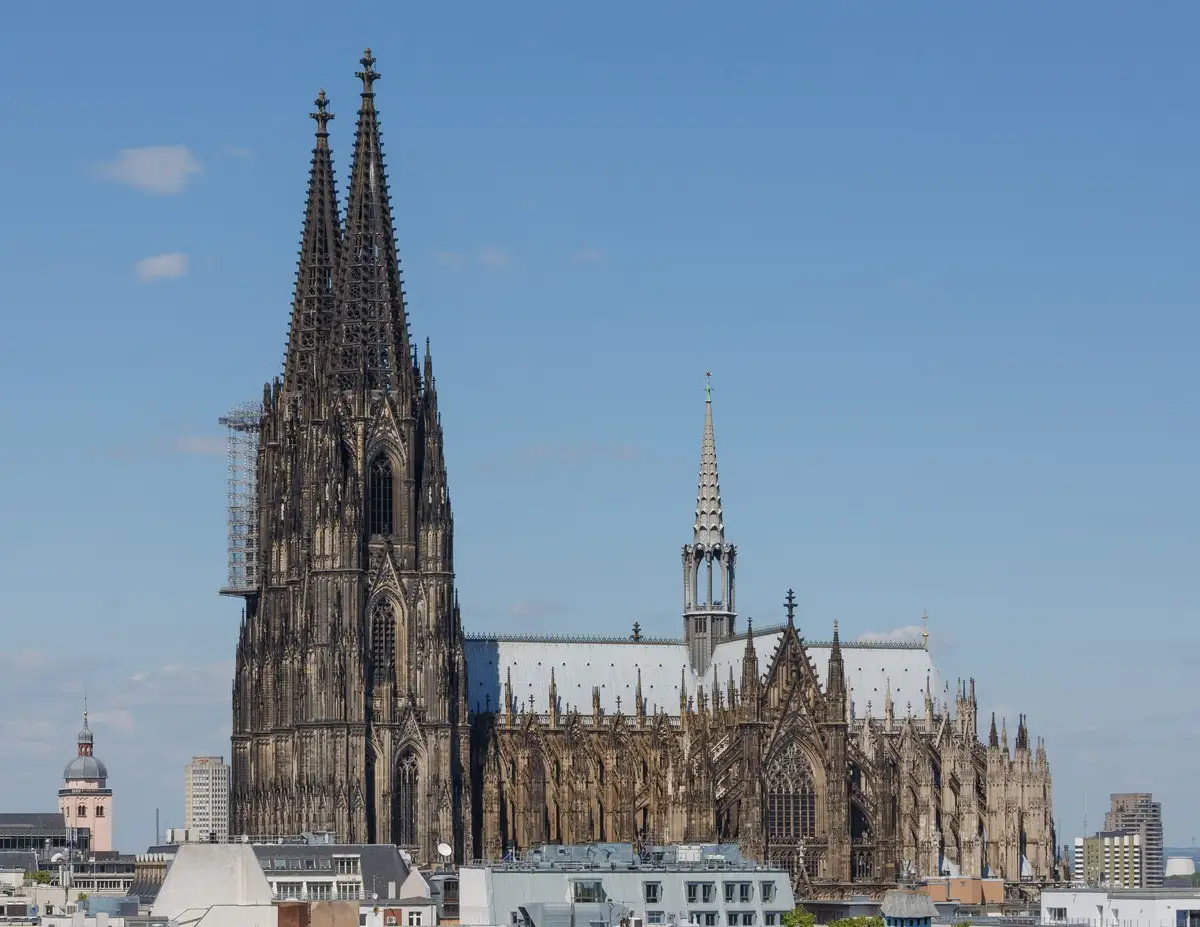
Cologne CathedralCologne Cathedral is a monumental Gothic cathedral and pilgrimage church centered on the Shrine of the Three Kings.
Cologne is one of Europe's great Gothic spaces, but it was built for a reason: to hold the Shrine of the Three Kings and the pilgrims who came to pray before it. Read the cathedral that way and the scale, the long nave, and the towers stop being mere spectacle. They are the setting for a golden shrine venerated as holding the relics of the Magi, and for a cathedral that still works as a place of daily Catholic worship in the heart of a busy city.
Cologne grew into a major pilgrimage city after the relics venerated as those of the Magi were brought here in 1164. Construction of the present cathedral began in 1248 to house them worthily; the Gothic choir was consecrated in 1322, and the building was finished to its medieval design only in 1880.
UNESCO describes a High Gothic five-aisled basilica beneath a twin-tower west front rising over 157 meters. The scale is real, but it serves the eye, drawing attention down the nave toward choir, shrine, and altar.
The cathedral has a clear center of gravity. Find the shrine, then read the building around it.
The five-aisled nave pulls the eye toward the choir, the way a pilgrim crowd was meant to move.
Behind the high altar stands the great golden shrine venerated as holding the relics of the Magi.
In a side chapel, a monumental carved crucifix from around 970, one of the oldest of its kind in the West.
Medieval and later windows, including the early Bible windows, color the light of the choir and aisles.
Cologne is a UNESCO World Heritage site and one of the most visited churches in Germany.
The Shrine of the Three Kings is the reason the cathedral became one of medieval Europe's great pilgrimage destinations.
The most useful way to visit Cologne is to remember that the famous architecture serves a pilgrimage. People came to pray near the relics of the Magi, not simply to admire the height of the towers.
The great gilded reliquary behind the high altar, made around 1190 to 1220, venerated as holding the relics of the Magi brought to Cologne in 1164. It is the reason the cathedral was built.
The medieval liturgical heart of the cathedral, with its carved choir stalls and the single slab of black marble that forms the high altar.
In the north side chapel, a monumental oak crucifix from around 970, among the oldest large sculptures of the crucified Christ in the West.
The early-14th-century Bible windows of the aisles, and later glass, shape the colored light of the cathedral. Read them for their theology, not only their craft.
The Treasury holds reliquaries, vestments, and medieval goldwork. The south tower can be climbed for a close view of the bells and the city, when access allows.
A focused visit that reads the cathedral in the right order: down the nave to the shrine of the Magi, then the Gero Crucifix and the glass.
Add the Treasury and, if access allows, the south tower climb, after time in the cathedral itself.
Cologne is still a working cathedral. Begin with Mass or quiet prayer before the shrine, and let the visiting follow the prayer.
Begin in the nave, move toward the choir and Shrine of the Three Kings, find the Gero Crucifix, and consider the Treasury or tower only after you have prayed or sat quietly. Check current official hours because services affect visitor movement.
Visiting
Good to know
Special celebrations, concerts, and ongoing conservation work can affect access to parts of the cathedral.
The south tower involves a long spiral stair and is weather-dependent.
Continuous public veneration behind the high altar
Cologne CathedralPublic devotion in its chapel
Cologne Cathedral and art-historical recordDisplayed in the Treasury
Cologne CathedralSource note Traditional attributions are presented as tradition, with documentation named where it exists.
Use this for corrections, broken links, missing places, and planning ideas.