
Authenticated parish relic collection
Relic collectionApproach the saints as members of Christ's Body and let veneration lead toward the altar.
Basilica of Saints Peter and Paul relic collectionChattanooga's basilica is first a living parish, then a pilgrimage of apostolic patronage, Father Ryan's sacrificial pastoral witness, and the communion of saints.
Come for Mass, confession, and prayer in a downtown parish dedicated to the two great apostles.
Then pray at the tomb of Servant of God Father Patrick Ryan, whose charity during the yellow-fever epidemic cost him his life. His cause is open, but the Church has not declared him Blessed or a martyr. Ask for pastors who will remain with their people in danger and for courage to serve the sick without seeking a heroic image of oneself.
The basilica's relic collection should deepen that same ecclesial communion. About eighty relics are described by the parish as authenticated. Other pieces are still awaiting authentication. The honest distinction protects devotion from exaggeration and lets the saints point back to Christ rather than become a catalog of claims.
Father Patrick Ryan became pastor in 1872. When yellow fever struck Chattanooga in 1878, he remained to minister among the sick and dying. He died at thirty-three. The Diocese of Knoxville later opened his cause, authenticated his remains, and re-entombed them in the basilica in 2021. Documentation for the diocesan inquiry has been delivered to Rome; his present title remains Servant of God.
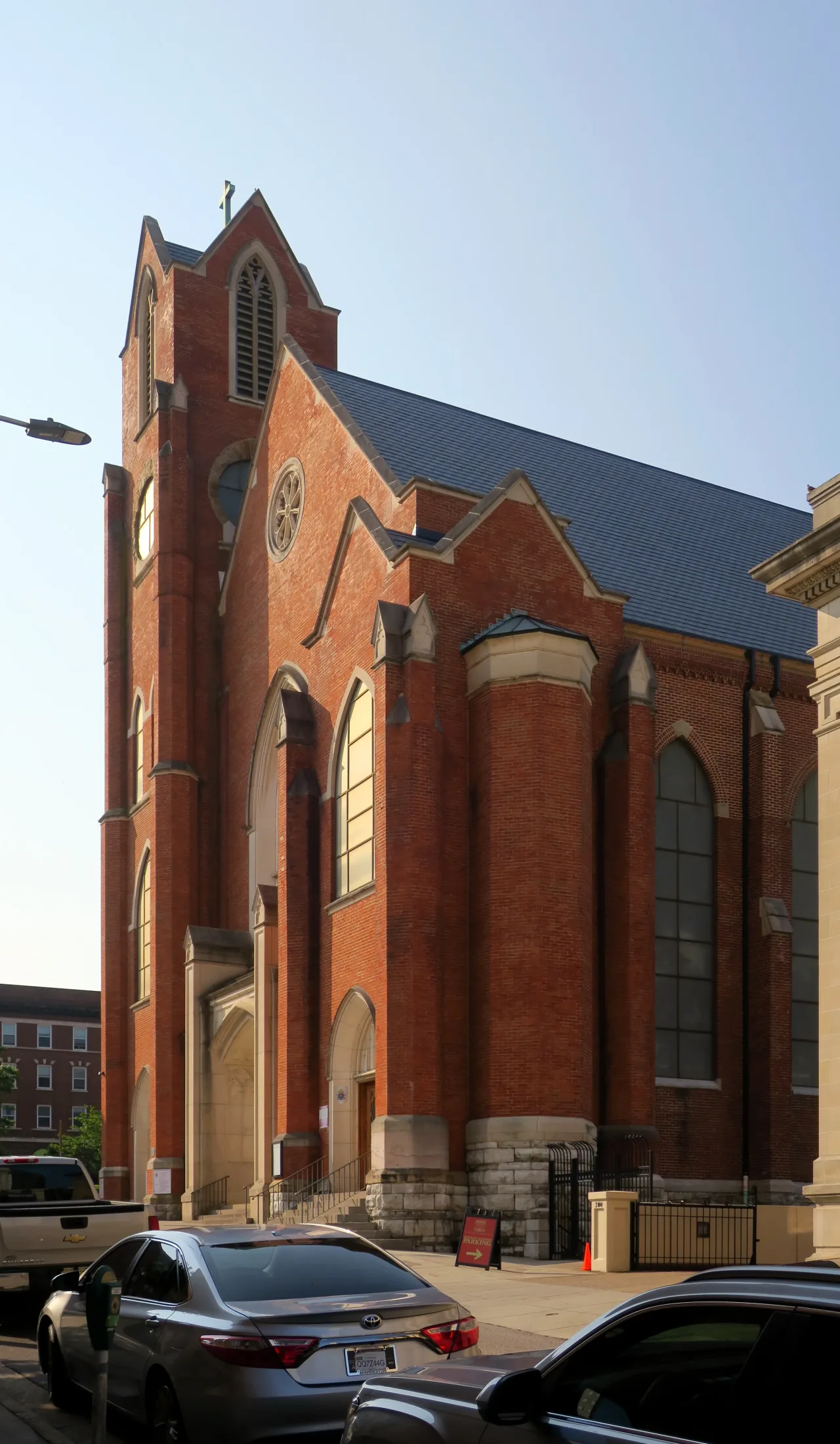
Dedicated in 1890, the Gothic Revival church was designed by Peter J. Williamson with Reuben Harrison Hunt overseeing construction. Its stone facade and bell tower announce a substantial Catholic presence in the city center; inside, Tiffany windows, heart-pine floors, nave, sanctuary, side altars, and sacred art form one parish church. The restored side altars and relic niches should be read as places of prayer ordered toward the Eucharistic altar, not as museum cases.
Parish founded in 1852
Church dedicated in 1890
Designated a minor basilica in 2011
Father Ryan's cause documents delivered to the Dicastery for the Causes of Saints
Peter and Paul teach apostolic fidelity; Father Ryan shows pastoral charity under mortal pressure; the relics make the communion of saints bodily and local. The parish rotates relics through its side-altars rather than pretending every piece is continuously visible. All three lines meet at the altar and in the living sacramental life of the parish.
Receive the church first as a living parish.
Pray for his cause without anticipating the Church's judgment.
Keep the parish's distinction between authenticated and unconfirmed pieces.
Mass or quiet prayer, Father Ryan's tomb, and the principal relic display.
An unhurried liturgy, tomb prayer, architecture, and the relic collection when access permits.
Keep the order altar, Father Ryan's tomb, then the authenticated relic collection.
Confirm current church, Mass, confession, adoration, tour, and relic-display access. Parish worship, funerals, and pastoral needs take priority over touring.
Use the basilica's current pages for Mass, confession, adoration, tours, office access, and any change to Father Ryan's cause.
Before Travel
Approach the saints as members of Christ's Body and let veneration lead toward the altar.
Basilica of Saints Peter and Paul relic collectionPray privately for his cause and imitate his pastoral charity without anticipating beatification.
Diocese of KnoxvilleSource note Traditional attributions are presented as tradition, with documentation named where it exists.
Official church sources.
August 26, 2026
Use this for corrections, broken links, missing places, and planning ideas.