St. Georg: the living cathedral
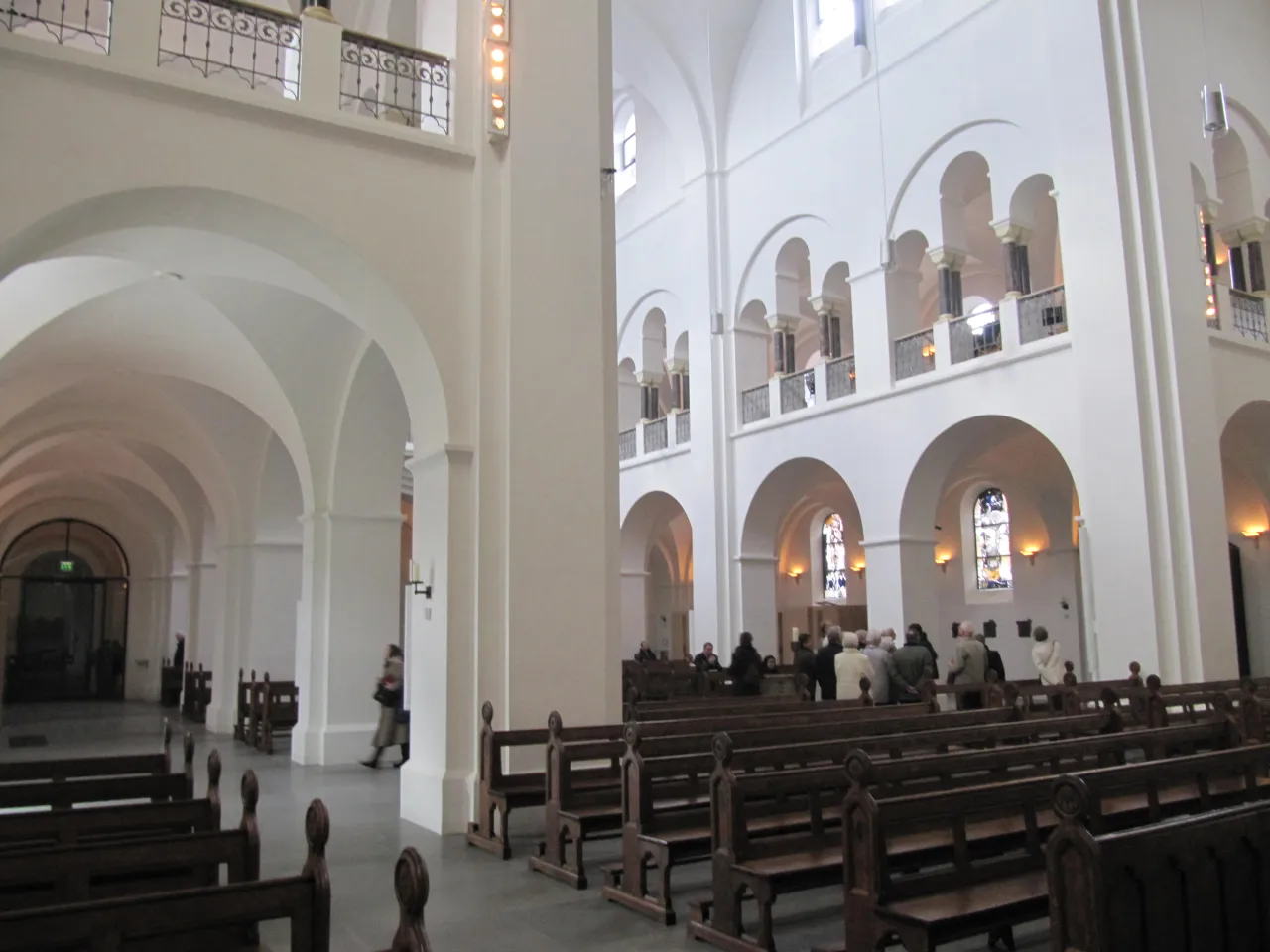
The nineteenth-century St. Marien-Dom serves the modern Archdiocese and keeps Ansgar devotion in the liturgy.
On the ground Begin at the cathedral, then use transit or walk toward the old city.
Mission, rupture, survival and return across the city
The medieval cathedral has vanished and Ansgar’s first church has not been located. The living Catholic city is encountered at St. Marien-Dom, Kleiner Michel and St. Joseph.
Orientation
Ansgar’s ninth-century mission was broken by the attack of 845 but continued from Bremen. Hamburg’s later Mariendom survived as an independent evangelical chapter after the Reformation until its demolition in 1804–1806. Public Catholic worship was suppressed in Hamburg proper, while Catholic life continued under different conditions in then-separate Altona. The 1811 Catholic dedication of Kleiner Michel, the new St. Marien of 1893 and the restored Archdiocese show return without making the lost buildings appear to have survived.
Planning a pilgrimage here?
The ground
The cathedral at St. Georg is modern. At Hammaburg-Platz, white blocks mark the later medieval Mariendom’s footprint and the Archäoskop reconstructs vanished surroundings. Archaeology dates the earliest church found there to the 1020s, not Ansgar’s time. His first Marian church has not been located; evidence may point to the area around today’s Lutheran St. Petri. The original Ansgar sculpture and medieval Ansgar painting in St. Petri offer context, but St. Petri is not a Catholic destination. Continue southwest to Kleiner Michel and west to St. Joseph in former Altona.
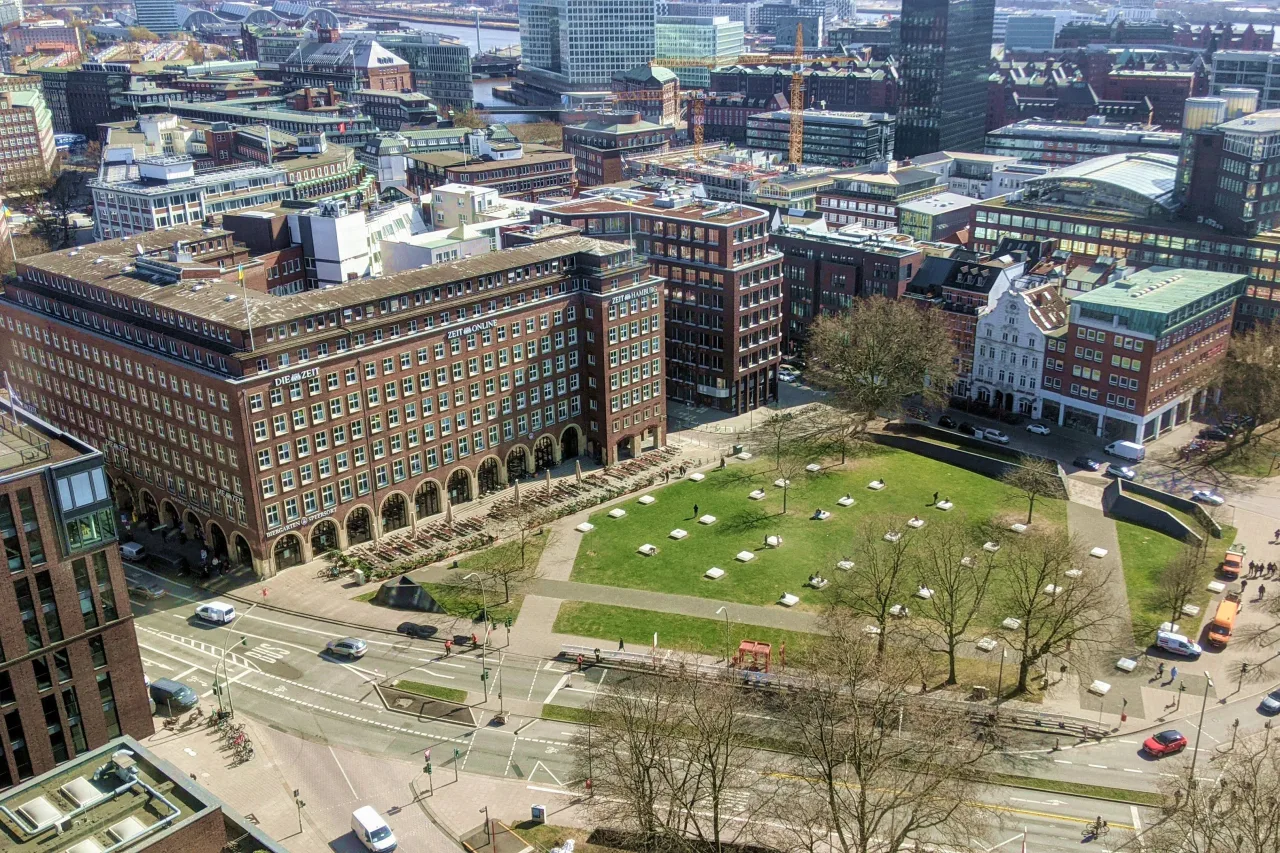
The nineteenth-century St. Marien-Dom serves the modern Archdiocese and keeps Ansgar devotion in the liturgy.
On the ground Begin at the cathedral, then use transit or walk toward the old city.
The later Mariendom stood here. The 1020s wooden church is the earliest archaeologically located church on this ground; Ansgar’s church remains unlocated. The Archäoskop is a reconstruction, not physical survival.
On the ground Read the markers before crossing toward Kleiner Michel.
Kleiner Michel marks public Catholic return in Hamburg proper; St. Joseph shows older Catholic continuity across the former Altona boundary.
On the ground Continue west by local transit when time is limited.
Visit
ST. GEORG
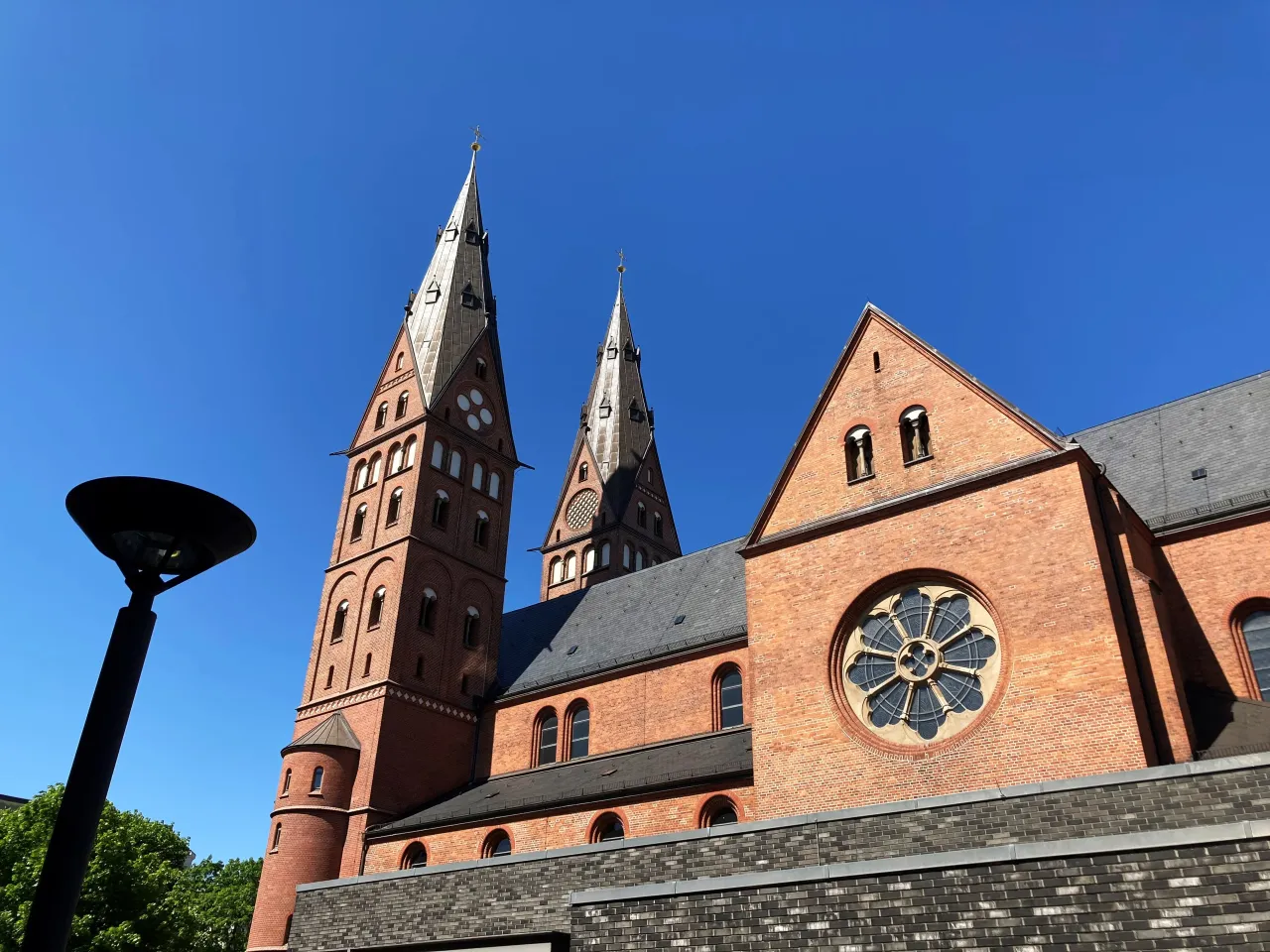
The living Catholic cathedral in St. Georg was dedicated in 1893 and became the cathedral of the restored Archdiocese of Hamburg in 1995.
NEUSTADT
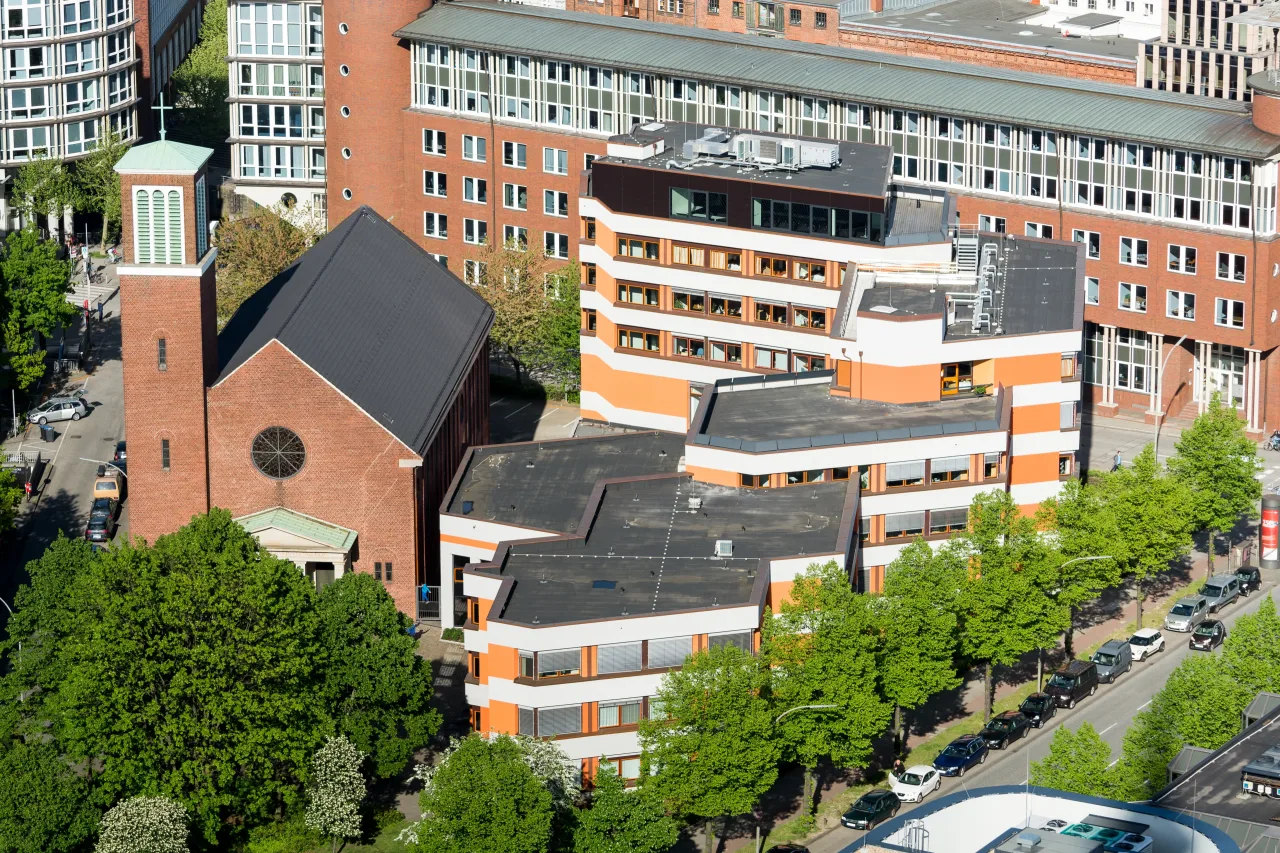
The former Lutheran Kleiner Michel became a Catholic church dedicated to St. Ansgar in 1811; today’s church was consecrated in 1955.
GROSSE FREIHEIT
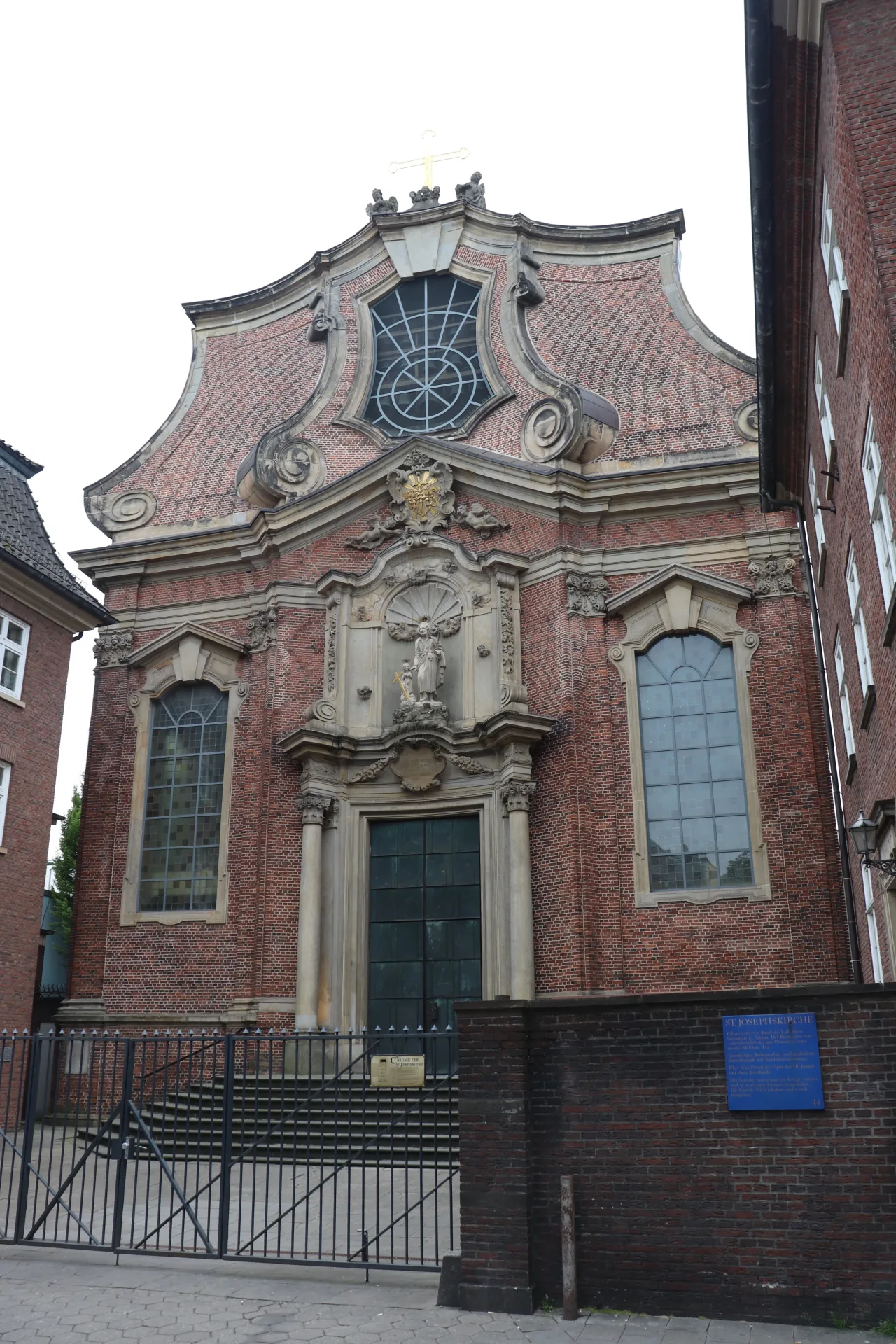
St. Joseph bears witness to Catholic worship in historically separate Altona, where the parish traces its permission to 1594 and its surviving church to 1723.
Sacred map
3 Essential Places shown.
Select a marker to visit or save that place. The list above stays complete on its own.
Plan your visit
Plan 1
Begin at St. Marien-Dom, read Hammaburg-Platz as the lost cathedral ground, then continue to Kleiner Michel. Verify worship and opening first.
Plan 2
Follow the central sequence, then travel west to St. Joseph on Große Freiheit for the Catholic continuity of then-separate Altona.
Plan 3
Leave time for cathedral Mass or confession, the old Dom site and Archäoskop, Kleiner Michel, and St. Joseph. Give Bremen a separate day with the regional guide.
Practical, not booking
Reviewed 2026-09-26. Verify current opening, Mass and confession with each church before travel.
The central churches are reached across St. Georg and Neustadt. Use local transit for St. Joseph in Altona when time is limited.
Continue to Bremen through the regional guide. Check current trains with Deutsche Bahn rather than relying on a fixed schedule.
Connected saint
Use this for corrections, broken links, missing places, and planning ideas.